
 E-Paper



Pune’s Bhandarkar Institute preserves rare documents from private parties
Till now BORI has conserved more than 25 such rare documents from individuals and institutions across the state


The Bhandarkar Oriental Research Institute (BORI), which undertakes work of conservation and preservation of old manuscripts and rare documents has also begun accepting projects from private parties and is getting positive feedback. Till now BORI has conserved more than 25 such rare documents from individuals and institutions across the state.
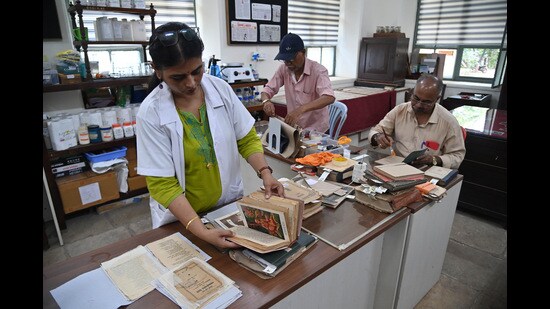
For the last several years BORI has been involved in the conservation work of rare manuscripts and documents, after getting funds from the Maharashtra state governor a special conservation lab was set up and a ‘conservation department’ was started inside BORI premises in April 2023.
In the last two years BORI has conserved over 21,000 rare books, available at the institute out of a total of 1.5 lakh books, said officials.
“For the last two years, the conservation work at BORI has been going on in full swing at our fully modernised lab which is been built at our campus. Daily around four to five books are conserved and now we have even started taking up private projects. This includes rare documents, pages, scripts and various other things that are preserved by individuals and institutions. Till now we have done conservation work of over 25 such private rare documents in the last few months,” said Bhupal Patwardhan, chairman, BORI’s executive board.
The BORI was established in 1917 to preserve and conduct research on the manuscripts and rare books brought from various sources to the institute. Later on in the year 1918, the then governor of Bombay Lord Willingdon sent the manuscripts’ collection to BORI and since then the collection has been going on from various sources across the country.
Currently, there are over 28,000 manuscripts from various languages right from Sanskrit, Prakrit, Urdu, Arabic, Persian, Devnagari, Kannada and many more. There are over 1.50 lakh books on different topics and subjects, and the digitalization process is been done by the institution.
Varsha Kotphode, head, conservation department at BORI, said, “Initially we started the library conservation work at BORI. We had done its digitalisation work but its physical condition was very critical. So we decided to do the conservation of the books in our library for that we conducted a survey of all our books. Then we realised that its conservation cost is very high so it was necessary to fit this process into an economical and affordable structure. Then we did its segregation, with its archaeological value, antiquity value, knowledge value and its rarity of the document.”
“Accordingly we started the conservation work, through archival rebinding and general book repair methods. For that, we trained two staff members in a bid to do its conservation in an economical and better way. Also, its fungal treatment work was done to preserve it for a longer period,” she added.
BORI also gave internship project works and trained the students from various colleges in Pune city as they have to work in an institution while studying and students would get credit points for that work. Till now more than 10 interns have worked at BORI and out of them two students have joined work at Maharashtra state museums.
“When we realised that we could do the conservation work in professional ways, we started getting conservation works from private individuals and institutions as well. The private works included rare documents related to the family tree (vanshaval) document of a Sardar family in Maharashtra, some rare documents of the pre-Independence movement and various other things,” added Varsha.


