
 E-Paper



Pune’s civic culture: Build, inaugurate, personalise
In an intensely competitive political environment where ideological distinctions have narrowed, constant public presence has become essential for survival. A completed road, a water tank, a garden, a hospital building or a welfare camp now offers an opportunity for political projection.

 Prefer HTon Google


Pune:
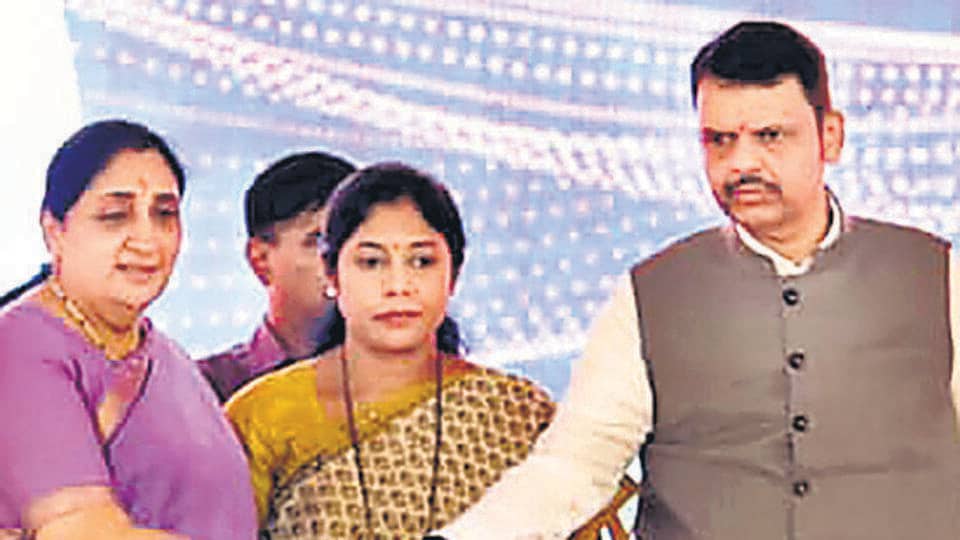
In Pune’s changing political culture, public infrastructure increasingly serves two purposes: civic utility and political visibility.
Roads, gardens, hospitals, water projects and welfare schemes are no longer viewed merely as public assets funded through taxpayer money. They are also becoming instruments of personal branding, symbolic ownership and political recall. Across Maharashtra’s urban politics, especially in Pune, governance and image-building are steadily merging into one another.
The developments witnessed in the city over the past week offered a revealing snapshot of this transition.
On Sunday, chief minister Devendra Fadnavis inaugurated the long-pending Mohammadwadi water supply project, expected to benefit nearly three lakh residents across Mohammadwadi, Undri and adjoining areas after years of chronic water shortages. During the programme, Fadnavis credited citizen forums and residents for persistently following up on the project and ensuring its completion.
His remarks came amid visible political undercurrents surrounding the event. A day earlier, friction had reportedly emerged after local residents expressed a desire to meet the chief minister directly regarding the project. Local BJP MLC Yogesh Tilekar was seen actively attempting to position himself at the centre of the project’s political messaging, triggering resentment among some resident groups who argued that citizen forums had sustained pressure on the administration for years while political leaders appeared only around inauguration time.
The episode reflected a larger phenomenon visible across urban Maharashtra: the growing competition to politically “own” civic projects. This ownership is not always administrative. Often, it is symbolic.
The politics of naming public infrastructure offers one of the clearest examples. The latest controversy erupted after a civic cancer hospital in Baner was initially to be named after the father of standing committee chairman Shrinath Bhimale. The issue drew attention because this was not the first such instance associated with the leader. In 2022, a PMC garden at Salisbury Park had also been named after his father, triggering criticism and citizen protests.
That controversy expanded into a larger civic debate after a 2022 Hindustan Times investigation revealed that at least 32 public gardens in Pune had been named after relatives or associates of corporators cutting across political parties. The names included fathers, mothers and family members of elected representatives despite a 2000 PMC resolution stating that gardens should ideally be named after national personalities or noted environmentalists.
Finally ahead of CM’s inauguration on Sunday, BJP leaders removed the name to avoid embarrassment to Fadnavis.
The issue highlighted how civic infrastructure was gradually becoming intertwined with personal legacy-building.
But this shift is not restricted to naming controversies alone.
Urban politics today increasingly revolves around visibility. In an intensely competitive political environment where ideological distinctions have narrowed, constant public presence has become essential for survival. A completed road, a water tank, a garden, a hospital building or a welfare camp now offers an opportunity for political projection.
In many cases, the inauguration itself becomes more important than the project.
This explains the growing scale of foundation stone ceremonies, banners, personalised publicity campaigns and political branding attached to even routine civic works. Public projects are increasingly presented not as institutional achievements of local bodies or governments, but as outcomes of intervention by specific leaders.
The trend is visible beyond Pune as well. Across Maharashtra, welfare schemes are now heavily associated with political faces and branding exercises. Government advertisements, public communication campaigns and event management around development projects increasingly revolve around personalities rather than institutions.
Part of this transformation is linked to the nature of urban governance itself.
Cities today are driven by fragmented accountability. Projects often move slowly due to coordination failures between municipal corporations, development authorities, state departments and contractors. By the time a project is completed, multiple political actors attempt to establish ownership over it.
At the same time, urban voters increasingly evaluate politics through visible and immediate delivery rather than ideological narratives. A corporator who gets a local road completed or ensures water supply acquires stronger political recall than abstract policy debates.
This has intensified the competition for credit.
Ironically, many of these projects are often pushed forward not solely by politicians but through sustained pressure from citizen groups, resident associations and local forums. The Mohammadwadi water project itself was pursued for years by organised citizen groups that repeatedly followed up with the administration regarding delays and implementation.
That may explain why Fadnavis consciously acknowledged citizen forums during Sunday’s inauguration. His remarks subtly shifted focus from individual political ownership to collective civic effort — something that is becoming relatively rare in present-day urban politics.
Yet, the broader trend remains difficult to ignore.
Public infrastructure in cities like Pune is increasingly becoming part of a political memory-building exercise. A nameplate, inauguration plaque or public ceremony now carries significance beyond symbolism. It establishes political visibility in rapidly changing urban constituencies where electoral loyalties are fluid and competition remains intense.
The result is a new civic culture — one where development projects are expected not only to solve urban problems but also to reinforce political identity.
Build, inaugurate, personalise.
That increasingly appears to be the defining template of urban politics in Maharashtra’s cities.


