
 E-Paper



Pune’s parents, teachers & students exhausted due to online classes
According to city psychologists, both teaching and learning methods need to be adaptive and relevant


With schools showing no signs of reopening and classes continuing in online mode for the second straight academic year, parents, teachers and students are experiencing exhaustion due to online teaching.
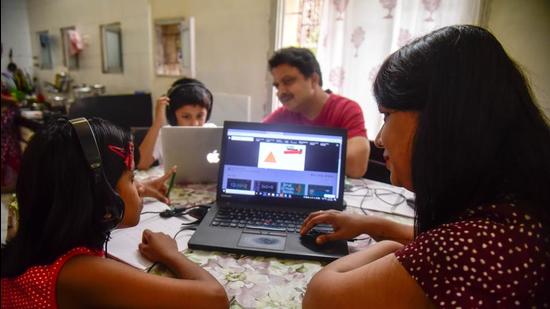
Archana Panch, vice principal at the Raman Bagh English School, said, “Children understand that there is a pandemic, but they miss the school schedule. We have a lot of parents and grandparents visiting us and requesting us to reopen school. They share that children are now frustrated being at home. Children want to go out but due to the pandemic, they are not able to.”
City parents expressed the view that many students want schools to reopen. Anita Salve, parent of a boy, 13, said that she is struggling to keep her son busy all day. “The physical activity is limited. Due to online platforms, the basics of the child are not very clear. Online education is not very engaging even though it is the need of the hour,” she said.
Along with students, teachers too are facing a lot of issues due to online education. Harishchandra Gaikwad, president of the Pune District Principals’ Association, said, “Teachers are reaching a state of exhaustion due to online platforms. Many teachers have to follow up with students. Many students have left for their villages and teachers are trying very hard to reach them. Moreover, class attendance is just 40% and students don’t attend regular school which is a hurdle for teachers.”
According to city psychologists, both teaching and learning methods need to be adaptive and relevant. Dr Shirisha Sathe, a city-based senior practising psychologist, said that teachers must realise that offline teaching methods will not work in the online mode. “Around 7% learning is verbal and 93% learning is non-verbal. Teachers have to adapt to a blended mode of teaching in future as learning will be online and offline. The whole methodology of teaching has to be reworked. And it has to adapt as per individual classes,” Dr Sathe said, adding that teachers must also interact with the national and international community to share information. “A lot of research reflects that there are many methods that teachers can utilise in teaching. An exchange of ideas will help teachers to derive their own method of teaching online and up-skill themselves,” she said.
Dr Sathe advises parents to engage children in all kinds of activities at home. “Keep children engaged in other activities like music, painting and pottery, and origami where fine motor coordination and eye-and-hand coordination is present and can help them,” she said.


