
 E-Paper



SARS-CoV-2 Genomics Consortium has 5 Pune labs tracking Omicron
Of the 28 laboratories in the country that are part of the Indian SARS-CoV-2 Genomics Consortium (INSACOG) group, five are from Pune, a highest for any city in the country


PUNE With threat of Omicron variant of Covid lingering, the state administration has now asked the laboratories to prepare for genome sequencing of samples in the coming days.
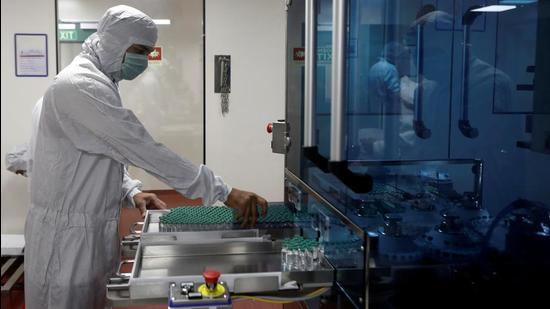
Of the 28 laboratories in the country that are part of the Indian SARS-CoV-2 Genomics Consortium (INSACOG) group, five are from Pune, a highest for any city in the country.
Pune Divisional Commissioner Saurabh Rao on Monday said, “As of Sunday evening nothing adverse has been reported with no samples tested positive so far for the Omicron variant. However the laboratories are fully geared to do genome sequencing in full swing and we are fully utilizing the labs as well.
According to Rao the administration is in touch with NCL and ISSER.
The primary goal of INSACOG is to begin sequencing work on Covid-19 positive samples sent in from across the country.
In the wake of the new Covid variant, Omicron, these five labs are now geared up to restart genome sequencing.
At least 650 samples have been sent for genome sequencing to various labs in Pune of samples that have tested positive for the infection. However, experts have also said that specific RTPCR test kits should be used for detecting the infection to reduce the load on labs for genome sequencing.
The five labs that are part of INSACOG also form the Pune-COG consortium of laboratories that work on Pune samples. These include National Centre for Cell Sciences, (NCCS), National Institute of Virology (NIV), National Chemical Laboratory (NCL), BJ Medical College and Indian Institutes of Science Education and Research (IISER).
INSACOG is a multi-laboratory, multi-agency, pan-India network to monitor genomic variations in the SARS-CoV-2 by a sentinel sequencing effort.
Dr Rajesh Karyakarte, head of the Microbiology department at BJ Medical College said, “Looking at the threat of Omicron, RTPCR positive samples from November are being processed by targeted accelerated sequencing. Around 100 samples have been sent to NIV, 350 to IISER and NCL, 100 samples to be processed at BJMC and 100 samples to be sent to IGIB, New Delhi. These could be Delta positives and are from the Pune and Ahmednagar region alone.”
The expert view
Experts also said that the specific RTPCR kits should be used for the detection of the new variant among samples. Dr Neeta Munshi who is associated with Ruby Hall said, “We have come across several articles that state that if the S-Gene is present in the detection kit then it would pick up the Omicron variant, otherwise the RTPCR kit may not be able to pick up this particular variant. However, we do not have any practical experience on the same as of yet.”
Dr Raman Gangakhedkar, former chief of the Indian Council of Medical Research (ICMR), now part of the World Health Organisation’s (WHO) scientific advisory group, said, “The S gene drop out gives us a fairly good indication that whether it is a new variant or an alpha variant that comes sform alpha lineage. So one has to look at using kits like Taqpath, which would be useful in reducing unnecessary load on genomic sequencing. In current genomic sequencing the delta variant continues to be a predominant variant which is there in India and even if we do more genomic sequencing it may not yield in more samples and so we need to have a smart strategy.”
Ministry of health and family welfare issues guidelines for travellers
On Monday the central ministry of health and family welfare issued a set of guidelines with regards to international travellers and the new variant of concern, Omicron, with which it directed states/UTs to proactively ensure testing as per guidelines and to send positive samples for Whole Genome Sequencing. “They should also proactively liaise with other States/UTs to ensure effective follow-up of international travellers after disembarking. All passengers from ‘At-Risk’ countries are mandated to be subjected to RT-PCR testing upon arrival. Random RT-PCR testing must also be done for passengers from all other countries,” the directive stated.
“The individuals turning positive must be managed at separate isolation facilities as per guidelines, and the results must be sent expeditiously for Whole Genome Sequencing. The contacts of positive travellers must be kept under institutional/home quarantine and must be strictly monitored by the States/UTs. The untested passengers and those turning RT-PCR negative must be followed up by the State Surveillance Units on Day 2 and Day 5, and their RT-PCR test must be conducted, if found symptomatic. They should ensure that every international traveller from these “At-Risk” countries is accounted for, tested, and positive samples sent promptly for Whole Genome Sequencing to designated INSACOG Genome sequencing Laboratories (IGSLs). The sentinel and surge surveillance through the Sentinel Surveillance Sites established in the States/UTs must also be carried out as per INSACOG Guidelines, to ensure that all such positive samples are sent expeditiously for Whole Genome Sequencing,” the letter stated.


