
 E-Paper



Sheep breeding and making of Deccan mutton economy
There was a large meat-eating population in India then, since not only Europeans, but all Muslims and several Hindus were mutton-eaters

 Prefer HTon Google


In the nineteenth and early twentieth centuries, mutton was an important source of protein in the Indian diet, but the production was low, and the quality of mutton was not good. The patterns of sheep and goat rearing in the Deccan, especially around Poona, along with early colonial and postcolonial efforts to improve breeds for better meat and wool, reveal the complex relationship between diet, pastoral practices, and agricultural policy.
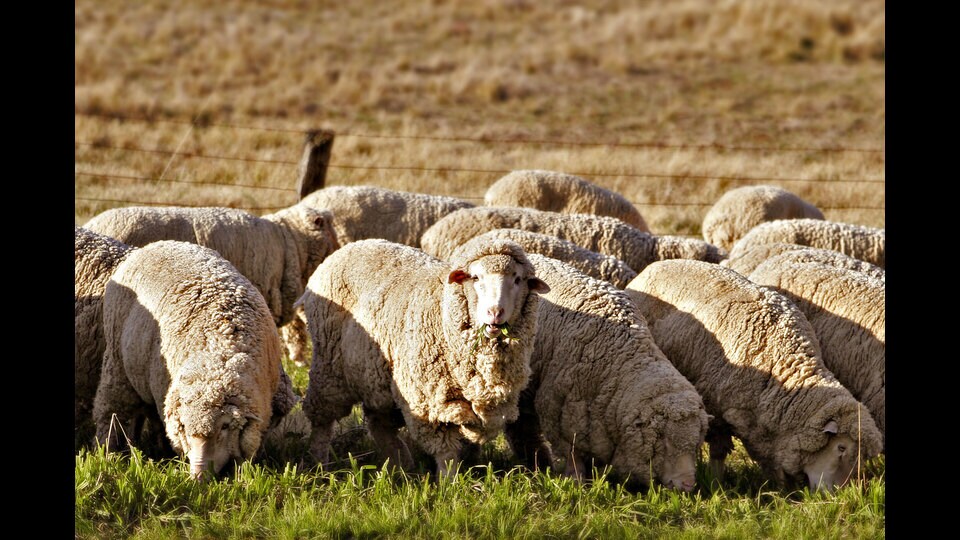
There was a large meat-eating population in India then, since not only Europeans, but all Muslims and several Hindus were mutton-eaters. Among natives, goats’ flesh was much more widely consumed than that of sheep. In large towns, those who could ate meat daily. But in small villages, it was a great luxury to have meat a few times a year, perhaps during a feast, or when some vow was made, and a sheep was offered as a sacrifice to one of the numerous deities.
Sheep and goats were kept in the Indian subcontinent for wool rather than for meat.
One of the earliest mentions of Deccan sheep was the brief mention of them by Dr Hove in 1787. He said of the people of the Deccan – “Of sheep they had some, and they were the finest that I saw in India, with long wool, which was so soft and white as the finest Guzerat cotton. The inhabitants made their winter covering from this wool, and although they are made up together of a thick texture, yet remarkably light in proportion.”
In “A Manual of Indian Cattle and Sheep” (1889), John Shortt mentioned that the majority of natives preferred quantity to quality, no matter how old and tough the sheep, as long as it was of large size. Shortt, and many like him, believed that few people in India ever took an interest in the improvement of the breed of sheep; all they cared for was their mutton, and with that view, they would get together several sheep of any breed and feed them on grass.
In many villages around Poona, it was uncommon for individuals from the Dhangar caste to own sheep. Keeping a flock of breeding sheep was also rare, except among wealthier Kunbi farmers. Most Kunbis who cultivated garden land tried to maintain their own flock, and typically, each village had three or four such farmers with sheep.
Poona provided a ready market for as many sheep as the district could supply. Sheep brokers and mutton butchers regularly travelled from Bombay to purchase goats, kids, sheep, and lambs, paying between Re 1 and ₹4 per animal in 1884. According to the Gazetteer of Bombay Presidency, sheep for stock were brought by the score, the price varying from ₹18 to ₹60. The price was sometimes as high as ₹80 when the buyer chose each sheep, picking one ram and nineteen ewes, all between three and four years old and of good colour.
Two distinct varieties of sheep were traded: the local, or “desalu”, priced from ₹1 to ₹10, and the “dumba”, a long, broad-tailed breed (the name derived from “doom”, meaning tail), which fetched between ₹4 and ₹10.
The long-tailed sheep included three varieties, “Yaipuri”, long-tailed and white with a black patch or two; “Kabuli”, broad-tailed, short-legged, and white or white and black; and “Yelga” from Karnataka, tall, broad-tailed, and of many colours.
Efforts towards the improvement of sheep in the Deccan date as far back as 1836, when a project for the development of the mutton and wool industry was launched by the East India Company in Poona and Mysore. A large number of flocks of selected sheep were stationed at Ahmednagar and near the forts of Jivdhan, Nimgiri, and Hadsar near Junnar in Poona district.
Fine-wooled stud rams were imported from England and Cape Colony for crossbreeding with the local sheep. The Saxon, Cape Merino, and Southdown were the main breeds of exotic sheep. But the project was soon abandoned.
In 1892, Veterinary-Captain J. W. A. Morgan brought to Ahmednagar a small flock of 70 to 130 breeding ewes from Baluchistan, the Deccan, Rajputana, and Australia, including Merinos, and crossed them with Siah Band (Dumba) rams. He wanted to check if the sheep from the various parts of the world could be acclimatised in Deccan and eventually be bred at Poona for wool and mutton.
After a decade of experiments, he concluded that the Dumba-Deccani cross was the best for Deccan, and his flock eventually consisted of only pure Dumbas and Dumba-Deccani crosses. These half-breds were very good mutton sheep and were particularly shapely. They thrived well in dry conditions in the Deccan.
Morgan sold the fat lambs of this breed to butchers from Poona and Bombay, and some of the rams eventually found their way to New Zealand. They were much appreciated by the breeders there.
In the early twentieth century, Rajputana sheep supplied the Bombay and Poona markets with mutton. They were mostly white and larger than ordinary. These were the finest and largest sheep in India, and many of them were annually sent in droves to different parts of North India for sale. Hence, the same breed was frequently designated as Delhi, Jhansi, and Tattyghar sheep. They had poor wool, but the mutton was large, and they got fat quickly.
The agriculture department promoted breeding in the 1920s by telling the breeders that sheep breeding was a very remunerative industry and was suitable for certain parts of Bombay Province where cattle breeding was not possible.
Poona breeders, in their efforts to improve mutton breeds of sheep, generally aimed to achieve better body symmetry, promote early maturity, and reduce any coarseness present in the original breeds.
However, these attempts were not always successful and not much was accomplished until the early part of the twentieth century. Important developments were the formation of a separate livestock section in the agriculture department in 1919, a well - established sheep breeding section at the livestock farm at Hissar in Punjab in 1936, from where sheep were brought to Deccan and a sheep breeding station at Poona in 1937. Following this, many technical programs were started for improving wool and mutton production through selection and crossbreeding.
The Sheep Breeding Research Scheme of 1937 in Poona was subsidised by the Imperial Council of Agricultural Research. The main lines of scientific works were the improvement of the Deccan breed of sheep by selection, crossing with the imported Merino breed, and thorough investigations into problems of feeding and management of the flocks.
These developments marked a turning point, as sheep breeding in the Deccan began to move from scattered, individual efforts to more organised and scientific programmes. After independence, this momentum continued, with the Indian Council of Agricultural Research turning its attention to improving sheep and goat breeds for mutton. In 1952, a scheme was launched to study breeds such as the Nellore, Mandya, and Tonguri, and to develop superior hybrids through crossbreeding with hardy fat-rumped sheep from Somaliland and the Dumba sheep, suited to local conditions.
Yet, the story of how these ideas were implemented on the ground, especially at the sheep breeding station in Poona, deserves a closer look, which will be explored in a future piece.


