
 E-Paper



Startup Mantra: Making a harvester for Indian farms
A delay in receiving their job offer letters led the duo to start their own company, Shstra, a startup that has built an electric harvester, which has had its prototype tested at Pune’s Venture Center


Two friends, Yash Raut and Atharva Patki from Amravati, were waiting for their job offer letter after clearing their interviews. Since it seemed to be taking an inordinately long time, they decided to take a trip to Pune, a trip that changed their lives and led to starting “Shstra,” a startup empowering farmers with smart, efficient, and sustainable harvesting solutions.
Curious minds
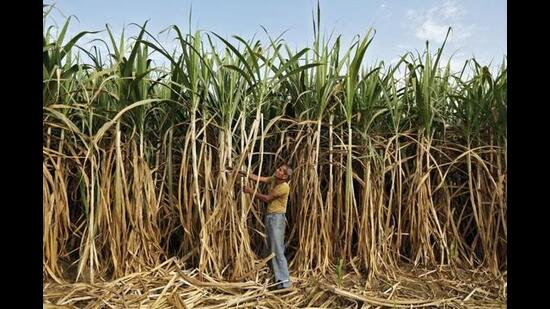
Says Yash, “Since we were at a loose end, Atharva, who had done an internship at Digital Impact Square, a Tata Foundation Initiative where he had some exposure to agri-tech, suggested that we take a trip to the sugarcane fields at the outskirts of Pune.”
They met some farmers who had their farms along the Pune-Solapur Road and casually spoke with them about sugarcane farming. “These talks were real eye-openers,” says Yash. “We understood that they had huge problems with labor since the next generation was not keen on farming. They explained to us how the ecosystem works and highlighted a few key issues. They mostly had problems with harvesting since that is very labor-intensive, while cultivation was relatively easy.” Since the farmers told them about the various mechanical harvesters in the market, Yash and Atharva decided that they needed to take a deeper look at them. Since Shaktiman and John Deere had their presence in the city, they decided to visit them.
Problem that inspired
Says Yash, who had a graduate degree in mechanical engineering, “We saw how the harvester engineering was done. We observed some limitations of these machines that were basically created for large farms. They would work well on large 200 or 300-acre farmlands, and not for the average Indian farmer whose farm size was about 2 acres. Their harvesters were huge, and they chopped the sugarcane. Chopper harvesters take about eight hours to chop 2.5 acres of land. This was simply too expensive for a small farmer who generally will hire a harvester since he cannot afford to buy one for himself, as the cost goes over a crore.” Yash informs that a sugarcane farmer will register himself with a sugarcane mill and then start cultivation. It is this mill that pays the harvester and deducts these charges from his dues. In general, the cost of harvesting from a machine works out to ₹200 to ₹300 more than manual harvesting.
Looking deeper
The trips to the fields, the talks with about 20 farmers, and visits to agri-tools’ companies were all churning in their heads while they waited for their offer letters. Says Yash, “We came to the conclusion that the farmer needed a harvester that was made for the size of his field, that was affordable and would not chop up the cane like the current ones did, but cut them in the required manner.”
The quest to find a solution that would work for the farmers was indeed very exciting. Says Yash, “Since we barely had any experience, not even in our family backgrounds, we had no guide or mentor, so we started doing our own desk research. We found out what the Total Addressable Market (TAM) is and who that should be, how to prepare a business report, what we will need in terms of money, manpower, materials, finance, and so on.” In November 2023, the duo received their job offer letters. But now they were more interested in finding a solution to the farmers’ problem than taking up the job. They spoke to their families and explained in detail what they wanted to do and why they were refusing the jobs. The families agreed. Now they had a new ‘job’ to do.
Initial steps
Both the youngsters who had just stepped into their twenties had no knowledge of making harvesters, had no training, and had no mentor. But they had plenty of enthusiasm and sincerity to find a solution to the problem. They started with the only way they knew. “We did some more desk research to get some numbers. We found that the total addressable market was USD1.5 billion in India per year. From a commercial point of view, that was a good place for us to start. We identified sugarcane harvesting as our niche, and by early 2024, we started work on our design,” says Yash.
Yash and Atharva rented a flat in Pune and started work on the design of their harvester. “We wanted it to be small, capable of working on a two-acre field, that it should be electric, and that it should not chop the plant.
“We envisaged three operations for our harvester. One, it will do the cutting at the base. The chopper method takes the whole plant with the leaves, etc, and chops it into small pieces. Two, it will do what we call de-topping – that is, cut the green leaves on the top, and three, it will do de-thrashing or cut off the yellow leaves, etc, from the stalk. After these three operations, you will get only the useful portion of the sugarcane, the stalk used by the sugar mills.”
They received ₹5 lakhs from government grant and a fellowship of ₹30,000 per month from another government grant. This enabled them to focus on work without worrying about the bills.
For the next eight months, the duo worked on their design for an electric harvester. Simultaneously, they enrolled for a programme where they learnt about the various government grants and applied for funds from the National Institute of Agricultural Marketing ( ₹5 lakh). By October 2024, they had their basic conceptual design ready, which showed what the harvester looked like and how it would perform. By June 2025, they had their prototype ready. Shstra had also enrolled with Venture Center’s incubator and was able to test their prototype. “Our prototype validation was successful, and in July, we started building it into a single harvesting machine.
Successful fund-raising
Yash and Atharva have so far invested a total of ₹50 lakh, most of which they have received as grants or from Venture capital (VC). Says Yash, “Our development cost is around ₹50 lakh, funded mostly through grants. Contributions include NIDHI SCHEMES, SELCO FOUNDATION, and the Department of Agriculture of India, along with ₹5 lakhs of our own funds. Going forward, we plan to raise ₹2–3 crore for pilot manufacturing and commercialisation.”
Competition
So far, their competitors are global players like John Deere and Case IH, who dominate with large, reliable but very costly diesel machines, and Indian players like Mahindra and Sonalika, who focus on tractors and implements. Says Yash, “Their products are either too costly, not emission-friendly, or not fit for small farms. Our unique selling proposition (USP) is being the first fully electric, compact, and smart sugarcane harvester made specifically for India, which makes us affordable, green, and practical.”
Getting to the market
Yash is confident that they have tapped into a real need. Says he, “India has about 5 million hectares under sugarcane, yet mechanised harvesting penetration is below 15%. This is a massive untapped market. Our strategy is to start with sugar mills in Maharashtra and Karnataka, partnering with contractors and farmer-producer organizations who manage harvesting operations.”
What the future holds
Shstra aims to roll out pilot commercialisation in 2026, scale production by 2027, and later adapt the same platform to crops like maize and cotton. Says Yash, “Alongside the machine, we are also developing the HATS digital platform for real-time data sharing between mills, farmers, and fleets.”
At 21 and 22, they refused the jobs they were offered to build a harvester made for Indian farms. From their progress so far, it looks like sugarcane farmers will see a huge change in the way they harvest their crop.


