
 E-Paper



Startup Mantra: Unlock trapped cash through ‘Cashinvoice’
The Pune-based supply chain financing platform enables comprehensive payable and receivable management solutions that digitize the way businesses pay and get paid

 Prefer HTon Google


PUNE The smallest vendors, distributors or retailers in a long-tail supply chain are often ignored or given the least priority by conventional banks and non-banking financial companies (NBFC) as their financing requirements are scattered and of low-ticket size. Today, most micro, small or medium enterprises looking for working capital take business or personal loans and thanks to higher interest rates, the cost of financial servicing for them is very high. Identifying these gaps in supply chain financing, Cashinvoice, a digital invoice and supply chain finance marketplace designed to unlock trapped cash in the supply chain was launched in 2018 by Arun Poojari and Shrinivas Kasar.
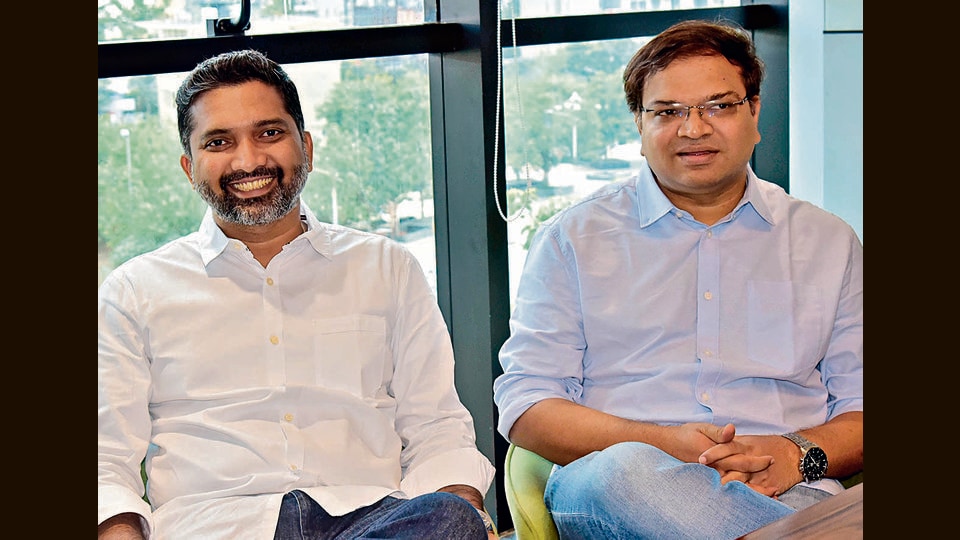
The Pune-based supply chain financing platform enables comprehensive payable and receivable management solutions that digitize the way businesses pay and get paid. It offers dynamic invoice discounting to some of India’s leading corporates.
In the beginning
Poojari and Kasar have about two decades of experience in the financial services industry and both have worked together in ICICI bank and Tata Capital since 2005. Pune city is where the duo came together and had their first business idea of setting up a microfinance company, however that idea could not be realised then.
Kasar said, “While working together between 2010-16, we both realised the potential of supply chain financing for the smallest stakeholders in the value chain. Since we had experience working in the small and medium enterprise (SME) banking space, we knew the challenges faced by conventional banks to achieve their targets. For doing a business of ₹5 crore, the relationship managers would prefer to tap big customers instead of small ones. This was because the documentation required and policies for assessing a customer of ₹5 lakh or ₹2 crore are almost the same. We realised that this problem can be solved digitally.”
“Digital has the power to bring equality in the supply chain financing ecosystem. When we talk about the bottom of the pyramid and creating value for the smallest stakeholder, it is possible only through technology. We decided to create this opportunity for the smaller players with a vision that any deserving entity should not worry about working capital,” he added.
Servicing cost
Cash flow management is a time-consuming activity that is often manual and prone to human errors. While these processes of payables or receivables are critical, the time, effort, and resources spent performing these functions are a significant profit drain to any business. Cashinvoice fulfils the growing need to manage such non-core but equally essential activities of companies efficiently.
Says Poojari, “We can reduce the cost of financial servicing through digitalisation. When we founded Cashinvoice, the idea was to link with an anchor company (large corporations), then their suppliers, distributors and retailer which essentially means the entire chain from procurement to sale to the last leg. Financing is a smaller element of it, but before the financing part comes in, we connect all stakeholders for the seamless transfer of information. This creates a lot of value for an anchor company.”
“Today, multinational corporations have the best of the systems. We are trying to offer their best practices to a mid-size Indian company to make such small companies competent enough. This will enable Indian companies to compete globally,” Poojari said.
Optimising cash flow
Cashinvoice optimises working cashflows through the digitalisation of invoices and leveraging supply chain finance to incentivise payable and receivables. The platform is built to offer a seamless, intuitive, and intelligent supply chain finance solution to corporates, their suppliers as well distributors.
Explaining further, Kasar says, “Supply chain financing can be divided into two parts - the supply side and demand side. On the supply side, the bigger players are covered under vendor financing programs and they get their bills discounted. But smaller vendors (up to ₹25 lakh) were never covered under any programme. On the other side, district-level distributors are well funded, but the people below like multi-brand outlets, mom-and-pop stores, etc are the ones who struggle for working capital. We try to reach to the long tail of the supply chain ecosystem on the supply as well as the demand side.”
“We have more than 50 corporates and the stakeholders in their ecosystem with us to whom we provide cutting-edge technology automating end-to-end processes from purchase order creation, invoice generation, payment clearance, reconciliation to settlements. This automation allows enterprises to focus on core commercial activities to scale their businesses by prioritizing efforts in the right direction,” Kasar added.
Initial challenges
Cashinvoice is not about any breakthrough technology says Poojari. “We have been doing this for the last 12 years in our corporate career. The only difference is that instead of the physical way, we wanted to digitise the entire process. The idea is about a sustainable model while reaching out to the lowest of the leg so that we can create value. Fortunately, India had financial frameworks in place and we had the experience, backing and market connections. The biggest gap we had was to get the technology platform in place.”
“We had decided to bootstrap. We struggled a lot to get our platform ready. We were not ‘tech people’ and we were getting into the tech business. Most investors would also ask us who is the tech guy amongst you. So, we got one who could deliver a great product. Nine months after starting this journey, we got the first transaction. A lot of mental recalibrations were also required as we had to again wear the hat of ‘relationship managers’ to get business. However, we believed in one mantra. Customers will always give us one chance for all the goodwill we have created over the last 12 years. Our worry was what if we fail in that chance and we must not fail their belief and faith in us,” he added.
Poojari and Kasar managed to onboard Tata Motors as their first customer. “There was an existing problem statement which was unsolved due to cost and understanding factor. They asked us to solve it and we did it in about five months. People started recognising us. Our first customer gave us visibility and helped in stabilising our systems. Subsequently, during the Covid-19 outbreak and lockdowns, we also got time to recover and build our systems.”
Leveraging data
Explaining how the system works, Kasar said, “We integrate with the ERP systems of the anchor companies to leverage the data. We funnel out the information to a certain level to select the customers we want to target. We then reach out to them through a digital medium, typically SMS, Whatsapp, etc. They can complete the onboarding journey which is completely paperless. We don’t ask them to upload any documents. Once the customers complete the onboarding process, we show them their eligibility and get the document signed.”
“Compare this vis a vis somebody who is going for a business loan with a bank or NBFC, they have to submit a lot of documents, answer queries, etc. With us it’s a seamless process primarily because we have already shortlisted, and done the analysis, even before we reach the customer, we already know that he qualifies in our criteria,” he stated.
Assessment
Banks give a lot of importance to past track records like bank statements, balance sheets, income tax returns etc, but when it comes to micro or small enterprises which are still out of the formal financial system, they don’t have these documents in place. Cashinvoice gives importance to the current transaction history which basically comes in form of a ledger between the buyer and seller.
Poojari says, “The ledger gives a complete insight into how the transaction has been between the two parties. For example, if a particular buyer buying from a seller has more or less paid on time, very minimal or no cheque bounces or no sales good returns etc. This shows that there is a healthy trade relationship and this can be a good customer. This is how we shortlist our customers.”
“Post shortlisting, when we reach out to the customer, we do some basic checks like a credit bureau, GST returns, etc. We enhance that data further so that we arrive at a credit note which is system generated. That’s where we show the customer their eligibility,” Poojari said.
Future plans
According to Kasar, the problem for the long-tail supply chain is the same across the globe. He said, “Entrepreneurs from advanced countries face the exact same challenges as Indian entrepreneurs do. Also, most supply chain financing happens only on the supply side of the equation in western markets. The way we do it in India is much more efficient and better way. India is a progressed country in the financial landscape. Hence, our goal is to go global and capture the western, European and South East Asia markets.”


