
 E-Paper



Sutradhara’s Tales: For the love of wrestling
Local tradition has that gymnastics, bodybuilding, and lejhim (folk dance form) became popular from Chhatrapati Shivaji’s times. This included the special form of the “kusti” (Indian wrestling) known as lalmati (red earth)

 Prefer HTon Google


The Maratha state was probably unique in the active encouragement it gave to the culture of physical fitness among its subjects. The veneration of physical strength (balopasana) as a state policy traditionally goes back to the great Chhatrapati Shivaji who wielded the hardy peasant stock into a disciplined fighting force. It is said that he encouraged sports to improve physical fitness amongst his troops.
Local tradition has that gymnastics, bodybuilding, and lejhim (folk dance form) became popular from those times. This included the special form of the “kusti” (Indian wrestling) known as lalmati (red earth). Shivaji Maharaj’s religious guide, Samarath Ramdas, popularised the worship of lord Hanuman as the embodiment of physical prowess and set up Maruti temples and talims (gymnasiums) in villages all over the kingdom. They acted as akhadas (wrestling schools) too, training a number of famous “kusti ustads” (masters).
The Peshwas and their nobles continued to patronise the talims throughout the 18th century with financial aid. A number of “ustads” became famous and enthusiasts from all over the country came to learn in the talims set up by them. Wrestling matches found a large and discerning audience in Pune.
Contemporary sources such as Peshwe Daftar, Patwardhan Daftar, Purandare Daftar and Parasnis Itihas Sangraha are filled with references of their healthy endeavour of exercise reflecting a healthy trend in the contemporary society. This entire talim eco-system is described using choicest vocabulary particular to exercise regime.
All the three senior Peshwas — Balaji Vishwanath, Bajirao I and Chimaji Appa — were well trained in athletic military capacities. Nanasaheb Peshwa used to strive in his own personal talimkhana on a regular basis. He had inculcated the same hobby in his sons, Vishwasrao and senior Madhavrao Peshwa. He extended his patronage to several well-known “malla” (professional wrestler) and “jethi” (pugilist).
A letter from Nanasaheb’s personal diary from 1754 records the expenses of nine annas of Chameli oil to hone the exercise wooden clubs (mudgal). Other records mention the list of “exercise ornaments” such as “Naal” (hollow stone cylinder with a handle inside), “Kharbuji”, “Sota” (thick piece of long, straight wood), “Farshi” (slab), “Mudgal” (club), Gada (mace) made of wood, silver, iron, stone and other metals handed over to talim guards and “jethis” for exercise.
A young lad, Anandrao, was trained since his juvenile age by Nanasaheb to be an accomplished wrestler. Nanasaheb offered him for professional contests on occasions with wrestlers from other regions. Once, when Nanasaheb was at Satara, a group of “jethis” challenged Shahu Maharaj at his court. Nanasaheb offered Anandrao to fight the challenge in front of Shahu Maharaj. Anandrao not only won the challenge but in the process, caused the opponents’ death! This gruesome event did not dampen Shahu Maharaj’s spirit who in fact felicitated Anandrao with a gift of land grant.
Sadashivrao Bhau, son of Chimaji Appa, was an avid lover of body training. It is said that he continued his daily routine even on the battlefield of Panipat by practicing thousand push-ups (Surya Namaskar). He was so habitual to his daily exercise that he could not refrain from it until the wounds would heal from a failed murderous attack by Muzafarkhan Gardi during the Udgir campaign. He writes to Nanasaheb that he shall only feel better and gain lost strength when he shall be able to continue his daily exercise routine.
Raghobadada, Bajirao I’s son, too was known to make daily trip to akhada for working out. He was quite involved in the wrestling events that were organised every now and then in Pune. In one letter to his brother Janardan when he is away from Pune, he writes, “Do arrange the fighting match (zombi) between Mohammad Husain and Dholya. I have suggested Nanasaheb to do so. I am confident that Dholya will win over Mohammad in this. Please let me know the outcome”. He writes to Sadashivrao Bhau that Chimaji Appa and himself are betting over the outcome of this fight and hence urges him to arrange the game as soon as possible.
Elsewhere, he records about his routine of push-ups, at least two times a day and horse riding.
One intriguing record informs us of talim expense on incense sticks for Vishwasrao and Madhavrao (Nanasaheb’s sons)! There existed the general practice that the exercise set should continue till the burning out of entire incense stick!
Nana Phadnis took great care that Sawai Madhavrao Peshwa was well trained in all aspects of body exercise and military training.
A famous letter by Gopikabai, grandmother of Sawai Madhavrao Peshwa dating November 8, 1783, provides elaborate advice about how daily exercise regime is to be maintained.
She writes, ”One should practice push-ups on daily basis and increase the sets as per the increasing body capacity. Exercise should be carried out with group of 5-6 lads of same age, two “jethis” and one trusted master for guidance. One should learn different type of wrestling moves from “jethis” and make sure the body strengthening diet is consumed regularly and shared with fellow trainees.”
Sawai Madhavrao was particularly fond of “Vajramuthi” and “kusti” type of wrestling and would continue the training even after mouth and nose bled. Fellow trainees were known to have injured during such a session.
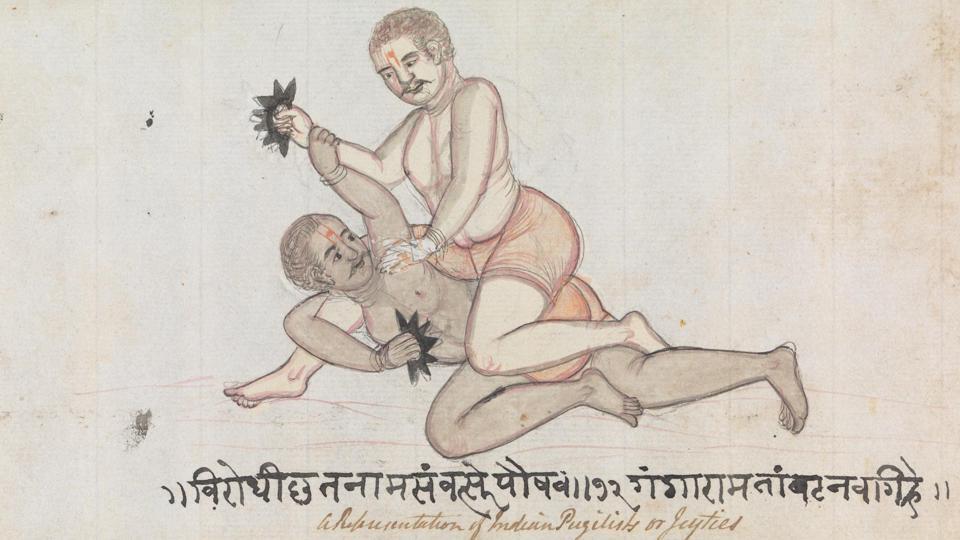
Gangaram Tambat Navgire has drawn several representations of professional “jethis”. Many wrestlers came from Solapur district and Karnataka who practised a particular form of wrestling. James Wales in his notes writes, “These practitioners go to different parts of India and are entertained by different rajas and princes before whom they held contests with great show and apparatus.”
Bajirao II, son of Raghobadada, was known for his strong built and recklessness since childhood. His own master provides the testimony to his liking for all the physical activities and disdain for studies. He says, “Bajirao II would not mind gym training for entire day and according to master, roamed around like an unchecked elephant!”
Medieval love of traditional wrestling continued into colonial period, lending a thriving talim culture to the city of Pune. We shall explore it in the next column.
Saili Palande-Datar is an indologist, environmentalist, history researcher and farmer. She can be reached at sailikdatar@gmail.com


