
 E-Paper



Taste of Life: Experiments with weight loss manuals and fashionable diets
Dr Wilhelm Ebstein’s method of treating obesity was already known in European medical circles before his ideas reached ordinary readers in India

 Prefer HTon Google


In 19th-century India, corpulence became a political disqualifier. Colonial thinking increasingly linked bodily discipline with political authority. British writers portrayed the stoutness of wealthy Indian elites as a moral weakness, while the lean English body was celebrated as proof of discipline, modernity, and fitness to rule.
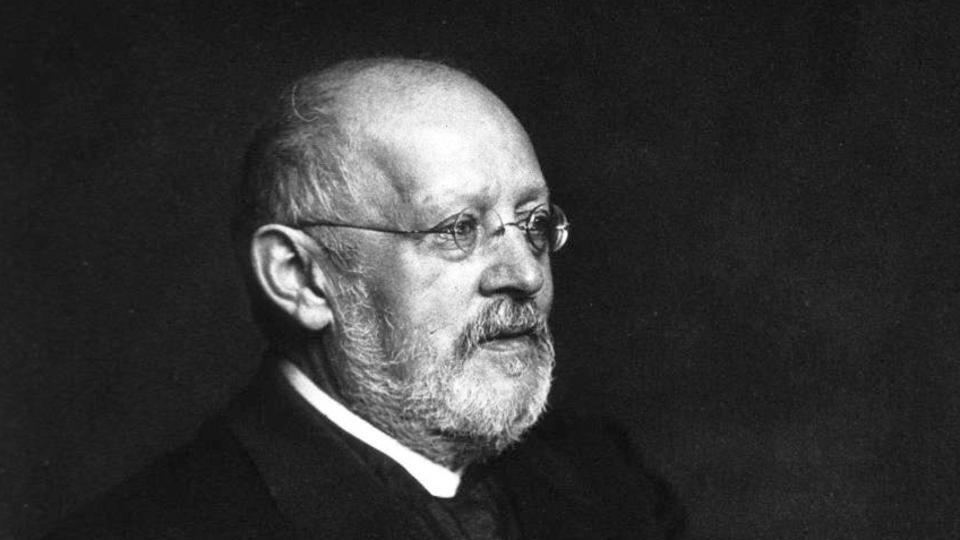
A little green-covered book, titled ‘Corpulence and its Treatment on Physiological Principles’, became quite a rage in Bombay and Poona in the winter of 1884. People began gifting the book to one another. A newspaper in Bombay, while commenting on its growing popularity, noted with amusement that people would present the book at Christmas, saying, “You do not really need this book, of course, but it may still help you acquire a more elegant form”.
The said book was meant to advise on treating obesity and was written by Dr Wilhelm Ebstein. It was translated from German and “adapted for popular reading” by Prof AH Keane, an “ingenuous and philanthropic physician”, from London.
The tremendous success of this book in the Bombay Presidency, and elsewhere in the world, was remarkable since Comte de Chambord was said to have died in the summer of 1883 indirectly as a result of “reducing his enormous bulk by diet”. This opportunity was seized upon by the daily newspapers to warn the public against the adoption of a “reducing diet”. As a result, methods to treat obesity with changes in diet had come under the strictest scrutiny.
Although William Banting’s method of weight loss (1863) was already familiar among the upper ranks of British colonists in India and the term ‘Bantingism’ had gained currency, Joshua Duke’s ‘Banting in India’ had not yet been published when Ebstein’s ideas started becoming popular in the Bombay Presidency.
Ebstein was a German physician and a professor at the University of Gottingen, where he subsequently served as director of the university hospital and dispensary from 1877. It is there that he conducted his research in Chemistry and disproved the notion that “fat and butter produced fat”.
Ebstein’s method of treating obesity was already known in European medical circles before his ideas reached ordinary readers in India. His approach rested on a few key principles: excess fat should be reduced gradually, the diet had to be maintained for life, and meals should include considerable fat, moderate amounts of “proteids”, and very little starch or sugar.
The main feature of Ebstein’s system was its greater emphasis on fat and reduced intake of “proteids”. “Proteids” is an older scientific term that was commonly used in the 19th and early 20th centuries for substances rich in protein. In modern science, the word has largely been replaced by “proteins”.
At the time, many physiological chemists believed that body fat was largely formed from “proteids” or “albuminous substances” through partial oxidation, and that starch, sugar, and fat contributed to obesity because they were easily oxidised in the body. Ebstein, however, rejected the idea that simply eating fat led directly to fat accumulation.
He, in his diet, excluded carbohydrates, sugar, all sweets, and, besides potatoes, excluded carrots, turnips, parsnips, and beetroot, but allowed asparagus, spinach, cabbage, and the leguminous vegetables. Meat was allowed, as was the lean fat. The fat, according to Ebstein, diminished the sensations of hunger and thirst and played a special role in preventing the conversion of proteins into fat. He did not set strict limits on the quantity of liquid consumed.
Ebstein’s diet was frequently compared with Banting’s system, though Ebstein emphasised moderation and digestion more than strict prohibition. Banting’s regimen strictly restricted bread, sugar, potatoes, beer, and sweets while promoting meat and rapid weight loss through disciplined control.
Ebstein’s method was comparatively moderate. Though he, too, blamed carbohydrates and sugars for obesity, he allowed a more balanced intake of fats and focused on careful eating, digestion, meal timing, and avoiding overeating.
An article in ‘Scientific American’, published on September 26, 1891, stated that Ebstien’s diet was “much better tolerated” than that of Banting, and yielded “as good, or even better, results”.
By the mid-19th century, especially during the 1850s and 1860s, obesity increasingly came to be viewed as a medical condition requiring treatment rather than simply a sign of wealth or prosperity. Although concerns about excessive corpulence had existed earlier, this period marked the rise of organised dieting practices and medical approaches aimed at managing body weight and improving health and longevity.
British surgeon William Wadd was a pioneer, describing obesity as a disease and a “mechanical obstruction” to health, publishing ‘Comments on Corpulency’ in 1829, which included autopsy cases and dietary advice.
An account of “reducing fat” was published by Brillat-Savarin in his famous ‘Physiologie du Gout’ (1843). After saying that the first cause of obesity was predisposition, he wrote: “The second and principal cause is in the flours and starches, of which man makes the daily basis of his nourishment. The starch produces its effect most quickly when mixed with sugar”.
This was followed by several methods to treat obesity. Chambers’ Method was one of the earliest systematic modes of treatment for obesity. It consisted of cutting off the fat and carbohydrates and limiting the intake of fluids. Ernst Schweninger’s diet restricted the use of fluids with meals. Schweninger was Bismarck’s physician, and his diet had kept down the famous statesman’s weight. Schleicher, a physician from Antwerp, modified Schweninger’s diet to include fluids with the meals.
Jean-François Dancel, in 1863, recommended plenty of albumen and a fair amount of carbohydrates. Physician-scientists like Weir-Mitchell, Salisbury, Yeo, Bouchard, and Dujardin-Beaumetz published their own diets that became topics of discussion in Europe and the colonies.
On May 23, 1885, a Bombay newspaper published an editorial declaring that obesity was to be regarded as a disease, a “gradual yet a true perversion of a normal state”. It described Bantingism, but maintained that “many persons placed on such a diet, while certainly reduced in bulk, felt so weak, dyspeptic, and wretched that they were unable to persevere”.
It also described in detail the Ebstein diet. However, the editorial, with due deference to Ebstein, and to other doctors who “vaunted their systems of reducing fat”, definitively declared that “habit of life” had more to do with growing stout than any other “agency”.
The editorial sparked considerable discussion across the Presidency, with newspapers publishing letters on the subject for months afterwards. Written under colourful pseudonyms, these letters described readers’ experiments with Bantingism, Ebsteinism, and other fashionable diets.
One correspondent from Poona, signing himself “Heavy Weight”, argued that such diets could actually worsen obesity, since many stout people already ate sparingly and the quantities prescribed in these manuals exceeded their normal appetite. Another writer from Poona, calling himself “Swami”, remarked that “even a dog got fat if he did not move”, insisting that physical exercise remained the only real cure for obesity.
These manuals by Banting, Ebstein, and others brought scientific ideas that were once confined to chemistry textbooks and medical journals into everyday conversation. Terms such as ‘carbohydrates’, ‘albumen’, and ‘nitrogenous matter’ gradually became familiar to ordinary people and began to find a natural place in daily discussions about food and health.
The popularity of the weight loss manuals and the conversations around obesity, food, and exercise reveal how deeply politics, empire, and the human body had become entangled in colonial India.
Chinmay Damle is a research scientist and food enthusiast. He writes here on Pune’s food culture. He can be contacted at chinmay.damle@gmail.com


