
 E-Paper



Taste of Life: How 19th-century institutes shaped western India’s agri-education
The development of agricultural instruction in colonial India began with the establishment of a department of agriculture in 1871

 Prefer HTon Google


On July 11, 1879, members of the Poona Sarvajanik Sabha met Sir Richard Temple, the governor of Bombay, at the Ganeshkhind Government House. The deputation was headed by Sitaram Hari Chiplonkar and included several dignitaries like Rao Bahadur Shrinivas Shesho, Rao Bahadur Chintamanrao Hari Deshmukh, Mahadeorao Yeshwant Raste, and Ganesh Vasudeo Joshi.
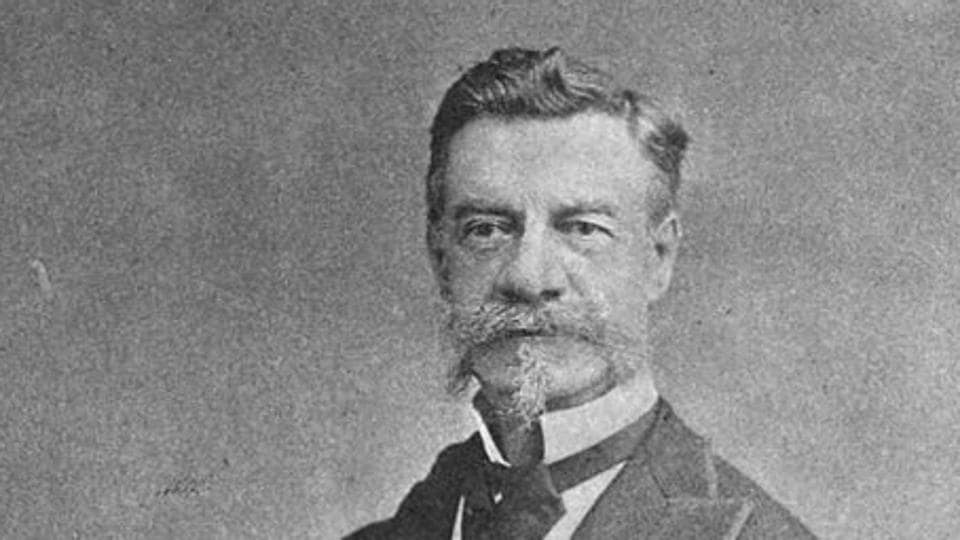
Chiplonkar introduced the members of the deputation to Temple and then delivered a speech praising the governor for his remarkable contributions to the development of education and the railway network in the Bombay Presidency. He spoke with particular enthusiasm about the establishment of agricultural classes in Poona and other parts of the Presidency. The question had become more pressing because several parts of the Presidency had recently suffered severe agricultural distress.
The previous year had been one of the most disastrous in many parts of the Presidency. Excessive rains, along with locusts and rats, destroyed crops, and in some regions these ravages created conditions bordering on famine. Bombay also witnessed a severe commercial crisis and a war on the frontier. Food prices rose sharply, employment became scarce, and agrarian crimes and outlaws’ depredations increased. After repeated crop failures and the spread of scarcity, the government began to pay more attention to agricultural improvement and scientific farming.
The development of agricultural instruction in colonial India began with the establishment of a department of agriculture in 1871. The department was created mainly because famines and scarcity kept recurring in many parts of India during the latter half of the nineteenth century. Although the imperial administration gradually recognised the importance of scientific farming and research, agricultural policy initially received little sustained attention.
Temple was one of the strongest advocates of agricultural instruction in the Bombay Presidency. Having succeeded Philip Wodehouse as Governor of Bombay, Temple brought administrative experience gained under John Lawrence in the Punjab. He combined a conservative outlook with a Benthamite concern for rationality and simplicity in governance and law.
In a minute dated October 29, 1878, Temple put forward a scheme for extending agricultural education. He recommended that agricultural instruction be introduced through modern Indian languages at the upper primary level by attaching farms to selected full-grade primary schools. He also advocated elementary instruction in scientific farming in all primary schools. In addition, Temple proposed appointing agriculturally trained persons as mamlatdars, mahalkaris, and clerks to popularise improved agricultural methods among the public. He further suggested that Patils, the village headmen, and talathis, village-level administrative officers, should receive elementary training in agriculture.
Temple’s scheme received official sanction toward the end of 1878. The pivotal feature of the scheme was the establishment of a College of Agriculture at Poona as the “Centre and Head” of the system. Accordingly, the Poona Civil Engineering College, opened in 1868, was renamed the College of Science, Poona, in 1879 after adding classes in agriculture, zoology, and physics. Students who completed the three-year course received a degree in scientific agriculture from the Bombay University.
In the following year, a seventy-two-acre farm was attached to the college to provide practical training to the students. The course was later upgraded to offer a licentiate in agriculture in 1889. Admission to the agricultural classes, however, remained restricted to matriculated students.
In a minute published in the government gazette on December 5, 1878, Temple observed that although Gujarat possessed considerable local advantages, Poona remained the most suitable location for such an institution because scientific equipment and trained teaching staff for higher agricultural education were already available there. He nevertheless hoped that a similar institution might eventually be established in Gujarat as agricultural instruction developed further.
The agricultural class at the College of Science initially opened with thirty-two students in 1879. By the following year, however, the number had declined to seventeen, fifteen of whom passed the final examination during 1880–81. Similar difficulties soon appeared in the agricultural classes attached to high schools. Eight such classes originally attracted 256 pupils, but attendance later fell to 188. Teachers lacked experience, promised textbooks were delayed, and suitable plots of land were often difficult to obtain near schools. Many pupils also regarded fieldwork as beneath their social status.
During 1881–82, the number of agricultural classes in high schools rose from eight to nine, while enrolment increased modestly from 188 to 209 pupils. Seventy students appeared for the prescribed first-year examination, of whom fifty-six passed. Despite these encouraging signs, the scheme remained expensive, with annual expenditure estimated at ₹ 6,000 for the agricultural college and ₹6,840 for the schools in 1879.
The scheme nevertheless continued to face serious obstacles. Students remained uncertain about future employment prospects, graduates lacked any distinctive title or status, and practical instruction suffered because of the absence of adequately sized farms and veterinary training facilities.
Some attempts at agricultural education had already been made in other parts of British India. The Government of Madras had earlier employed Mr Robertson, a graduate of the Agricultural Institution at Cirencester, to establish an agricultural school for southern India. Equipped with modern scientific appliances and extensive land for experimentation, the institution attracted many students from agricultural communities. Similarly, a department of agriculture had functioned for several years in the North-Western Provinces, though it did not appear to have devoted significant attention to agricultural instruction.
To Temple, however, the initiatives undertaken in southern and western India represented only the beginnings of what ought to become a much wider system. He believed that no branch of study was likely to prove more useful or popular among Indians. At the same time, he observed that many earlier agricultural experiments and model farms had failed because too few trained individuals were capable of conducting them successfully. Even where success had been achieved, he believed the benefits did not adequately reach the peasantry.
Temple therefore argued that one effective way of diffusing agricultural knowledge among the landholding classes was to ensure that Indian revenue officials received formal agricultural training. He proposed that all officers in the land revenue department should undergo agricultural instruction, senior officials through the college course and junior officials through the school course. Over time, he hoped that Patils, the village headmen, and the karkoons, the accountants, would also pass elementary examinations in agriculture.
Agricultural education in the Bombay Presidency largely developed along the lines suggested in Temple’s minute. Many of the early difficulties remained unresolved for years. Yet the scheme marked one of the first serious attempts to connect scientific instruction with the everyday problems of cultivation in the Bombay Presidency. The institutions founded during this period continued to shape agricultural education in western India long afterwards.
Chinmay Damle is a research scientist and food enthusiast. He writes here on Pune’s food culture. He can be contacted at chinmay.damle@gmail.com


