
 E-Paper



High-income group hold lion’s share in wet, dry waste generation in Pune: Report
The study, conducted between December 2021 and April 2022, recorded over 16,000 kilogrammes of waste, generated by approximately 10,000 residents across income groups


The recent report on waste generation covering Pune city reveals that high-income group is a major contributor of both wet and dry types. The study finds wet, followed by paper, plastic and sanitary taking most of the share of collected waste, said officials part of the study.
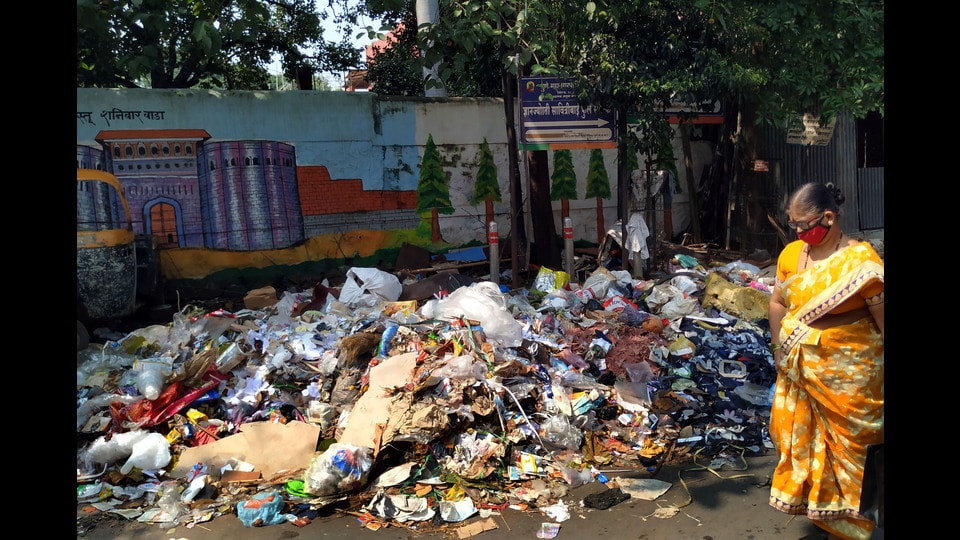
The waste characterisation report is a survey on household waste generation and recovery by waste pickers in Pune. The study, supported by the Pew Charitable Trusts and Plastic Solutions Fund, was conducted by Kashtakari Panchayat along with the Pune Municipal Corporation, the SWaCH Cooperative, and the National Chemical Laboratory (NCL).
The study, conducted between December 2021 and April 2022, recorded over 16,000 kilogrammes of waste, generated by approximately 10,000 residents across income groups. To cover the range of income groups, a stratified sample of 2,463 households (or 9,862 individuals) across seven locations was selected. At each location, waste was studied for 7-8 consecutive days to capture the cyclical fluctuations of waste generation. The audit was not conducted on the days, preceding, following, and including festival days during the period, namely Christmas, New Year’s, Sankranti, Holi, and Gudi Padva. After analysing the data, the report was published in March 2023.
According to the data, the daily waste generated by the high-income group is 0.386 kg/day per person, while the middle and lower-income groups contributed 0.263 kg and 0.130 kg/day per person. The average waste generation in the city is 0.238 kg/person per day.
The report indicates that people from high-income groups contribute more to the generation of both dry and wet waste.
Harshad Barde, director, SWaCH said, “Generally, it is understood that because waste is linked to consumption, the quantum of waste generated is directly proportionate to income levels/consumption levels - whether within countries (developed vs developing countries) or income groups (high income vs low income) in a city. The data also shows that the percentage of organic waste generated by residences of different income groups in Pune relatively constant – between 72% –76%.”


