
 E-Paper



ZP app to help teachers improve learning outcomes
Ayush Prasad, chief executive officer (CEO), zilla parishad, said the mobile app will have registered and verified teachers and management representatives


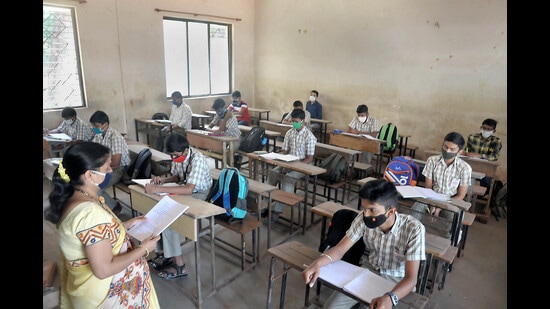
Pune zilla parishad (ZP) has developed an app-based social media platform for its teachers to improve learning outcomes under the Acharya Vinoba Bhave Shikshak Sahayak programme. The online facility will allow teachers to interact with each other, share teaching material and best practices. Over 7,129 teachers across 2,495 schools in Pune ZP and Pune Municipal Corporation (PMC) are participating in the programme.
Ayush Prasad, chief executive officer (CEO), zilla parishad, said the mobile app will have registered and verified teachers and management representatives.
“Each teacher has a unique identity and is linked to a 17-digit UDISE (Unified District Information for Education) code, a central government database project that records data of schools and students. Lot of emphasis is put on teacher engagement and motivation – as a way to create widespread self-embracement to adoption and change. Tools such as gamification, recognition, likes, share, rewards are used to build engagement. Vinoba programme helps in building alignment, increases speed while also increasing effectiveness,” said Prasad.
According to the education department, 91 per cent of schools in PMC have participated whereas 60 per cent schools from Pune rural have registered for the programme.
He said the programme focuses on teacher engagement, motivation and support in various forms.
“Schools are located in remote rural areas. Most schools have 2-3 teachers and some up to 10. They often teach multiple grades and multiple subjects. Apart from teaching, significant time is taken for other tasks, like department of children with special needs, monthly parent meetings, enrolling out of school children, book and uniform distribution, mid-day meal and teacher training. The isolation of small schools is a challenge. Teachers function best in communities and teams,” said Prasad, adding that the programme can help teachers in multiple ways.
“It can help in better incorporation of art, music, activities in classrooms through sharing of teaching resources. There can be more topic-centred clubs and academic and other events. Visibility and recognition of teachers across schools, clusters and in district. One important aspect is that there can be improved support for children with disabilities by improving teacher support through weekly plans and activities,” he said.


