
 E-Paper



Champai Soren opposes ST, minority dual benefits
“All the schools, colleges, and such educational institutions run by the churches in Jharkhand describe themselves as ‘minority institutions’ and take the benefits in lieu of that from the government. But they also take the benefits of the reservation meant for the STs. Both cannot go hand in hand simultaneously. No institution can take the benefits of both minority status and ST status,” Champai Soren posted on his Facebook and X pages on Saturday.

 Prefer HTon Google


The tribal movement demanding the delisting of converted tribals from the Scheduled Tribes (ST) list gained further momentum, with former chief minister (CM) Champai Soren saying on Saturday that minority status and taking benefits of ST cannot go hand in hand.
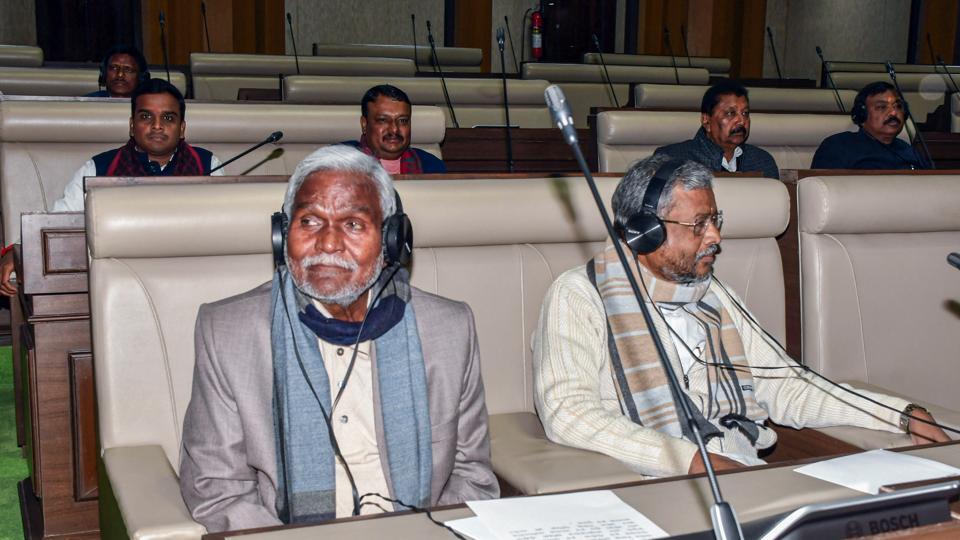
“All the schools, colleges, and such educational institutions run by the churches in Jharkhand describe themselves as ‘minority institutions’ and take the benefits in lieu of that from the government. But they also take the benefits of the reservation meant for the STs. Both cannot go hand in hand simultaneously. No institution can take the benefits of both minority status and ST status,” Soren posted on his Facebook and X pages on Saturday.
The statement assumed significance a day after the Kendriya Sarna Samiti (KSS) held a massive dharna in front of the Governor’s House (Lokbhawan) in Ranchi on Friday, demanding the delisting of converted tribals from the ST list. During the protest, KSS vice president and women’s wing president Nisha Bhagat tonsured her head in a symbolic gesture against the alleged dual benefits taken by converted tribals.
“Religious conversion is at an all-time high in Jharkhand, and the state government has completely failed to stop it. Tribal women are being insulted in the name of Changai sabhas (missionary healing cum conversion meetings), and the administration is silent. Converted tribals are now MLAs from 10 out of 28 assembly seats reserved for the STs in Jharkhand, and the government is running with their support. I have sacrificed my hair in protest of this, and if the central government fails to notify the Sarna religion code immediately, there will be Ulgulan (mass protests),” Nisha Bhagat, also KSS women wing president, told the media during the protest sit-in.
The KSS president, Phulchand Tirkey, said that their movement has now spread all across Jharkhand, and if their demand for the delisting of converted tribals from the ST list is not met soon, it would intensify further. The KSS also handed over a memorandum to Governor Santosh Gangwar, demanding an immediate and effective ban on religious conversion, protection of the Sarna faith, monitoring of the accused organisations, and effective implementation of the Freedom of Religion Act.
“This is not only against the letter and spirit of the Constitution but is also a direct attack on tribal identity, dignity, culture, and the Sarna religion. Muslims are also marrying tribal girls and getting land and other documents to encroach upon the exclusive rights granted to tribals under the Constitution. Original and traditional tribals are being denied and deprived of most lucrative posts, jobs, educational opportunities, and other opportunities. Once converted, they don’t follow our traditional religious and social systems and rituals. How could they still be considered tribals?” asked Tirkey.
Meanwhile, Champai Soren cited an example in Seraikela-Kharsawan district, after Santhal Parganas and East Singhbhum districts, to buttress his campaign against conversion and land grabs by Bangladeshi infiltrators.
“In the 1995 voter list of Seraikela-Kharsawan, you will see that people with surnames like Majhi, Tudu, Mahato, Mandal, Kumbhkar, etc., from the Adivasi-Moolvasi communities were the majority voters in Kapali area, adjacent to Jamshedpur but under Seraikela-Kharsawan district. But during the past few years, this Kapali has been turned into a colony of infiltrators by land grabbing, protected under the CNT Act,” Soren said.
“Several people from Kapali visited me on Tuesday and narrated the drastic demographic shift there. Now, only 1,500–2,000 Adivasi-Moolvasi voters are left in Kapali, whereas over 35,000 voters are now from a specific community. These displaced tribal, SC, and OBC people have land and other documents in their possession, but how were their lands snatched in violation of the CNT Act? They are now a minority in their own villages. The state government must tell under whose aegis these infiltrators are being settled here. Many records of rights (Khatiyans) have vanished. Is this possible without government patronage and protection? If the district administration and the Election Commission don’t act to rectify these anomalies in right earnest, we will hold Janata Darbar and make Khatiyans and other documents public,” he summed up.


