
 E-Paper



Covid-19: Life in the time of social distancing
These social distancing-compliant circumstances cannot, and have not been able to, mitigate one of the most damaging social consequences of the outbreak: The targeting of Asian Americans, a catch-all description of people from China, where the outbreak started


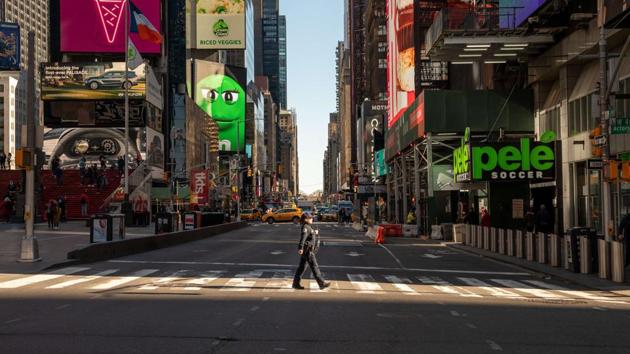
I work from home. Maryland state, where I live, just on the northern edge of Washington DC, is not under stay-at-home orders that are in force in more than 17 other states, including New York, California and Washington DC — the three states hit the hardest in the United States (US). But all non-essential businesses and activities have been shut down; schools and colleges are closed; restaurants have either switched to take-out or home delivery or closed, and offices are closed.
Both our children are home, one from college and the other from high school, which are both closed until sometime in April. They are grudgingly, but increasingly, reconciled to staying home. But not on vacation; there are no sleepovers, late-night ice-cream hunts or soccer hang-outs.
They stay home, have lunch and dinner with us, talk — argue (fight), if it gets a little crabby around the house — and share in the daily chores, pick up the laundry, take turns unloading the dishwasher and putting out the trash bin.
We are in the suburbs where social distancing is somewhat more convenient than in the high-rises of New York City, the epicentre of the outbreak in the US, or other close-living arrangements, where every trip up or down the elevator can be a health hazard. Someone has to hit the floor-level buttons and you can never be too sure about the infection status of the person before you. A morning run or walk in crowded open spaces such as Central Park can turn out to be dangerous.
But these social distancing-compliant circumstances cannot, and have not been able to, mitigate one of the most damaging social consequences of the outbreak: The targeting of Asian Americans, a catch-all description of people from China, where the outbreak started, and south-east Asian and South Asian countries such as India, Bangladesh and Sri Lanka.
On my morning run the other day, I encountered an elderly Asian-origin man I had seen and nodded to every time we crossed each other in the past months. This time, I ran around him, cutting a six-feet distance from him — as I do with everyone, irrespective of who they are as a part of social distancing. It had felt wrong and, more notably, rude. Rude to him, and all my Asian-American friends and acquaintances, given the hate crimes being reported against them from various parts of the country, and the world, irresponsibly stoked by political leaders.
On another of my daily runs, I saw a familiar Asian American couple, who I had admired for their fitness and habitual courteousness. This time, as I neared them, they went off the sidewalk, stepped over the grassy buffer zone, and were practically on the road as they went around me. I wasn’t sure if they were avoiding me as a possible contaminant — an Asian man (Indian, actually) — or to save me the embarrassment of going around them. Either way, it felt extremely wrong and disconcerting.
yashwant.raj@hindustantimes.com
The views expressed are personal


