With bated breath, every summer India awaits for monsoon winds to soothe its parched landscape. Along with fulfilling its responsibility of replenishing the underground and over-ground reservoirs, watering swathes of bone-dry farmlands and calm our minds and bodies, it has the habit of teaching us lessons for not following a sustainable way of life. If it was Uttarakhand in 2013, it is Maharashtra this year. Last week, Malin, a village near Pune, was flattened by landslides triggered by torrential rains, killing more than 75 people.
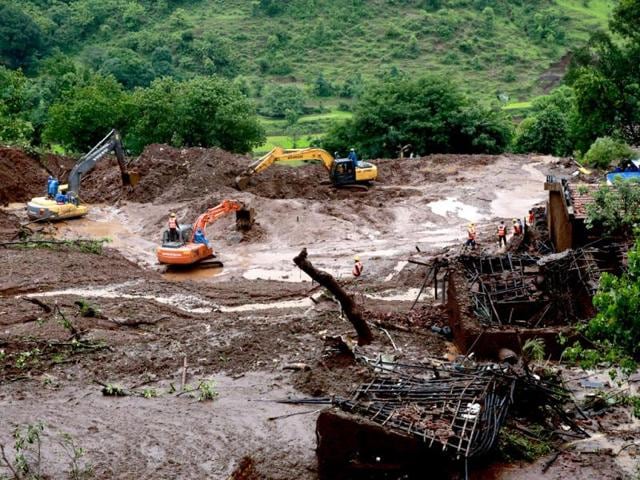
Like Uttarakhand, this tragedy could also have been avoided — or at least minimised — if the people and local authorities listened to warnings and had been a little more conscious of the way they were implementing a project plan. Environmentalists have blamed the short-sightedness of the government in implementing an employment generation scheme for tribals that required hill slopes be flattened and tress cut down to develop cultivable plot. The official data indicate that nearly 28,000 trees were cut for this project; unofficial figures put the count at 300,000. Malin was also marked as an ‘ecologically sensitive’ village by the Kasturirangan committee report on the Western Ghats last year. In 2013, the Union ministry of environment and forests had notified it as an ecologically sensitive village and recommended a no-development policy but yet, as the tragedy shows, it was business as usual at Malin. It’s not only Malin that refused to learn from the Uttarakhand tragedy; even the Himalayan state seems to have forgotten last year’s tragedy. The state government is still pushing for hydropower projects that were blamed for upsetting the ecological balance of the area and it also restarted the Kedarnath Yatra — the rush of pilgrims can again put pressure on the fragile ecosystem of the area and this could lead to disastrous consequences.
Every time there’s a natural calamity of this scale, there is clamour for better and effective early warning systems. But the people, as well as the government, fail to do anything about the man-made activities that accentuate such weather-related havoc. The early warning systems can only forewarn us about the extreme weather patterns, like heavy rain, but it cannot stop landslides from happening. To stop that, we need to plant trees on our barren hills. The writing on the wall is clear: The pace at which we are urbanising ecologically sensitive areas has dangerous consequences, as we have seen in Uttarakhand and Malin. How many more deaths will it take for people to realise this truth?
{{/usCountry}}Every time there’s a natural calamity of this scale, there is clamour for better and effective early warning systems. But the people, as well as the government, fail to do anything about the man-made activities that accentuate such weather-related havoc. The early warning systems can only forewarn us about the extreme weather patterns, like heavy rain, but it cannot stop landslides from happening. To stop that, we need to plant trees on our barren hills. The writing on the wall is clear: The pace at which we are urbanising ecologically sensitive areas has dangerous consequences, as we have seen in Uttarakhand and Malin. How many more deaths will it take for people to realise this truth?
{{/usCountry}}