A year after the US Navy Seals killed Osama bin Laden in Pakistan, the central command and control of al-Qaeda based in Pakistan continues to be in disarray. The terror group has not been able to recover from the US drone strikes and the death of many of its senior leaders. Thanks to his lacklustre leadership, Ayman al-Zawahiri, the new amir of al-Qaeda, who is believed to be operating from a hideout in Pakistan, has not been able to restore the confidence and motivation of its central command and control.
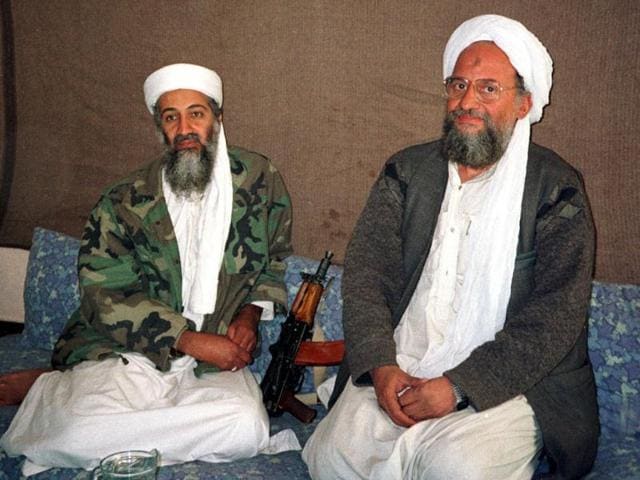
The disruption of the group’s central command and control appears to have affected its ability to plan and launch catastrophic strikes in faraway places.
However, its affiliates — the Taliban of Pakistan and Afghanistan, the Haqqani Network of Afghanistan, the Lashkar-e-Taiba (LeT) and Lashkar-e-Jhangvi (LeJ) of Pakistan, the al-Qaeda in the Arabian Peninsula (AQAP) based in Yemen; the al-Qaeda in the Islamic Maghreb based in Algeria and Mali; the al-Shabaab of Somalia; and the Boko Haram of Nigeria — have maintained their capability for sporadic acts of terrorism involving mass fatalities in their respective areas of operation.
While the global reach of al-Qaeda has been affected due to the inability of its present leadership to carry out terrorist strikes on a global scale, its regional command and control, regional cadres and regional ability to carry out strikes remain unimpaired.
The affiliates of al-Qaeda continue to use the multi-modus operandi and multi-target operations that they had learnt from the terror group. This was evident from the recent commando-style attacks on different targets in Afghanistan by the Afghan Taliban and the Haqqani Network. Mass casualty attacks carried out during the last one year by affiliates of al-Qaeda in Yemen and Nigeria highlight their continuing motivation and ability to strike when an opportunity comes up.
{{/usCountry}}The affiliates of al-Qaeda continue to use the multi-modus operandi and multi-target operations that they had learnt from the terror group. This was evident from the recent commando-style attacks on different targets in Afghanistan by the Afghan Taliban and the Haqqani Network. Mass casualty attacks carried out during the last one year by affiliates of al-Qaeda in Yemen and Nigeria highlight their continuing motivation and ability to strike when an opportunity comes up.
{{/usCountry}}The death of bin Laden has not only weakened the lethality of the central command and control, but it has also blunted its web-based psywar campaign. The al-Qaeda was dependent on it for getting new recruits, imparting online training and instructions. As a result, there has been a decline in the flow of Arab recruits with a capability for global attacks and in attacks launched by web-motivated “lone wolf” jihadis.
There are also indications that after the death of bin Laden, who was a Saudi of Yemeni origin with influential family connections in Saudi Arabia, there has been a decline in the flow of funds to al-Qaeda from ‘charity organisations’ and affluent Saudi families. The shortages caused have not been made good by the money earned from narcotics smuggling.
The weakening of al-Qaeda as a global terrorist organisation should not be taken to mean that the dangers of a catastrophic act of terrorism are less likely now. The dangers will remain high so long as the intelligence agencies are not able to identify and neutralise al-Qaeda-trained operatives who were placed in sleeper cells in different parts of the world by bin Laden when he was alive. The central command and control of al-Qaeda has been disrupted, but not its global network of sleeper cells. If a new leader emerges who is able to motivate them, we may still face new acts of mass-casualty terrorism.
So long as al-Qaeda’s global network of sleeper cells is not disrupted, dangers of maritime terrorism, acts involving weapons of mass destruction, material and mass disruption of the internet have to be guarded against through international cooperation in intelligence collection and sharing and physical security.
The 9/11 strikes led to a decade of close international co-operation against terrorism. We cannot afford to let this co-operation weaken till al-Qaeda is decimated. The group is now weakened, but not decimated.
India must maintain extreme vigilance and preparedness against commando-style, complex terrorist strikes of the kind launched by the LeT in Mumbai on 26/11 and by the Afghan Taliban in Afghanistan recently. The LeT has not repeated its 26/11 style terrorist strikes in India after 2008. But its training camps in Pakistani territory are active and the anti-India radicalisation of its leadership shows no signs of abating.
There are no indications of any change in the use of terrorism as a strategic weapon against India by Pakistan’s Inter-Services Intelligence (ISI). If the US and other NATO forces carry out their plans to thin out their presence in Afghanistan in the coming months, the US is expected to transfer its holdings of arms and ammunition to the Afghan Security Forces. The danger is some of it would fall into the hands of jihadi groups in the Af-Pak region.
With the thinning down of the NATO presence, the jihadi terrorist organisations, now operating in Afghanistan, will find at their disposal surplus jihadis who are well-trained and motivated. India must be prepared because some of its cadres and weapons could be diverted to Pakistan-occupied Kashmir (PoK) to re-kindle terrorism and the Pakistan-sponsored proxy war in Jammu and Kashmir.
At a time when there is an urgent need for revamping our intelligence collection, follow-up action and physical security capabilities through close cooperation between the central agencies and the state police and through fresh instruments such as the proposed National Counter-Terrorism Centre (NCTC), it is worrying that the differences between the Centre and the states on the NCTC are threatening to weaken our counter-terrorism capability.
Stability in the Af-Pak region is years away. Until a modicum of stability is established, the Federally-Administered Tribal Areas (FATA) of Pakistan will continue to be the epicentre of the attempts to revive global terrorism and to keep India bleeding. The international community — and particularly India and the US, which face the maximum threats from the terrorists based in the Af-Pak region — cannot afford to slacken its vigilance.
(B Raman is additional secretary (retd), Research and Analysis Wing. He was the head of its counter-terrorism division for six years)
The views expressed by the author are personal