


 Live Score
 Cricket Teams
 Cricket Players
Abhishek Sharma turned to Shubman Gill for help after three ducks in T20 World Cup: ‘Give me the bat, otherwise…’
During the BCCI Naman Awards, Abhishek Sharma turned his T20 World Cup misfortunes into humour, joking about reaching out to Shubman Gill after three ducks.

 Prefer HTon Google


At the BCCI Naman Awards, Abhishek Sharma took a rough memory from the T20 World Cup and turned it into a punchline before anyone else could. The question put to Shubman Gill was simple enough: had he offered Abhishek any advice before the tournament? Gill’s answer came with the kind of easy smile that usually tells you a friend is about to be teased in public. “No.1 T20I batsman in the world ko kaun advice dega” (Who is going to give advice to the world’s No. 1 T20I batter?), he said on JioStar, brushing the idea away and lifting Abhishek at the same time.
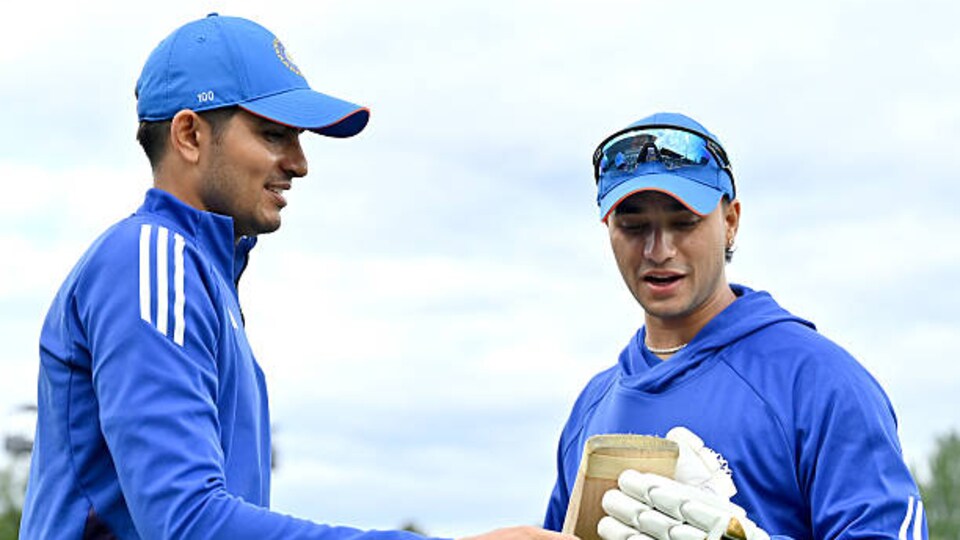
The line would have been funny anyway, but Abhishek gave it a bite by dragging the conversation back to the phase that had made headlines earlier in the T20 World Cup 2026. He revealed that after beginning his campaign with three ducks, he had been the one reaching out. “Maine hi message kiya tha isko 3 duck ke baad ke mujhe bat de de, isse pehle koi aur record bann jae” (I was the one who messaged him after three ducks and told him to give me his bat, otherwise some other unwanted record would have been made), Abhishek said, laughing at a run that most batters would prefer to leave untouched. Those three ducks had come at the start of India’s 2026 T20 World Cup campaign, which is why the callback landed instantly.
There was more in the exchange than a joke about bad form. Abhishek also shared Gill’s reply from that phase: “Usne bola tha, tu kar lega” (He told me, you’ll manage it). It was a small line, but it said enough. Belief, stripped to its shortest form. That was what gave the banter its warmth. Shubman Gill did not treat Abhishek’s slump as a problem to be solved; he treated him like a player who would find his own way through it.
The conversation then shifted from runs to bats, and the chemistry between the two became even clearer. Asked whose bat he liked the most, Abhishek Sharma did not need a second to think. “Shubman ka hi” (Shubman’s, of course), he said. Then came the obvious follow-up on whether Gill ever lets him use it. Gill’s answer turned the whole thing from an anecdote into something that sounded far more familiar and lived-in: “Woh mere bat se hi khelta hai hamesha” (He plays with my bat all the time anyway).
That was the real charm of the moment. Abhishek brought up his own worst stretch before anybody else could weaponise it, and Gill met it with a compliment, a shrug and one last bit of mischief. For a few seconds, the room was given a glimpse of the kind of friendship cricket usually keeps off-camera: one player making himself the joke, the other making sure the joke never loses its affection.


