


 Live Score
 Cricket Teams
 Cricket Players
India without Bumrah: Siraj must lead, spinners must hunt as a new bowling blueprint takes shape in Sri Lanka Tests
This attack may require more from Siraj, more overs from the spinners and greater flexibility in their approach

 Prefer HTon Google


There was a phase at Eden Gardens last November that best explains Jasprit Bumrah’s value to India better than any statistic. South Africa had begun the first Test briskly. The score had moved to 57 without loss and the pitch, despite pre-match anxiety about its character, did not appear to have persuaded the visitors to go into survival mode. Then Bumrah intervened.
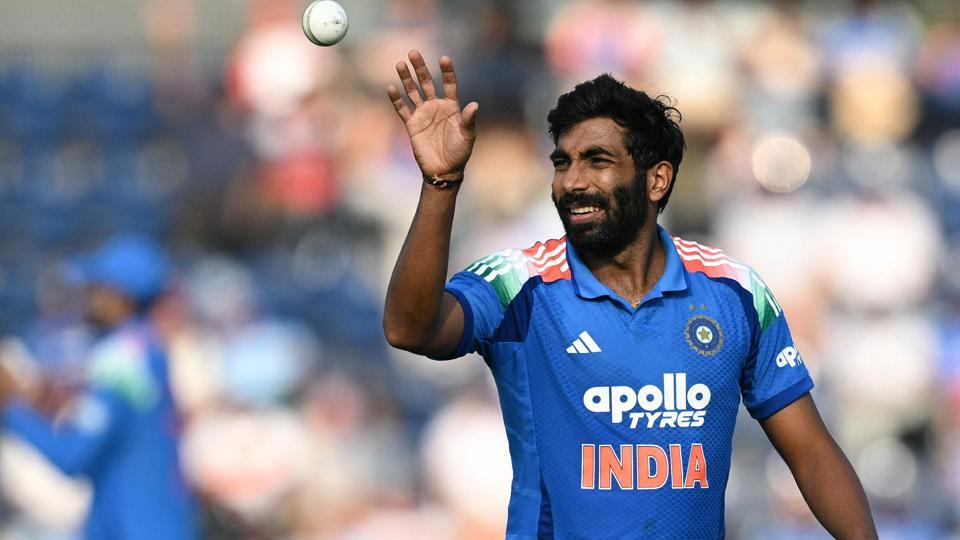
Dismissing two set openers in consecutive overs, Bumrah finished with 5/27 by the time South Africa were bowled out for 159. Once again, India had been provided headway into a Test by a bowler who could make a pitch look more helpful than it was, turn pressure into wickets and change the direction of an innings almost by himself.
Bumrah did something similar, if less spectacular, in Guwahati a week later. He bowled 32 overs for 75 runs and took two wickets in a South African first innings that eventually reached 489. The wickets were not enough to prevent India’s 2-0 series defeat, but his bowling illustrated the other part of Bumrah’s value—even when he wasn’t ripping through a batting order, he could make scoring difficult and give India’s spinners room to attack. India won’t have that option in Sri Lanka.
Bumrah has been ruled out of the two-Test series, leaving Mohammed Siraj as the senior member of a pace group that also contains Prasidh Krishna and Gurnoor Brar. The squad was originally selected with Bumrah, Siraj, Krishna and Brar as its seam options, but now India are being forced to rethink not merely personnel but the way the attack itself is supposed to function. That distinction could have repercussions on how India’s bowling fronts out in the future.
Bumrah is unique and hence irreplaceable. Which is why India need an attack that can compensate for the things Bumrah made look routine. Siraj, in particular, inherits a different responsibility. When Bumrah was present, Siraj could be the aggressor, the bowler willing to attack the stumps and hit the pitch hard, knowing that the world’s most complete fast bowler was waiting at the other end. In Sri Lanka, Siraj becomes the senior seamer. He will have to create pressure rather than merely contribute to it.
That could make India’s bowling more collective—and perhaps more demanding of everyone involved. The spinners are likely to carry a greater share of the wicket-taking burden. Ravindra Jadeja, Kuldeep Yadav and Manav Suthar offer India different ways of attacking in conditions expected to reward spin, while Saransh Jain provides the off-spin option. Kuldeep’s role could become particularly significant. Without Bumrah’s ability to strike at almost any stage, India’s wrist-spinner may be asked to turn pressure into breakthroughs more regularly.
The bowling workload, consequently, could shift. A Bumrah-led attack allows a captain flexibility in strategy. With Burmah, there exists a possibility of a short burst of three or four sharp overs, a change of angle, a return with the old ball, another spell when a partnership begins to develop. Without him, India may have to think in terms of longer chains of pressure. Like if Siraj holds one end, a second seamer attacks in shorter spells, and the spinners squeeze from the other end. Essentially, it’s less about finding one match-winner and more about ensuring that somebody is always asking a question. And in Sri Lanka, more often than not it’s always a spinner.
Which makes the just-concluded warmup game a near-ideal rehearsal for India because the pitch started out to be flat but took sharp turn later. “The bowlers had a great opportunity to go down and express themselves on a pitch which was slightly on a flatter side in the first day. But as the days went by, there was more turn on to it and definitely a good outing for the spinners,” said Sairaj Bahutule, India’s bowling coach, after the warm-up match on Sunday.
“Most of the guys have come here, experienced guys, Jaddu (Jadeja) has already played here. But the new guys like Manav and a few others, Saransh Jain, they need to just adapt to what will be the ideal lines, what will be the ideal lengths and obviously the field sets, which is very much important.”
With Ravichandran Ashwin already retired and Bumrah needing more rest than ever, it’s not a secret that India have to urgently remodel their bowling strategy. This attack may require more from Siraj, more overs from the spinners and greater flexibility in their approach. There could be a temptation to select an extra bowling option, particularly if the management decides that the workload cannot simply be redistributed among four frontline bowlers.
But the point is that for the first time in a while, India’s bowling attack can’t be constructed around the assumption that Bumrah will eventually solve the difficult passage. Siraj must lead, the spinners must hunt together, and someone, somewhere, will have to produce the unexpected. Without the safety net of Bumrah, this is a reality India must adjust to, and quickly.


