


 Live Score
 Cricket Teams
 Cricket Players
After Shubman Gill gamble fails, BCCI left with no option but to turn back to Hardik Pandya as India’s T20I captain
With the Shubman Gill blueprint unravelling, selectors are set to return to the drawing board to find India’s next T20I captain before the England tour in July

 Prefer HTon Google


The BCCI’s carefully drawn captaincy roadmap reached an unexpected dead end. While the realisation within the Ajit Agarkar–led selection committee had reportedly set in much earlier, it was only made official on Saturday, when BCCI secretary Devajit Saikia confirmed in a press conference that Shubman Gill’s T20 ambitions had stalled after the selectors rejected him for the World Cup squad, citing concerns over his form.
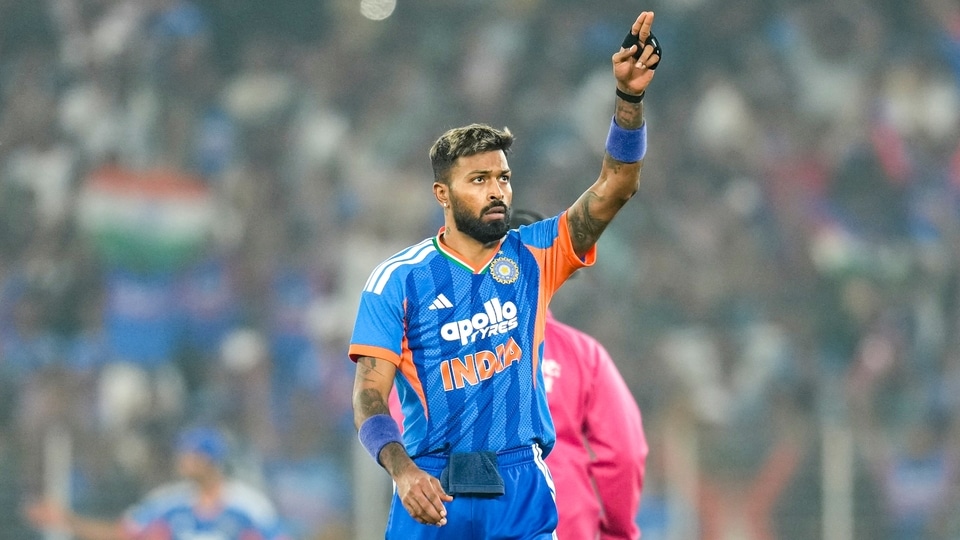
The decision underlined the Agarkar-Gautam Gambhir regime’s core belief in not letting reputation or superstar status outweigh performance, but it also leaves the team management facing a familiar dilemma. Once the World Cup concludes in March next year, the selectors will be forced back to the drawing board, tasked with identifying India’s next T20I captain in the post-Suryakumar Yadav era.
For Suryakumar, who turned 35 last September, the 2026 T20 World Cup is, in all likelihood, set to be his final appearance at an ICC event, if not in India colours altogether. That reality pushed the BCCI to revisit a long-held belief, the idea of restoring a single, all-format leader at the helm of Indian cricket.
ALSO READ: Rejected for T20 World Cup, Shubman Gill eyes Vijay Hazare stage to reclaim white-ball status
Gill’s emergence as that successor appeared convincing during the demanding tour of England earlier this summer. In his first assignment as captain, he shattered multiple batting records while leading a transitional side still adjusting to the retirements of Virat Kohli, Rohit Sharma and Ravichandran Ashwin following India’s disappointing World Test Championship cycle. By the end of that series, the selectors and team management were convinced they had found their man
Despite missing out on the previous T20 World Cup squad and having gone more than a year without playing the format at the international level, Gill was fast-tracked back into the T20I setup for the Asia Cup and handed the vice-captaincy. If that move hinted at a larger plan around the 25-year-old, it became unmistakable a month later when he replaced Rohit as India’s ODI captain.
With the promotion came privilege. Amid growing external debate, Gill was afforded a free run as opener, backed with clarity, assurance and security from the management, commodities that have become increasingly rare in modern Indian cricket. However, his returns never lived up to the hype or expectations. Across 15 innings following his return, Gill managed just 291 runs, without registering a single half-century. The selectors eventually pulled the plug after a lean home T20I series against South Africa, where Gill recorded scores of 4, 0 and 28.
The decision was reportedly finalised in Lucknow, after the fourth T20I was abandoned due to heavy smog. In the series finale, Sanju Samson was reinstated at the top of the order, and, in a brisk 22-ball 37, offered a timely reminder of what Indian cricket had been missing.
After Suryakumar Yadav, who leads India’s T20I future?
With the Gill blueprint unravelling, the selectors and team management are set to return to the drawing board in search of India’s next T20I leader, with the tour of England in July emerging as the likely deadline for a decision.
Given the pattern of decision-making under the Agarkar-Gambhir regime, even a strong tournament from Suryakumar may not be enough to secure his future as captain. By the time the 2028 T20 World Cup rolls around, he will be 37, and it remains uncertain whether he will feature in the next cycle at all.
India had briefly entrusted Axar Patel with the vice-captaincy earlier this year before Gill reclaimed the role in September, and the all-rounder has been handed the same responsibility for the World Cup as well. However, backing Axar as the next T20I captain would represent a significant leap of faith. He is yet to lead India in international cricket, and while he did captain Delhi Capitals during IPL 2025, the franchise finished fifth and missed out on the playoffs. The selectors are nevertheless expected to monitor the 31-year-old closely over the next IPL season before taking a call.
Beyond Axar, the current World Cup squad features other leadership options. Samson, who despite his consistent captaincy record in the IPL, remains untested as an international leader, while Jasprit Bumrah’s workload management, particularly with Tests and the 2027 ODI World Cup looming large, is likely to rule him out of sustained leadership duties in the next T20 World Cup cycle. This will leave BCCI with no other option but to revisit the very option they had once rejected - Hardik Pandya.
During Rohit’s tenure as T20I captain, Hardik frequently stepped in as stand-in skipper whenever the former prioritised other formats. He also served as Rohit’s deputy during the 2024 T20 World Cup. Consequently, many expected Hardik to take over the T20I captaincy following Rohit’s retirement from the format in June last year. He was the most experienced option, having led India in three ODIs and 16 T20Is, in addition to guiding the Gujarat Titans to an IPL championship in their maiden season and currently captaining the Mumbai Indians. However, fitness concerns and workload management tipped the scales against him.
Hardik has since come a long way. He has improved his fitness, established himself as one of the most consistent performers in the format, and abided by the BCCI’s mandate to participate in domestic games when not on international duty. With his focus now primarily on white-ball cricket, he is likely to be available throughout the next T20 World Cup cycle while continuing his ODI commitments.


