


 Live Score
 Cricket Teams
 Cricket Players
From bowl out to last-ball heist: India vs Pakistan at T20 World Cups is about who blinks first
The India-Pakistan T20 World Cup rivalry hinges on mental clarity during pressure phases.

 Prefer HTon Google


India vs Pakistan at the T20 World Cup isn’t a rivalry that unfolds slowly. It spikes. One phase, one over, sometimes one delivery, and the whole match tilts - not because either side suddenly becomes a different team, but because this fixture magnifies every decision into a referendum on nerves.
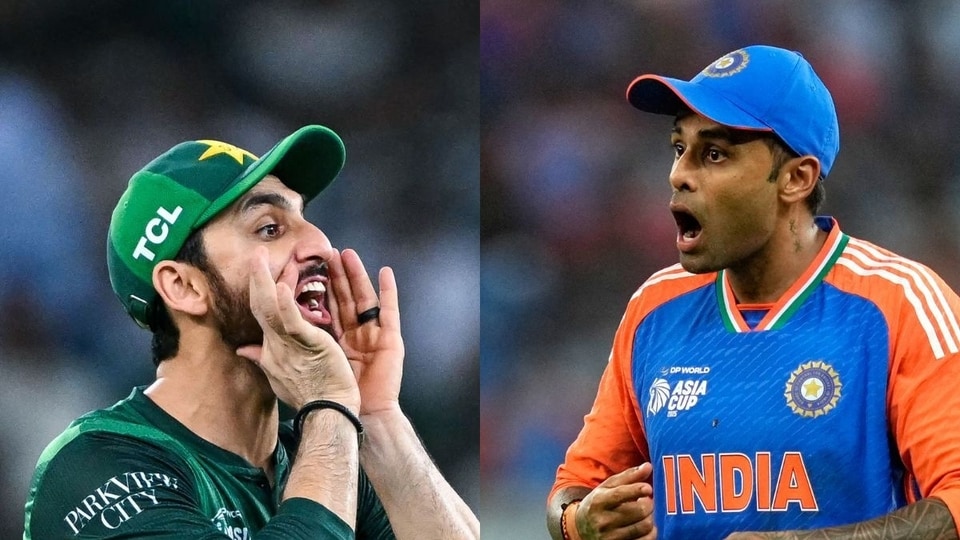
What decides it, again and again, is simple: who keeps their clarity when the game turns irrational. The best way to prove that is to walk through the matches that have actually shaped the mythology - and show, specifically, what each one was decided by.
2007 (Group Match, Durban): The bowl out and the birth of pressure cricket
The first ever India vs Pakistan match in a T20 World Cup ended in a tie - and was settled by a bowl out. That match matters because it established the rivalry’s first modern truth: this fixture can drag you into situations you didn’t train for.
What decided the game wasn't a tactical masterclass. It was execution in the most exposed way possible: hit the stumps, no excuses. India landed three; Pakistan missed three. The game was decided by a skill that is usually a footnote, suddenly made into the headline. From that night, every India-Pakistan T20 World Cup meeting carried the same warning: you are not just playing the opponent, you are playing the moment.
2007 (Final, Johannesburg): One over, one shot, one lifetime
The final later that same tournament remains one of the rivalry’s defining scenes because it compresses everything into a final over. Pakistan needed a manageable number, and the finish came down to end-game decision-making - by batters under stress and by a captain trusting a plan.
What decided it was not who batted better. It was who handled the last over’s choices better: which ball to attack, which ball to respect, when to take a single, when to back the boundary. India won by five runs, and the margin itself became the lesson - in India-Pakistan T20 World Cup matches are often decided not by dominance but by one side making slightly fewer mistakes when it matters most.
2012 (Colombo): When control beats chaos
The 2012 match was a reminder that you can defuse this rivalry by refusing to let it become dramatic. Pakistan were bundled out for a low total, and India chased without panic.
What decided it was control cricket in two phases: disciplined bowling that didn’t leak cheap runs, and then a chase that didn’t run after highlights. India didn’t try to win in one over. They won by making Pakistan’s innings feel short and breathless, then keeping the chase steady. The rivalry’s noise didn’t matter because India never let the match become a thriller.
2014 (Mirpur): The chase that never became a movie
If you want a template of how India have repeatedly beaten Pakistan in T20 World Cups, it’s Mirpur 2014. Pakistan put up a middling total. India chased, and the game never felt out of control.
What decided it was clarity: keeping wickets in hand, rotating strike, and targeting the right moments rather than swinging at the aura of the contest. Pakistan’s best chance in this fixture is always the same - create doubt, force risk, trigger a collapse. India didn’t give them that opening.
2016 (Kolkata): Awareness over ego
Kolkata 2016 was played on a surface where stroke-making wasn’t easy. That is exactly where this rivalry becomes dangerous, because batters start trying to prove something. India didn’t. Pakistan couldn’t.
What decided it was discipline: India treated it like a hard pitch first and a rivalry second. Pakistan’s innings never found momentum; India’s chase, once set, didn’t need heroics. This match is important because it shows a repeatable theme: in India-Pakistan, the team that plays the pitch honestly often beats the team that plays the occasion emotionally.
2021 (Dubai): The night Pakistan broke the spell
Dubai 2021 is the outlier, the rupture; Pakistan’s first World Cup win over India and it was emphatic.
What decided it was powerplay control plus a chase that never blinked. Pakistan’s new ball phase boxed India into a par score rather than a winning one. Then, in the chase, they have India zero oxygen - no wickets, no panic, no one over away feeling. The key point was Pakistan didn’t win by being chaotic. They won by being clinical, which is why the night felt so jarring.
2022 (Melbourne): Virat Kohli’s nerve of still
Melbourne 2022 is iconic because it proves the rivalry’s strangest rule: the match can flip even when it looks dead.
Pakistan set a competitive total. India’s chase drifted into deep trouble, and then the game turned into a short burst of overs where the pressure moved from one dressing room to the other. What decided it was not big shots alone. It was refusing to surrender the chase’s structure - staying alive long enough for one explosive over to matter, then holding nerve at the end.
This match highlights the rivalry’s real battlefield; not talent but psychological elasticity. The team that can bend without breaking survives.
2024 (New York): When 119 was defended
New York 2024 was a low-scoring knife-fight: India were bowled out for 119, Pakistan fell short. Matches like this are perfect for explaining what India-Pakistan really is at the T20 World Cup - because there is nowhere to hide.
What decided it was discipline under suffocation. In low chases, batters get seduced into thinking time is their friend. The dot balls pile up, panic begins, and the chase becomes a mental trap. India’s bowlers and fielders stayed connected long enough to make Pakistan feel the score was gettable - and that illusion is exactly what breaks teams.
The key factor that decides India vs Pakistan
When you line up the defining India-Pakistan T20 World Cup games, one pattern repeats:
The match is decided by the team that wins the pressure phases - not the team with the better squad on paper.
Those pressure phases usually arrive in threeways:
1) Powerplay control
The new ball decides the mood. If you lose the first six overs badly, you spend the next 14 trying to outrun anxiety.
2) The middle-over squeeze
This is where dot balls become emotional, where strike rotation is oxygen, and where one bad over becomes a crisis.
3) Death-over clarity
The 2007 final, the 2022 chase, even the 2024 scrap - they all reduce to end-game decisions. One over of panic beats ten overs of competence.
So, the final conclusion could be - India vs Pakistan at the T20 World Cup is decided by who stays calm when the match stops behaving normally - and becomes a test of thinking under fire.


