Live Score
 Cricket Teams
 Cricket Players
Hanuma Vihari’s race to ace No. 3
Having looked compact in Mohali, can he own that slot in the batting order?

 Prefer HTon Google


Bat at No. 3 and you can shape a Test and by extension, the series. You don’t have to look beyond Keegan Petersen to understand how impactful this position can be. Down 0-1 after a sobering loss to India at Centurion last December, South Africa slowly made their way back thanks to Petersen’s resilience. Propped up by Petersen’s classy stroke-filled 62 and 28 at Wanderers, before another bold 82 at Newlands, South Africa looked every bit a transformed side. Petersen’s innings set the tone, lifted the morale of the rest of the team and instilled the self-belief and confidence required to go eye-to-eye with India.
No. 3 is the toughest position to bat. Kane Williamson, Marnus Labuschagne and Babar Azam have batted there for New Zealand, Australia and Pakistan. From earlier eras, Don Bradman, Viv Richards, Ricky Ponting and Kumar Sangakkara lent invincibility to this position. For India, since 1996, Rahul Dravid batted at No. 3 before passing on the baton to Cheteshwar Pujara. But from this Sri Lanka series, India step into the unknown with Pujara rested.
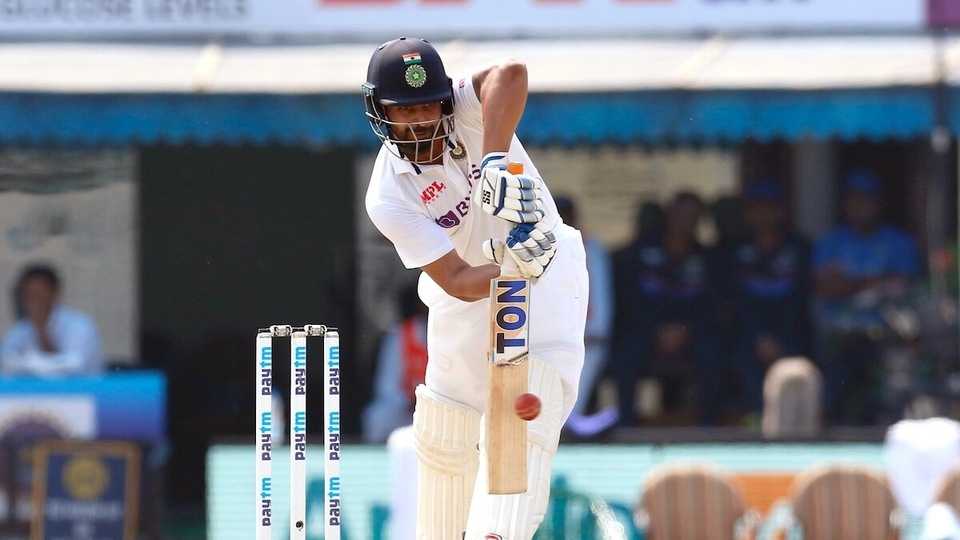
Enter Hanuma Vihari. Technically sound with an appetite for long, doughty innings, Vihari has been in and out of the senior team purely because there just wasn’t any place for him. But now, with the backing of Dravid, Vihari will hope to cement his position in the team as No. 3. He has some big shoes to fill though. Dravid has scored the second most runs (10,524, 28 hundreds) in Test history at No. 3 after Sangakkara. Pujara too has 6,133 runs with 17 hundreds.
Bat at No. 3 and you can shape a Test and by extension, the series. You don’t have to look beyond Keegan Petersen to understand how impactful this position can be. Down 0-1 after a sobering loss to India at Centurion last December, South Africa slowly made their way back thanks to Petersen’s resilience. Propped up by Petersen’s classy stroke-filled 62 and 28 at Wanderers, before another bold 82 at Newlands, South Africa looked every bit a transformed side. Petersen’s innings set the tone, lifted the morale of the rest of the team and instilled the self-belief and confidence required to go eye-to-eye with India.
No. 3 is the toughest position to bat. Kane Williamson, Marnus Labuschagne and Babar Azam have batted there for New Zealand, Australia and Pakistan. From earlier eras, Don Bradman, Viv Richards, Ricky Ponting and Kumar Sangakkara lent invincibility to this position. For India, since 1996, Rahul Dravid batted at No. 3 before passing on the baton to Cheteshwar Pujara. But from this Sri Lanka series, India step into the unknown with Pujara rested.
Enter Hanuma Vihari. Technically sound with an appetite for long, doughty innings, Vihari has been in and out of the senior team purely because there just wasn’t any place for him. But now, with the backing of Dravid, Vihari will hope to cement his position in the team as No. 3. He has some big shoes to fill though. Dravid has scored the second most runs (10,524, 28 hundreds) in Test history at No. 3 after Sangakkara. Pujara too has 6,133 runs with 17 hundreds.
|#+|
Preferred over Iyer
The choice for Dravid and captain Rohit Sharma was between Vihari, Shubman Gill and Shreyas Iyer. Since Gill has opened before, the choice almost naturally boils down to Vihari and Iyer. Both have done well at No. 5 and 6, where it’s more about playing the old, softer ball while shepherding the lower order. But with a No. 3, who can come into play from the second ball of the innings, it’s also about countering the new ball.
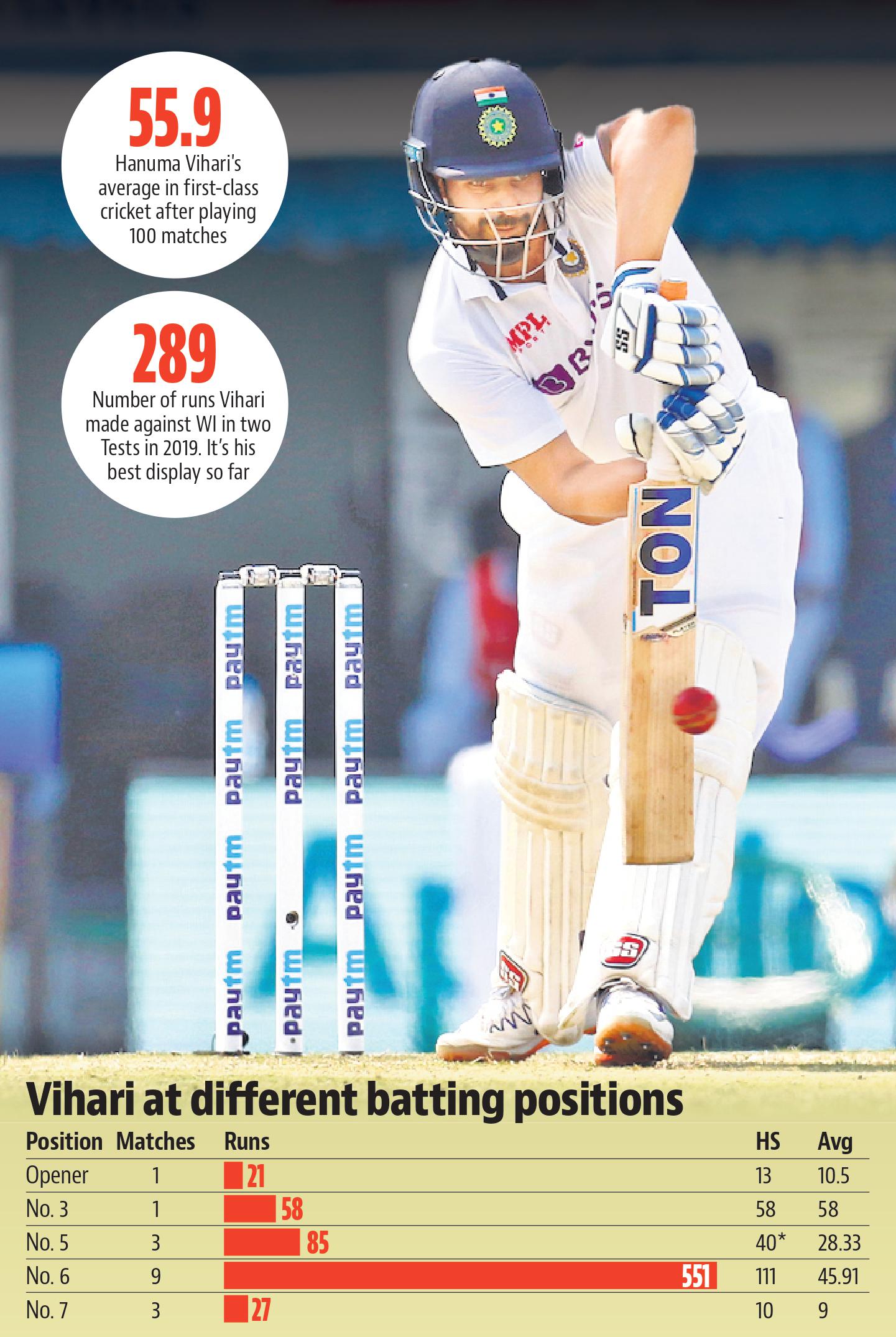
With little to separate, it is only fair that the team management has gone with the player with more experience, so the first chance has gone to Vihari. His preferred batting position is also No. 3 for his state side, so he knows what it takes to succeed at that slot. The Andhra and Hyderabad player’s domestic record is outstanding, averaging 55.90 (aggregate 7771 runs) from 100 first-class games with 22 centuries and 42 fifties.
“From his childhood he used to always bat at No. 3, he likes to play when the ball is hard and new. Under-16, 19, Ranji every side he used to bat at No. 3,” said coach John Manoj, who has trained Vihari since he was 11-years-old at Hyderabad’s St John's Cricket Academy. “It’s (No. 3) the most important role and Vihari is suited because he doesn’t get subdued, plays his shots well and always rotates the strike,” he said. “Earlier, the seniors were there so he didn’t get the opportunity to bat higher, now he should grab the chance.”
In Mohali, batting at No.3 for the first time in what was only his second Test at home, Vihari looked solid and compact on way to scoring 58. How he builds on the start will be keenly watched in the second Test, a day-night encounter at the M Chinnaswamy Stadium starting here on Saturday.
Different captains prefer different templates. Virat Kohli had Pujara at No. 3 but he made no secret of the fact that he preferred someone with a more attacking instinct. Sharma said after the Mohali Test that the slot is not locked and they will see how things go. Like Pujara, Vihari is someone who will grind out for the team and build the platform. To make the position his own, Vihari will not only have to lend solidity, he may also have to beat the image of a defensive player. To make the No. 3 position his own, Vihari will have to come up with performances like in the 2-0 victory over West Indies in 2019 where he got 289 runs in four innings. The second Test will also be a dress rehearsal for the fifth and final Test of the series against England which India leads 2-1.
For now, the team management has backed Vihari but they will be keeping an eye on how he copes with the challenge. Gill comes into the picture if Sharma wants a more attacking option. As opener, the Punjab batter, has the skills to tackle the new ball and is a fluent stroke-maker. In his 10-Test career so far, the 22-year-old has done well at the top of the order, scoring 558 runs at an average of 32.82. His strike rate in Tests is also an impressive 56.76. Iyer is even more attacking with a stunning strike rate of 80 plus after 57 first-class games where he averages 51.83 (4821 runs). The competition for places will further increase once KL Rahul is back. And that means Mayank Agarwal will also vie for a place in the middle-order which essentially makes it a four-candidate race for two spots. If Vihari converts this opportunity into something big, it will only make the race tighter.