Live Score
 Cricket Teams
 Cricket Players
Mohsin Naqvi, the politician, trumps the cricket administrator: The politics behind Pakistan’s T20 World Cup U-turn
It took only eight days for the top officials to climb down from their previous stance. Shocking? No. Expected? Yes.

 Prefer HTon Google


The drama is over, or is it not? The row involving India and Pakistan for the Men's T20 World Cup 2026 has possibly been put to rest, but who is to say the narrative won’t repeat 18 months down the line when the 50-over World Cup comes around? Late Monday night, the Government of Pakistan made its expected U-turn, announcing that the senior men's team would indeed take the field against India on February 15 at the R. Premadasa Stadium in Colombo. It took only eight days for the top officials to climb down from their previous stance. Shocking? No. Expected? Yes.
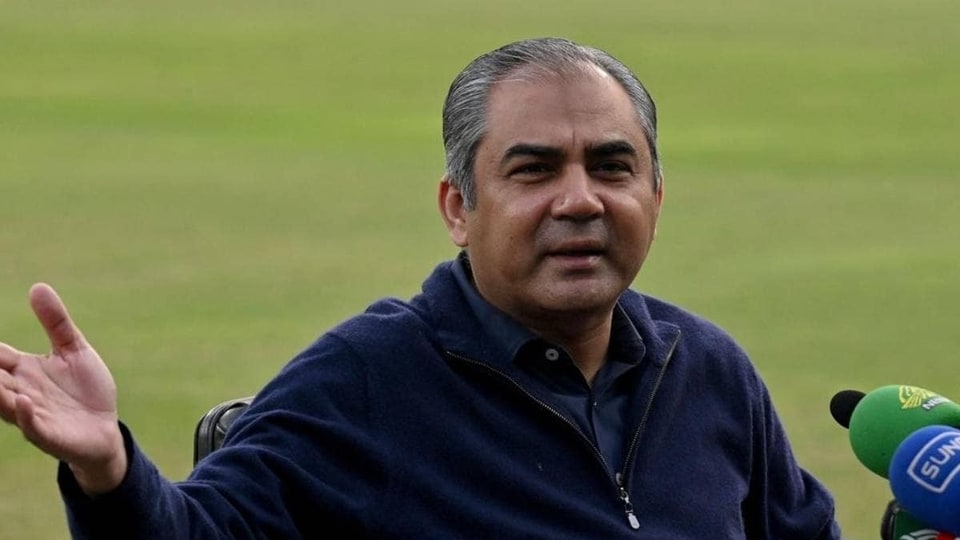
The high politicising around the India versus Pakistan contests is getting nauseating, to say the least. And the neighbours are not presenting a strong case for themselves. “We don't want to mix sports with politics,” this statement has rung out loud from every media interaction held by either Pakistan Prime Minister Shehbaz Sharif or Pakistan Cricket Board (PCB) chairman Mohsin Naqvi, but this remark comes off as straight-up fiction if the recent events are to be looked at.
Also Read: Pakistan's U-turn on T20 World Cup India match Live Updates: IND-PAK requested to play Test series after PCB's U-turn
When the Government of Pakistan announced on February 1 that the team led by Salman Ali Agha is boycotting the India clash, most of social media said that a backtrack was inevitable. The threat was simply not sustainable. For starters, the match was to be played at a neutral venue, so what grounds did Pakistan have to boycott one particular match and not the entire tournament? The mere mention of “sanctions” was enough for the PCB to climb down from its high ground and open back-channel talks. With other boards unwilling to support Pakistan’s position, the PCB informed the ICC that its refusal to play India was covered under the Force Majeure clause. When that failed to convince, Naqvi invited Bangladesh Cricket Board (BCB) chief Aminul Islam to Pakistan.
Another political move by Naqvi, Pakistan’s Interior Minister. Because the ICC was never going to heed the PCB’s demands. Inviting Bangladesh was therefore the best available face-saving exercise, especially since the decision to boycott the India match was framed as an act of “solidarity” with the Bangla Tigers after their ouster from the tournament. Credit must go to the ICC for keeping its cool and acting even-handedly with Pakistan, which had thrown all its toys out of the pram without holding any real bargaining chips. The two-hour meeting was the first clear sign that a U-turn was imminent. And sure enough, just 24 hours later, the Government of Pakistan reversed its own decision.
With this move, the entire saga concluded, but not before Naqvi and the PCB held another tournament to ransom after the Asia Cup 2025.
Be a cricket administrator, not a politician
Just five months ago, the PCB held the Asia Cup 2025 to ransom. Now, at the T20 World Cup, the pattern has repeated itself. After the Indian team refused to shake hands with Pakistan players during a group-stage match of the continental tournament, tempers flared within the PCB. The Naqvi-led board fired off multiple emails to the ICC, demanding the removal of match referee Andy Pycroft for allegedly failing to uphold the spirit of the game.
When the apex body refused to comply, the PCB resorted to tactics rarely seen before, and perhaps unlikely to be seen again, unless Pakistan is involved. The Pakistan–UAE match was delayed by an hour after the PCB chief withheld clearance for the team to take the field, preoccupied with his standoff with the ICC over Pycroft’s removal. He even threatened to pull out of the tournament, one he himself was overseeing as Asian Cricket Council (ACC) chairman.
With Pycroft still not removed, the PCB recorded a video inside the Players and Match Officials Area (PMOA) showing him speaking to Pakistan coach Mike Hesson. The clip was later uploaded to social media, accompanied by the claim that the match referee had apologised to the Pakistan team for not informing the management that Indian captain Suryakumar Yadav would not shake Agha’s hand at the toss. What was actually said in the PMOA will never be known, as the video carried no audio. The match between Pakistan and the UAE eventually went ahead, but little respect was shown to either the opposition or the sport.
Possible to imagine a similar episode unfolding at the FIFA World Cup or the Olympics? No team would get away with such a brazen act, showing so little regard for the opposition or the sport. Yet it was allowed to happen in full view during the Asia Cup. It was barely two weeks before the World Cup that Pakistan announced it would not play India. And let’s call a spade a spade: solidarity with Bangladesh was merely a smokescreen. If Pakistan truly wanted to claim the moral high ground, boycotting the entire tournament would have been the more principled stance.
The PCB knew that pulling out of the India match alone would command global attention and force the ICC’s hand, given the money at stake in the marquee clash. Had the fixture not gone ahead, broadcasters' financial losses would have been staggering.
Naqvi played the politician to the best of his ability, so it is hardly surprising that a narrative is now being pushed in Pakistan that the ICC went begging. The reality, however, is far removed from that claim. The ICC has a long-standing practice of engaging directly with member boards – as it did when it sent a delegation to Dhaka after the BCB sought to move its T20 World Cup matches from India to Sri Lanka. The approach has always been the same: seek a peaceful resolution and avoid unnecessary confrontation.
Naqvi, the PCB chief, ACC chairman and Pakistan’s Interior Minister, played his hand astutely. Which is why the PCB chairman’s claim that the Government of Pakistan would take the final call borders on the comical. He is the government. By rank, he occupies the second-most powerful office in the country after Prime Minister Shehbaz Sharif. Naqvi may have executed the role of a politician to near perfection, earning himself brownie points along the way. But as a cricket administrator, he fell short. And if this was truly about standing up for Bangladesh and claiming the moral high ground, what justification was there for negotiating and making demands to reverse the stance? Hypocrisy, plain and simple.