“Our way” vs “their way”: Azeem Rafiq and diversity in cricket
Promoting a multicultural environment seemed to be the norm for the sport in England and Australia. Then came the testimonies of Ebony Rainford-Brent and Rafiq
Watching Yorkshire cricketer Azeem Rafiq testify before the British parliament was disturbing. It caused unease—nausea even—but nothing Rafiq said however, was a surprise. Separated by 18 years and two countries, I worked on two pieces of research—one officially supported, the other a fellowship project—about the engagement of English and Australian cricket with their multi-ethnic populations. The 1997 Anyone for Cricket? Equal opportunities and changing cricket cultures in Essex and East London, was commissioned by the Essex Cricket Association and the London Community Cricket Association and produced by the Roehampton Institute. In 2013, under the Australia India Institute’s Emerging Leaders fellowship, I worked on what became a paper titled, “Fawad Ahmed & the Vanishing of Billy Birmingham: how ethnic diversity and the south Asian diaspora became front and centre in Australian cricket policy.”
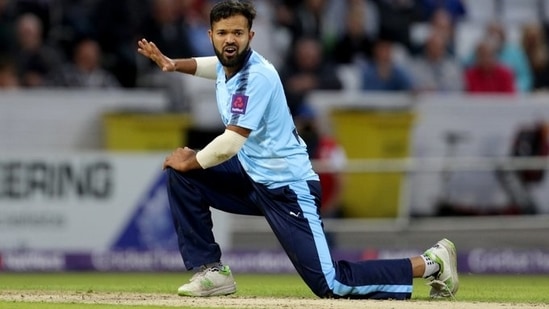
Azeem Rafiq (TWITTER)
On both occasions, I spoke to recreational cricketers—more than fifty of them across ethnicity and age—about their experiences and their opinions about each other. The outcomes of the two pieces of research were different but these conversations, their stories hard to forget, sent cricket to the same place. The sport these cricketers loved was a marker of great divide. The creation of separate ethnic, Asian and West Indian, leagues in the Essex region for example, bothered the official authorities. They were aiming to have everyone play under their big and, it was hoped, welcoming umbrella. Australian cricket’s “pale, male and stale” stereotype was an anachronism in a visibly multi-ethnic country, even more when compared to other sport like Australian Rules Football and running alongside a growing South Asian immigrant population.
Regardless of the passage of time and diverse cricketing environments, the similarities spoke volumes. At the root was how cricket was to be played—“our way” versus “their way”. In England and Australia, the cricket club, where all cricket begins, is also a battlefield of dominance. In Australia, club/grade cricket is the pathway to professional cricket; in England, 12-13 year olds begin with clubs, the best among them spotted by counties for their junior age group teams and their academies.
Club cricket in England and Australia is very different to its South Asia version, excluding of course, the colonial gymkhanas. Across the subcontinent, boys and now girls, play in clubs that are little more than tents, or a box full of nets, matting and rollers set in the corner of a rented ground. Post-match drinks as a means of financially supporting the bar and from it the club itself, are not found in Asia. In the 1997 study, black and Asian cricketers believed the lack of “drinking culture” particularly among the Asians, was used as an excuse to alienate them. Several black cricketers told stories of how their club’s rights to rent a ground or get affiliated to mainstream leagues was taken away because they were told they didn’t spend enough at the bar. As a result, clubs in Essex had retreated into their own leagues, with Black and Asian clubs playing against each other outside the mainstream.
From 2013 and Australia: access to the local, recognised cricket club had its own rules. A structured summer season revolving around cricket, mostly on Saturday games, with very few limited-overs matches ending in a single day, accepting and internalising “sledging”, the post-match social drink and volunteer duties. The structured season couldn’t work for too many new immigrants, who worked two jobs or wanted to send their children for their language classes on Saturday. The clubs inviting or welcoming them did not appear to be in the majority. It led the south Asian diaspora creating their own year-round Twenty20 competitions and state cricket associations in Australia trying to set up their own diversity initiatives to bring them into their fold.
This to me reflected cricket’s varied meanings across cultures. In South Asia’s warm climates, cricket is the game of the street, improvised in a crush for space, all year round, 24X7. In England and Australia, it belonged to wide open spaces, well-tended fields and order. It represented summer. Its cricketers too on either side defined their individual ways of playing. In England 1997, a white respondent from Essex said club cricket was, “a day out, the social side of the game, banter during the game, drink after.” Winning was “not the be-all and end all.” A black respondent said, “The Asians play cricket like the West Indians, they play to win, everyone plays competitively.” An Asian said, “If it’s not competitive, what’s the use of sport?”
In Australia, years later, the same difference. In the country where, to the shock of young south Asians, “even umpires get sledged,” Harmeet Saini, who runs Indigos CC, a multi-ethnic cricket club in Melbourne, said what young Asian immigrants found hard to handle in Australian club cricket was the unimportance of winning and losing. The complete opposite he said, “had been drilled into us (Indians). I have told the guys this so often. I scored 140 in the Katoch Shield semi-final and I was dropped for the final because coach said I wasn’t serious enough.”
Whatever the points of difference at the club/amateur level, I thought that the passage of time, markers of progress and the presence of role models in pro cricketers would have levelled the field for cricketers of colour in England and Australia. After all England had been captained by a man called Hussain and in Australia, I met passionate grassroots workers committed to spreading the gospel of cricket multiculturalism. Boards had set up programmes to expand the ethnic base of their sport and talked repeatedly of diversity.
Then came BLM and testimonies from Ebony Rainford-Brent and Rafiq and it was as if the dial had merely wobbled a little ahead before returning to where it had been set decades ago. I revisited the transcript of an Australian state cricket official I had spoken to in 2013 peppered with stereotypes. That one of his Asian origin players was “not like other Muslims” but in his early years had a “blasé attitude to fielding” after which “Australianism has knocked that out of him a little bit” plus “some of the Asians don’t have that hard edge to their cricket.” Was that his race or cricket culture speaking? Or as former first-class cricketer, columnist and life coach Michael Jeh says in his video interview, the simple inability to respect anyone not like you?
As for various cricket Board’s declarations of “inclusion” and “diversity” programmes my friend Joanne King had the answer. King, who from the 1980s onward worked actively in TV and other media as scorer-statistician for over three decades, said, “it’s one thing to have a policy in place that says you mustn’t discriminate but it’s quite another to check whether it is happening or not.” She was referring to something more substantial than the mere checking of boxes.


 Live Score
 Cricket Teams
 Cricket Players