


 Live Score
 Cricket Teams
 Cricket Players
South Africa SWOT analysis for T20 World Cup: Aiden Markram arrives with all the weapons to go one better this time
South Africa's T20 World Cup squad features explosive players like Dewald Brevis and a strong bowling attack led by Kagiso Rabada.

 Prefer HTon Google


South Africa’s T20 World Cup 2026 campaign comes with a familiar promise: the squad looks built for big nights, the fast-bowling core can bully most line-ups, and the batting has enough firepower to make 190 plus scores feel chaseable rather than mythical.
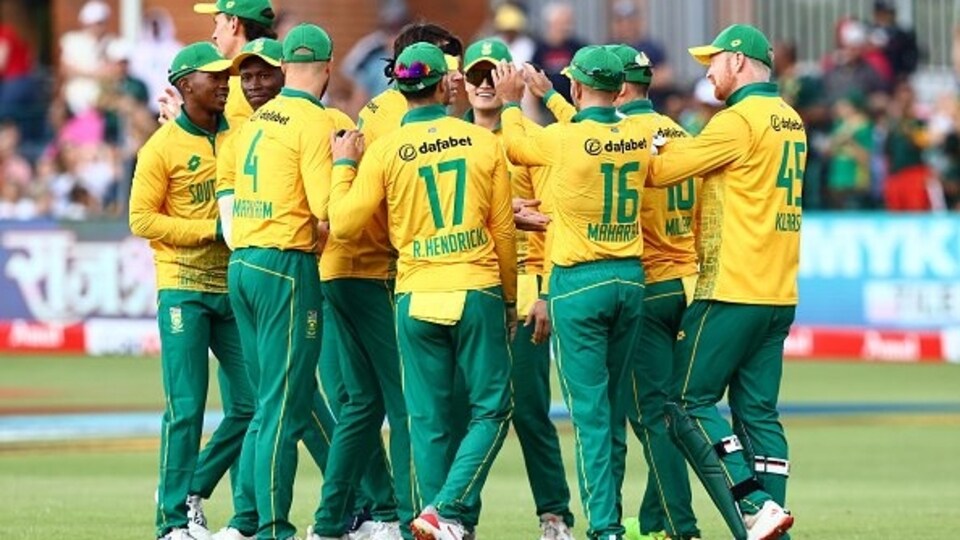
The margins, though, are ruthless. This tournament will punish even small uncertainty - a muddle middle order plan, and one injury in the finishing layer, or a death-overs role that changes every game.
South Africa squad for T20 World Cup 2026
Aiden Markram (c), Corbin Bosch, Dewald Brevis, Quinton de Kock, Marco Jansen, George Linde, Kehsav Maharaj, Kwena Maphaka, David Miller, Lungi Ngidi, Anrich Nortje, Kagiso Rabada, Ryan Rickelton, Jason Smith, Tristan Stubbs
Strengths of South Africa for T20 World Cup 2026
A pace attack with genuine variety
Kagiso Rabada gives you strike power and leadership. Nortje gives you high-pace, hard-length intimidation. Lungi Ngidi offers the heavy-ball, wicket-taking threat, while Jasen’s left-arm angle adds a different problem for batters and coaches setting match-ups. That mix is ideal for World Cup cricket, where you rarely get once surface throughout and need multiple ways to create discomfort.
All-round depth that increases selection flexibility
Marco Jansen and George Linde don't just lengthen the XI: they provide overs you can plan around and runs you can rely on in the 15-20 window. Bosch is another seam option who can hit late. This depth gives Markram room to tailor combinations without feeling like he’s robbing batting to pay for bowling.
Power through phases, not just at the top
Quinton de Kock remains the tempo setter. If he gets South Africa ahead early, the rest of the innings opens up. Brevis and Stubbs are the middle-overs disruptors who can break spin plans, and Miller is still the cleanest endgame hitter in the squad. That spread matters because T2-0 games are often won by the team that wins a couple of phases, not necessarily all of them.
Spin control to manage the middle overs
Keshav Maharaj and George Linde are built for control: take pace off, shut the easy release shots, and force risk. Even if they don’t run through teams, they can keep the scoring curve flat enough for the quicks to attack with fields set for wickets rather than damage limitation.
Weaknesses for South Africa in T20 World Cup 2026
The finishing plan is fragile if Miller is compromised
South Africa’s best finishing template still runs through Muller. If his adductor issue reduces power or movement, the responsibility shifts sharply to Stubbs/Brevis and whichever all-rounder is batting at 7. Those players can finish games, but they are also inherently streaky, and that volatility is amplified in knockout pressure.
Limited frontline spin variety
The squad leans on a left-arm orthodox plus part-time coverage. There is no specialist wrist-spinner here, which can reduce wicket-taking threat in the middle overs against sides that sweep well or stack match-ups. It is survivable - but it raises the demand on the seamers to strike consistently.
Middle-overs volatility remains a real risk
Brevis and Stubbs can win a match in a dozen balls, but they can also vanish for a stretch if asked to both rebuild and accelerate. South Africa need a stable top-four blueprint so those two can play with clarity.
Anrich Nortje’s rhythm is a variable
When Anrich Nortje is fully sharp, he changes match-ups at the death. When he is a shade off, he becomes good rather than frightening, and that difference shows up in the last four overs, where tiny execution errors become 15-run swings.

Opportunities for South Africa in T20 World Cup 2026
Build momentum early and lock roles fast
The group stage offers a chance to settle combinations: decide the top three, define who owns the overs from 17-20, and choose the preferred spin pairing. The earlier South Africa remove uncertainty, the less likely they are to stumble into a “we’ll figure it out later” spiral.
Exploit match-ups with a clear method
South Africa’s upside climbs if they commit to a method against spin: who takes the risky, who holds shape, and how they rotate when boundaries dry up. A deliberate plan is the difference between 78/2 after 10 and 62/3 after 10 against high-quality middle-overs bowling.
Use their bowling depth to attack
With Rabada, Nortje, Ngidi, and Jansen available, South Africa can be proactive: defend short boundaries with smarter fields, keep wickets as the currency, and avoid the conservative trap where par becomes the ceiling.
Also Read: Pakistan SWOT analysis for T20 World Cup: Salman Agha seeks balance between chaos and consistency to win the title
Threats for South Africa in T20 World Cup 2026
Fitness and recovery windows
Short tournaments push niggles. One injury can also create a chain reaction - weaker fielding positions, fewer overs from an all-rounder, a longer tail, and more pressure on the top order to bat deep.
Two different kinds of opponents in the same group
New Zealand tend to squeeze teams into errors with discipline. Afghanistan tend to suffocate with spin and force impatience. South Africa must switch gears quickly - tactically and mentally, or one poor innings can turn qualification into a scramble.
Knockout pressure is mostly about clarity
In do-or-die games, teams rarely forget skills. They forget roles. South Africa’s best protection is committing early: is Brevis a fixed No.5 or a floater? Who bowls the 19th when the game is tight? If those answers are still shifting by Match 3, the tournament will decide for them.
South Africa’s X-factor for T20 World Cup 2026

Dewald Brevis is South Africa’s pure volatility weapon - the kind of batter who can take a 9 an over chase and turn it into a cruise in 10 balls. His biggest value is in the middle overs, where games often get strangled by spin and teams settle for nudges; Brevis doesn’t negotiate, he detonates. If he walks in around 8-12 overs with even a half-platform, he can flip match-ups instantly, force captains to abandon their best plans, and create the kind of scoreboard pressure that lets Rabada and Nortje hunt at the death. The risk is obvious - he can burn bright and burn fast - but that is exactly why he is an X-factor: South Africa don’t need him to be safe, they need him to be unfair.
South Africa’s Best Probable XI for T20 World Cup 2026
Quinton de Kock (wk), Ryan Rickelton, Aiden Markram (c), Tristan Stubbs, Dewald Brevis, David Miller, Marco Jansen, George Linde, Keshav Maharaj, Kagiso Rabada, Corbin Bosch/Anrich Nortje


