


 Live Score
 Teams
Teams Players
Too many changes, haphazard planning: India's Test team gripped by climate of uncertainty
India's cricket team faces turmoil as inconsistent selection and communication disrupt player development and performance.

 Prefer HTon Google


One of the hallmarks of a champion outfit is consistency in selection and transparency in communication. These used to be stellar character traits in Indian cricket even until a year ago, but one isn’t entirely sure that’s the case currently.
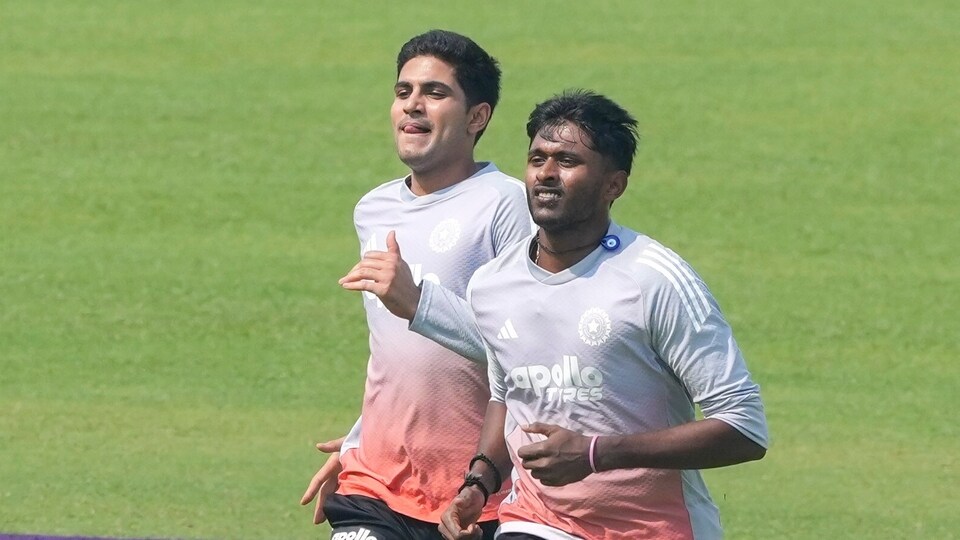
In the 14 months since India’s first Test under head coach Gautam Gambhir, seven batters have occupied the pivotal No. 3 position. A couple of them – Virat Kohli in Bengaluru last October and Devdutt Padikkal in Perth 12 months back – were forced developments when the designated No. 3, Shubman Gill, was compelled to miss the said matches with a stiff neck and a broken finger, respectively.
A change at No. 3 was inevitable from this summer, when Kohli retired from Tests, Gill was named to succeed Rohit Sharma, also retired, and decided to drop down to No. 4. In Gill’s first Test at the helm, in Leeds in June, Sai Sudharsan, the Tamil Nadu left-hander, was given that spot on debut. Sudharsan was dropped for the next Test with comeback man Karun Nair batting there at Edgbaston and Lord’s.
On his return to the XI in Manchester, Sudharsan reclaimed the one-drop position and held it for the next seven innings. In Delhi last month against West Indies in the last of two Tests, he brought up his highest score (87) in the first innings and backed it up with 39 in a modest second-innings chase. His reward? A place on the bench for India’s next assignment, against South Africa in Kolkata where his fellow left-hander from Tamil Nadu, Washington Sundar, was thrust to one-drop.
On a treacherous deck where no batter looked at home, Washington was the most assured in both innings, negotiating 82 deliveries for 29 in the first dig and top-scoring with 31 off 92 in the second in an Indian tally of 93. Will Washington continue to bat at No. 3 in the second Test, starting in Guwahati on Saturday? Don’t hold your breath.
This revolving door philosophy isn’t restricted to the No. 3 slot alone, but of all the calls taken in India’s last six Test series, this perhaps stands out the most. From England onwards, various members of the support staff and skipper Gill himself have waxed eloquent about Sudharsan, anointing him one for the future, a long-term investment that needed time and sensitive handling so that he could grow into an admittedly challenging role. Sudharsan would have been well within his rights to expect to bat at Eden Gardens; one is certain Gambhir would have explained the rationale behind leaving him out of the Kolkata skirmishes, but how does that help a young man trying to find his feet at the highest level? Let’s not forget that he’s only played five Tests to date.
One of the primary reasons for Sudharsan going out was India’s fascination in playing a fourth spinner alongside Washington, Ravindra Jadeja and Kuldeep Yadav. The nod therefore went the way of Axar Patel, one of three spinning all-rounders. Axar has been a stellar white-ball performer, playing influential all-round parts in title triumphs at the T20 World Cup, the Champions Trophy and the T20 Asia Cup since June last year. But before the Kolkata Test, he hadn’t featured in a first-class match for 14 months. His only red-ball outing after being dropped from the XI following the Visakhapatnam Test against England in February 2024 was a Duleep Trophy fixture that same September. Axar’s utility can’t be questioned, but the leadership group has pointed to Mohammed Shami’s lack of red-ball game-time to justify his repeated omission from Test squads. How then will they explain Axar’s inclusion despite such a long first-class hiatus?
Which brings us to the topic of conversations, of messaging, of communication. In Australia last winter, there was a buzz around Shami, who had just started to bowl after knee surgery. Not a day went by when the Aussies didn’t ask privately, with a little trepidation, if Shami would be joining the Test squad, in such high esteem do they hold him. Shami didn’t make it eventually, and maybe with good reason because he was a little undercooked, but despite being in the middle of an excellent run for Bengal in the Ranji Trophy, he is still steadfastly ignored.
Ajit Agarkar, the chairman of selectors, said the other day that he wasn’t sure of Shami’s fitness. Isn’t it your job to ascertain that, Ajit? That’s why the strength and conditioning team is around, that’s why there are physios, right? They could have presented a clear picture had they been asked. Instead, Shami and Agarkar have been engaged in a proxy war of words. Let’s not forget that Shami is a seasoned campaigner who made his India debut a dozen years back and therefore deserves to be treated with respect behoving his standing.
Karun is another enigma in the manner in which he has been handled. True, he didn’t make the most of his return to Test cricket after eight years, with just one half-century in eight innings in England on mainly terrific batting strips. But if the selection panel and/or team management has decided to move on, the least he deserves is to be informed of the same, like Rahul Dravid did with Wriddhiman Saha a few years ago. Again, like Shami, Karun is a senior hand – and, in case it needs reminding, is one of only two Test triple-centurions from India. Surely, he merits a phone call?
Then, there is the curious case of Kuldeep Yadav, superfluous all the way in England even when dry surfaces greeted the teams, and that of Shardul Thakur, recalled for the England series after a year and a half ostensibly because of his medium-paced all-rounder status. Thakur played two Tests, bowled a mere 27 overs (Gill’s lack of confidence in his bowling was almost embarrassing) and has been given the heave-ho. Harshit Rana, who debuted in Perth and played in the next game in Adelaide last year, was dropped for the England tour, held back as cover for the first Test in Leeds, released after the game and when India needed a back-up for the injured Arshdeep Singh in Manchester, was overlooked with Anshul Kamboj getting the nod. The latter may not find favour after his forgettable debut, but then again, who knows, really?
Nitish Kumar Reddy has been identified as the solution to India’s long and abortive quest for a sustained seam-bowling all-rounder resource for Test cricket, with the think-tank espousing the need for quality of opportunity. Against West Indies last month, he bowled a grand total of four overs in Ahmedabad and wasn’t needed to bat, while in the next fixture in Delhi, he made 43 while batting at No. 5 and didn’t bowl a single ball even though India sent down 200 overs on the trot after enforcing the follow-on, and even though Yashasvi Jaiswal was given one cursory over of leg-spin. Bizarre? What do you think?
We are not even going down the Sarfaraz Khan route. 150 in the second innings in Bengaluru against New Zealand, then 11, 9, 0 and 1 in the last four hits of the same series. Travelled to Australia as a reserve batter, didn’t get a game, and was dumped for the tour of England. If there is any consolation for the 28-year-old, it’s that he isn’t short on company in the ‘summarily jettisoned’ list. But how can that be any consolation?
This conundrum of their own making has been amplified by the string of losses at home – four in the last six Tests. India seem to be doing everything possible, including laying out pitches that their own batters appear ill-equipped to succeed on, to stymie their progress. If several of the players in the squad and just outside it are seized by a feeling of uncertainty, if not insecurity, it isn’t without reason. The leadership group must set the house in order, post-haste; the so-called transition phase can’t be an excuse for addled decision-making.


