


 Live Score
 Cricket Teams
 Cricket Players
Why Nitish Reddy fits India’s Washington Sundar-shaped gap better despite Ayush Badoni buzz
India's search for a replacement for Washington Sundar highlights a choice between Ayush Badoni and Nitish Kumar Reddy.

 Prefer HTon Google


India’s search for a Washington Sundar “replacement” often turns into a debate about two completely different jobs. Sundar isn’t picked because he’s an extra batter who can bowl. He’s picked because he is a left-hand bat who also gives you reliable offspin overs, control in the middle, and match-ups that let captains squeeze one more batter into the XI.
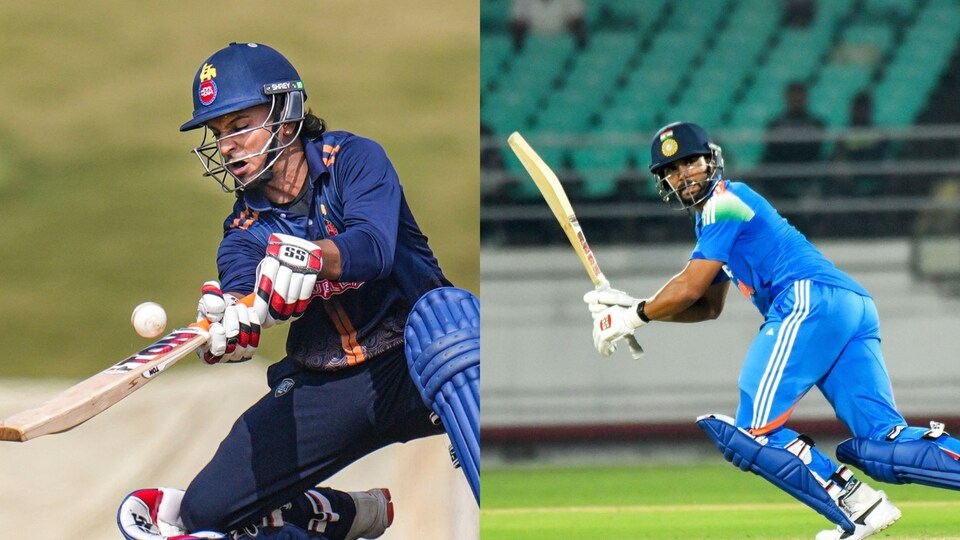
That’s why the current notion of India giving Ayush Badoni a go makes sense. Badoni offers two things selectors like in modern white-ball cricket: a flexible middle-order bat and a bit of offbreak to plug an over when the pitch grips or a left-hander walks in. In pure “skill type”, he feels closer to Sundar than most batting options because he can at least mirror the offspin lane.
But replacement is about reliability, not resemblance. If India’s goal is to replace Sundar’s guaranteed overs, Badoni doesn’t yet project as a 10-overs-in-an-ODI option or a four-overs-in-a-T20 option against top-level batting. His value is tactical: one or two overs to disrupt rhythm, a match-up over when the ball is older, and batting that can absorb pressure without forcing a top-order reshuffle. Think of him as a “role enhancer”, not a bowling allrounder who is picked for his overs.
Also Read: The future superstars: 5 Indian players you need to keep an eye on during the U19 World Cup 2026
Nitish Kumar Reddy, meanwhile, replaces the role more cleanly even though he doesn’t replace the bowling type. Reddy is a genuine allrounder: a batter who can contribute in the engine room and a seam option who can share workload. In XIs where India want two specialist spinners and still need a sixth bowling option, Reddy’s overs have clearer predictability than a part-timer’s. On slower decks or big grounds, pace-off and hard lengths can be just as valuable as finger spin, especially when you’re managing overs through the middle and at the death.
So who is the better Sundar replacement? If the question is “who keeps the team balanced when Sundar is missing?”, the answer is Reddy. India can rebuild spin control elsewhere (a frontline spinner plus a secondary option), but they cannot easily replace an allrounder who lengthens the batting and still gives you legitimate bowling coverage. Reddy’s presence stops the XI from becoming either bowling-heavy or batting-heavy, and it gives the captain more freedom with bowling changes.
Badoni still belongs in the conversation, and the idea of testing him is logical, because he could be the replacement for a different problem: the shortage of calm, adaptable middle-order batting with bonus overs. If India want Sundar’s “shape”, they look at Badoni. If India want Sundar’s “function”, they go with Reddy — and accept that the spin control must come from their specialist spinners, not the allrounder slot.
The selection tells you what the team values in that match. If the surface screams grip and left-hand heavy line-ups, Badoni’s offbreak becomes a handy lever. If the game is about batting depth and seam overs, Reddy is the sturdier bet for India right now, in most conditions, across formats, right away.


