


 Live Score
 Cricket Teams
 Cricket Players
World Cup 2023: Ravindra Jadeja and the art of left-arm spin
Jadeja, Santner and Keshav Maharaj are all left-arm spinners who have enjoyed success in this World Cup. But they approach their bowling in different ways

 Prefer HTon Google


Ravindra Jadeja has been a feature of the Indian team across all three formats of the game since his international debut in 2009. While he has often provided crucial runs in the lower-middle order, it is his craft of left-arm orthodox spin that has been an invaluable asset to his team for the last 14 years.
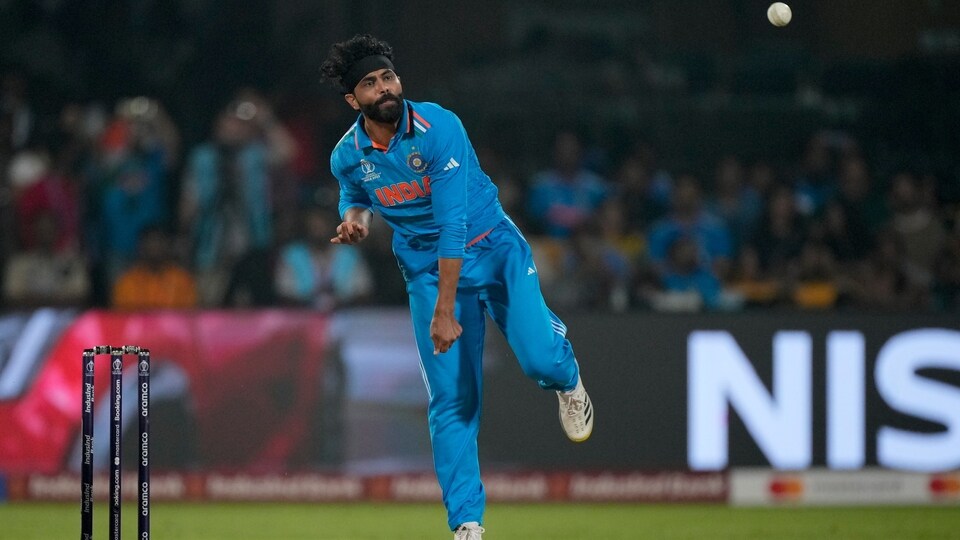
There have been 116 slow left-arm bowlers that have played ODI cricket since the format’s inception, and Jadeja is currently third in the list of leading wicket takers with 220 dismissals in 187 matches. Shakib Al Hasan is the only current player to have more wickets (308 in 233 matches), and Daniel Vettori finished his ODI career with 305 wickets in 276 matches.
Although his career spans 14 years, Jadeja had a dry spell between the start of 2020 and the end of 2022. In this period, he only played 12 ODI matches, taking just eight wickets in total. However, 2023 saw the left-arm spinner heavily involved in three ODI series and the Asia Cup, all before the World Cup started in October. Although Jadeja’s figures weren’t exceptional in these games leading up to the World Cup, playing 15 matches (12 of which were in the subcontinent) and bowling just short of 100 overs in 50-overs cricket prepared him well for India’s World Cup campaign in their own backyard.
Three left-arm orthodox bowlers have shined in the preliminary phase of the World Cup, and each contributed to their team’s progression to the knockout stages. Jadeja and Mitchell Santner have taken the most wickets with 16 each, and South Africa’s Keshav Maharaj is in third place with 14 wickets from nine games. Although the three are grouped together because they are left-arm spinners, they each approach the art in very different ways.
Santner has produced the most spin with an average of 4.4º of turn, and as the tallest of the three by 20cm, has been able to use this extra turn and bounce to find the edge of the right-hand batter on 8.2% of his deliveries, the highest of all slow left-arm bowlers in the tournament. Maharaj has bowled slower (82kph) than any other left-arm orthodox at the World Cup, enticing more shots off the front foot than any of his peers.
Jadeja, who has imparted a modest 2.8º of turn on average at this World Cup, uses a combination of pace and relentless accuracy as his biggest weapon, and he has executed this plan of attack meticulously. The Indian spinner has bowled at an average of 96kph in this tournament, 8kph quicker than any other left-arm orthodox, and the second fastest of all finger spinners; only Maheesh Theekshana serving up off-spin has bowled marginally quicker.
But darting the ball in is just the beginning of the batters’ problems when facing Jadeja in his home country; combined with his fantastic control of line and length, batters have been left in two minds as to whether to go forward or back to the quick spinner, and being trapped on the crease to this unforgiving precision of line and length has resulted in an economy rate of just 3.6 runs per over to right-handed batters.
With the highest percentage of dot balls bowled (60%) of this left-arm trio, Jadeja has enforced wickets through the scoreboard pressure he has created by offering no loose deliveries, in contrast Santner has enticed batters to play attacking shots to shorter, fuller or wider balls, and this variety of deliveries has served New Zealand’s leading wicket-taker well in his approach to the format.
Jadeja has also had the most success of the three against the top order. 42% of his wickets have been batters in the top four, with a strike rate of 32 against these frontline stroke-makers. This is even more impressive given that Jadeja only bowled a single over in the first powerplay, so he was often bowling for the first time to batters who had successfully navigated their way through the new ball from each end, with the ten overs of a more attacking field, and were now set to start building on the firm foundation they had laid. If 50-overs cricket is the middling ground of formats, then the start and end of the innings are the T20 element while the middle 30 overs are more akin to a condensed Test match scenario where bowlers have to execute their plans with near perfection and consistency to gain reward. Jadeja bowled 382 (87%) of his deliveries in this tougher phase of the game when batters are neither seeking to take advantage of the risk-reward environment of the first powerplay, nor bat with the freedom that comes as the innings draws to a close.


