The state government will float global tenders later this year to gain expertise in treating the landslide-prone mountainsides in the long run in Uttarakhand.
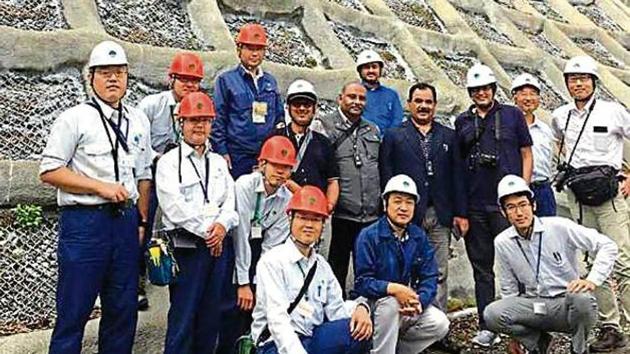
Japanese experts are at present carrying out surveys at three places in the state that have been selected as model places for scientific and cost-effective measures to check landslides. The places are Neergard near Rishikesh in Dehradun district, Jowari 2 in Rudraprayag district and Padli in Nainital district.
The initiative is part of the memorandum of understanding (MoU) signed by the state government and the Japan International Cooperation Agency (JICA) in August 2016 for disaster mitigation in the hilly state, especially slope treatment of the landslide-prone mountainsides. The project, currently in operation since March 2017, will continue till March 2022.
Anup Mallik, the chief project director of JICA Uttarakhand, said the state government sought the help of Japanese experts as they are experts in dealing with such issues. “Japan is highly prone to earthquakes. Over the decades they (Japanese) have developed expertise in treating vulnerable landslide-prone mountains. They have already helped many countries in this regard,” he said.
Referring to the study at model places in Uttarakhand, Mallik said, “Through the construction and treatment procedure at these three sites, Japanese technology will be transferred by Japanese experts to our officials and engineers, which could be then replicated in other landslide-prone areas of the state.”
“JICA has provided support in this regard as a separate technical cooperation project (TCP) since 2016,” he added.
{{/usCountry}}“JICA has provided support in this regard as a separate technical cooperation project (TCP) since 2016,” he added.
{{/usCountry}}Out of the total project cost of ~807 crore under the JICA project in the state, over ₹140 crore has been earmarked for the disaster management component.
“This money will be used in developing the site-specific landslide management plan for the three model places, reconstruction of damaged forest roads, capacity building of forest department personnel and so on,” Mallik said, adding that later this year a multi-stage global tender process will be started for treating these three places after detailed site-specific treatment plans are completed by the Japanese experts.
“After these three places, we also have plans to take up around five landslide-prone areas for treatment in the state,” he said.
On the type of technology to be used in the landslide treatment, Mallik said the Japanese experts would study the landslide-prone areas with regard to its local terrain, site-specific issues and other local factors, which may or may not be same for different landslide prone mountainsides in the state.
“Their treatment for landslide management will be site-specific and that is where we have much to learn,” he said. “The kind of technology they use generally involves building small check-dams, concrete carpeting and hydroseeding,” he added.
Hydroseeding is a process of injecting seeds with machines on the mountain slopes to grow grass and plants that can stop soil erosion and act as binders.
He said Japanese experts deal with the issue in a holistic manner and their treatment focus on soil and water conservation, forest conservation, sediment disaster mitigation, checking erosion and slope reinforcement.