
 E-Paper



Learning to transcend blackboards as 41 govt schools get ‘smart classes’
Students from standards 1 to 10 in these schools, where studies often suffer due to dearth or absenteeism of teachers, will now be able to enjoy e-learning sessions, which is likely to boost academic levels of the students in the long run. The digital education initiative ‘Chetna’ has been introduced by the Divine Light Trust, a Mussoorie-based philanthropic organization that works for education, medical care and rural development.


Dehradun: Like her counterparts in private schools, Deepa, a student of the fifth standard at a government primary school in Mussoorie, would now be able to learn the basics of Science and nuances of spoken English through graphics, animation, sound and visual effects. Learning will transcend blackboards in 41 government schools, including Deepa’s, spread across five districts of Uttarakhand’s Garhwal region, with the introduction of e-learning through smart classes.
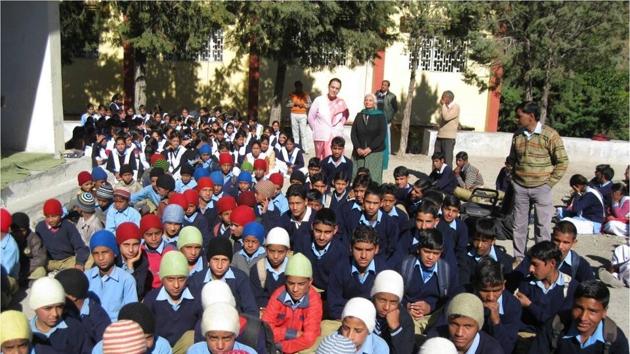
Students from standards 1 to 10 in these schools, where studies often suffer due to dearth or absenteeism of teachers, will now be able to enjoy e-learning sessions, which is likely to boost academic levels of the students in the long run. The digital education initiative ‘Chetna’ has been introduced by the Divine Light Trust, a Mussoorie-based philanthropic organization that works for education, medical care and rural development.
On Tuesday, Uttarakhand Governor, K K Paul marked the launch of the initiative by handing over pendrives (carrying smart classes software) to each of the principals of nine primary, five middle and 27 intermediate schools at the Raj Bhawan. “We need to provide facilities like private schools to students of government schools for improving the quality of education in which multimedia can play a strong role,” said Paul.
Spread across Chamoli, Uttarkashi, Pauri, Tehri and Dehradun districts, the schools were selected by the respective district magistrates after a detailed scrutiny. Under the program, each school is being provided with the required software and hardware including a projector, a screen, a speaker and a mouse along with the licensed teaching content in Hindi medium valid for five years.
Dr Sunil Sanon, chairman of the Trust, hoped that the e-learning program will bring about a “mix of tangible and far-reaching intangible advantages” besides infusing fresh enthusiasm for learning, especially in the remote, hill areas. “The smart classes will not only compensate for the absence of certain teachers, but will also help in keeping students disciplined and interested in learning thus reducing the common practice of bunking classes. We hope that the program will contribute to the rise in the standard of education in the hinterland of Uttarakhand,” said Dr Sanon.
The program comes after a similar experiment. “We were encouraged (to start the Chetna program) after a qualitative change was witnessed in the academic levels of the students from the lower strata in two government-aided girls’ schools of Mussoorie where we’d set up audio-visual classrooms in 2013,” said Dr Venu Sanon, co-founder and education coordinator of the Trust. Teachers from the respective schools have been trained in handling the equipment and ‘social audit teams’ have also been created to ensure that the e-learning sessions are used effectively.
“Facilities like audio-visual classes were a distant dream for our students till now. They’re very excited (to attend the smart classes)...we hope that it will make a difference in the way they enjoy various subjects,” said Urmila Bhatt, an assistant teacher at Government Primary School (Charleville Gate) in Mussoorie which has 35 students on roll from classes 1-5.


