
 E-Paper



Never hungry in rich prey base area, RTR tigers shun trap bait
The tigers need to be radio-collared and their movement monitored before they are translocation process is started.


How do you bait and trap a tiger that’s hardly ever hungry?
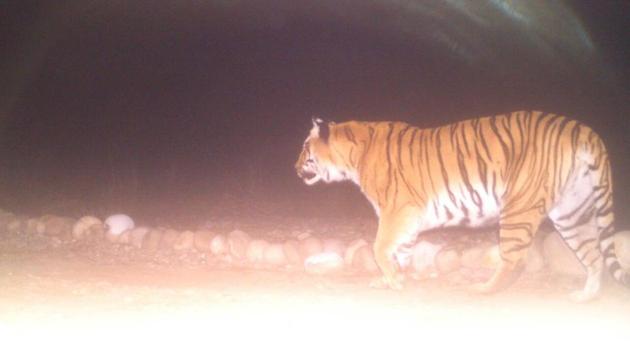
That’s one question the Rajaji Tiger Reserve (RTR) management seems to have no answer to. The officials at the RTR are scratching their heads, trying to brainstorm a solution so that they could trap two female tigers in the western part of the reserve and put radio collars around their neck.
The tigers need to be radio-collared and their movement monitored before they are translocation process is started. The move to radio-collar two tigers — both over 10 years old — was launched after getting approval from Union ministry of environment, forest and climate change (MoEFCC).
As per the officials, the two tigers they have chosen are “not even looking at the bait” they keep as the big cats in the western part of the reserve hardly ever go hungry owing to the huge prey base. The western part has only two female tigers with no breeding record. Spread across 570 sqkm, the reserve is at least four times bigger that the150 sqkm eastern part that has a high density of tiger population. The reserve reported 34 tigers during Phase IV an increase of 18 tigers as compared to Phase IV monitoring of 2014.
“There’s healthy prey base in the western area and therefore, the tigresses are not interested in the bait kept by us. We have attempted to trap them through this method at least five times, but failed every time,” Sanatan Sonkar, director, RTR, said.
After National Tiger Conservation Authority (NTCA) gave nod to radio-collar the tigers last year, several issues popped up on ground delaying the detailed monitoring of the existing tigers in the western part.
The NTCA approval came in August. It was rainy season at the time after which winter stepped in when wild bushes grew thick and long making it difficult for the officials to track the big cats.
Tiger translocation is planned in western part that is divided from the eastern part by a buzzing narrow corridor that disallows movement of tigers. The big cats in eastern part are reporting healthy breeding, but lack of a male tiger in the western part has blocked the process.
The RTR management’s initial plan is to radio-collar the tigresses and track their movement. In a month’s time then, three tigers- one male and two females will be relocated from Corbett landscape to the western part to initiate breeding.
“The western part is extremely big and is rich in prey base. That’s why it is not difficult for the animals to find food. We are ready with the teams to tranquilise the animals and radio-collar them,” Aditi Sharma, veterinarian assisting the management said.
The technical support is provided by Wildlife Institute of India (WII).


