E-Paper



Open sewage treatment plant near Badrinath shrine: HC asks govt to explain
The Uttarakhand high court has directed the state and central governments to explain why a sewerage treatment plant has been constructed near the Badrinath shrine in violation of the laid down norms


The Uttarakhand high court has directed the state and central governments to explain why a sewerage treatment plant has been constructed near the Badrinath shrine in violation of the laid down norms.
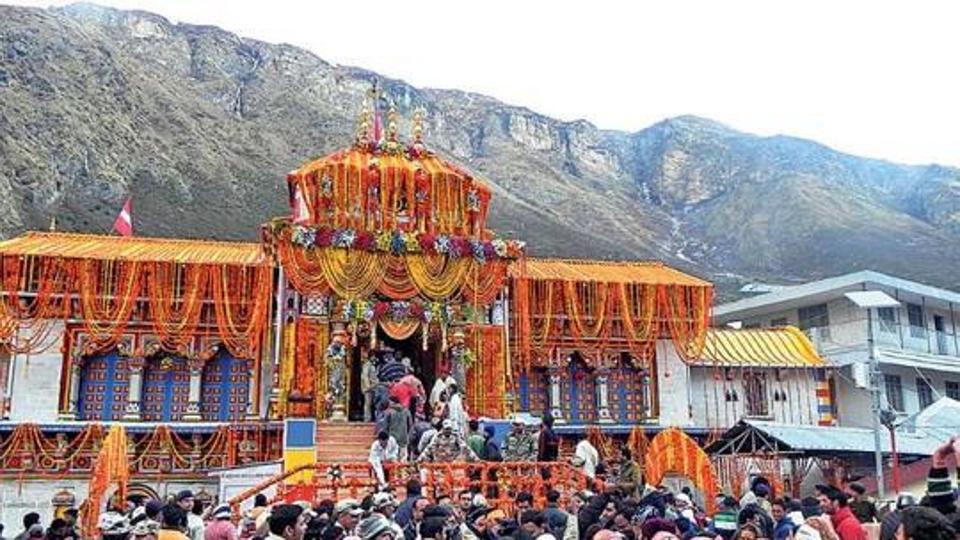
A division bench of justices VK Bisht and Alok Singh issued the notices while hearing a public interest litigation filed by Nainital resident Chetna Bhargav on Thursday, the petitioner’s counsel MC Pant said.
Badrinath shrine, one of the Char Dhams, is located in Garhwal hills in Chamoli district along the banks of River Alaknanda.
Chetna said on June 6 this year, she went on a pilgrimage to Badrinath shrine, Narad Kund, Anna Kshetra, Khap Kshetra and Baba Balaknath Ashram.
“I was shocked and hurt to see the unhygienic condition there. An open sewage treatment plant has been constructed just 500 meters from Badrinath shrine. The is famous for Anna Kshetra Ashram where hundreds of sadhus are served food twice a day, but the pungent smell from the STP is causing great inconvenience. The STP is also causing harm to the ecosystem of the surrounding areas and polluting the waters of Alaknanda,” Chetan said in her petition.
“The construction of STP in a residential and religious area has not only failed the objectives of the Namami Gange Programme but has also caused great inconvenience, stress, and disease among the local inhabitants and people visiting there,” the petition said
The petitioner urged the court to take immediate steps for shifting of the open STP to an alternate location.
Chetna said main pillars of Namami Gange Programme are sewage treatment infrastructure, river-front development, river- surface cleaning, bio-diversity, afforestation, public awareness, industrial effluent monitoring, and the establishment of Ganga Grams.
The petitioner claimed that the original proposed site for the establishment of STP was at a location downstream of Badrinath Town on Badrinath-Joshimath road near Alaknanda Vanya Vihar where sufficient land was available. “Contradictory to this, STP was setup at Khak Chowk, which is opposite to the main road,” she said.
“STPs are considered a major source of aerosol, and may constitute an important health risk for flora and workers there as well as to surrounding inhabitants. Bio-aerosols produced by STP contain different types of microorganisms such as viruses, pathogenic bacterias and fungi, capable of causing skin, digestive system, respiratory and nervous system diseases and human allergies,” the petition said.
The petitioner pointed out that the wastewater from the nearby drainage/nullah and Narad Kund and Sapt Kund was draining into Alaknanda, but no steps have been taken to permanently stop it. “A nullah was proposed for the discharge of wastage from STP but the same has not been constructed and the sewer lines are directly draining into Alaknanda,” the petitioner said
Bhargav said in response to a writ petition regarding the pollution in Alaknanda river in 2005, the HC had ordered the authorities to take necessary steps to end the unhygienic conditions prevalent near the Badrinath temple.
“The economic frontiers have always treated the spiritual heritage as a cash cow. We need to realise what we lose in our race to achieve more, and it is not something I want to stand by and hence the PIL,” Chetna said.