E-Paper



Uttarakhand HC spells it out: Cops shouldn’t work more than 8 hrs at stretch
In a landmark judgment, the Uttarakhand high court on Tuesday directed the state government to ensure that police personnel do not work for over eight hours at a stretch and give at least three promotions to a policeman


In a landmark judgment, the Uttarakhand high court on Tuesday directed the state government to ensure that police personnel do not work for over eight hours at a stretch and give at least three promotions to a policeman.
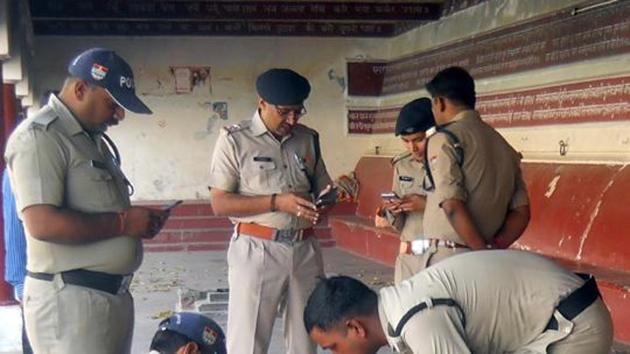
The high court, in its 67-page order, also ordered the government to create a corpus within a period of three months for welfare of policemen and appoint a psychiatrist in each district to counsel policemen.
The order was issued by a double bench of justices Rajiv Sharma and Sharad Kumar Sharma while disposing of a public interest litigation (PIL) filed by Arun Kumar Bhadoria in 2017. HT has a copy of the court order.
The PIL had sought better and humane conditions of service for Uttarakhand’s police personnel.
Besides, the court directed the government to provide sufficient recreational facilities like gym and swimming pool etc at police stations as well as police housing colonies and medically examine all police personnel after every three months to assess their fitness.
The order issued mandatory directions to the government, citing reports of various commissions, committees and research bodies on police reforms and condition of police in India and the state.
The HC order pointed out that according to section 42 of clause 1 of the Uttarakhand Police Act, 2007, police officers are supposed to work for 24 hours.
The bench said: “Section 42 of the Uttarakhand Police Act, 2007, has to be interpreted in a reasonable and humane manner. What it implies is that a police officer should be available for 24 hours but it does not suggest that he has to work uninterruptedly for 24 hours. The stress and strain is the same of police officer/personnel.”
“The long duty hour takes a toll on the morale, motivation and self-esteem of staff. The overall frustration manifests itself in the offensive conduct and behaviour with the public at times. It is the duty cast up the State to make provisions for securing just and humane conditions of work under Article 42 of the Constitution,” the order stated.
The bench has also directed the state government to pay at least 45 days’ extra salary to improve conditions of service of the police personnel for undertaking the arduous duties, make suitable amendments in the rules by providing at least three promotions to a policeman to remove stagnation and for improving efficiency, and recruit qualified doctors specifically for the police force.