
 E-Paper



Delhiwale: A home away from ‘des’
In the living quarters of a family of labourers

 Prefer HTon Google


A family of labourers, their true home, they say, is their village, which they call des (country). But while they are in the Capital, for practical reasons, they have to make it a home too in the form of a pavement shelter where they cook, rest, sleep and spend free hours together.
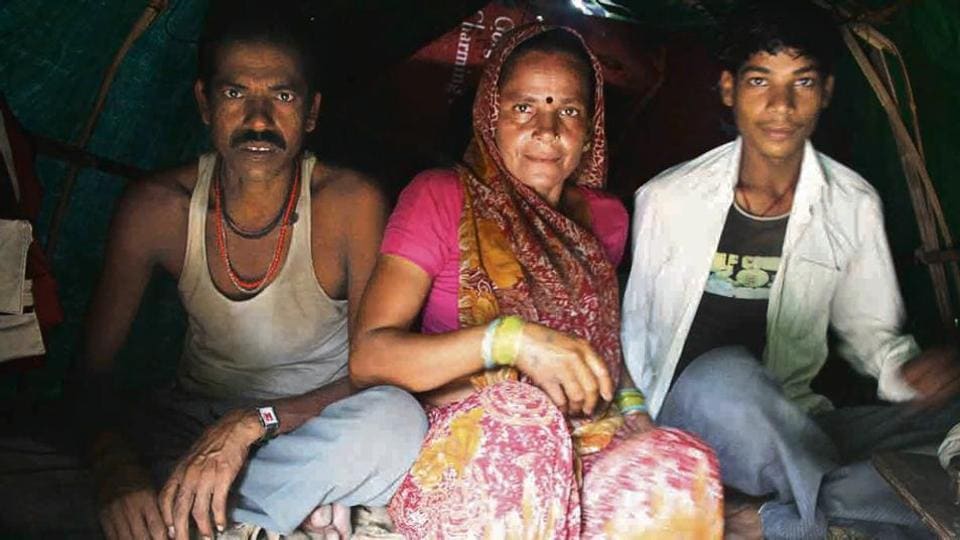
The middle-aged Nand Ram lives with his wife, Beni, and teenage son, Bablu, in Green Park, a genteel neighbourhood in South Delhi. Mr Ram’s house is not far from the area’s market, full of elegant cafes and sophisticated gentry. His accommodation consists of one room. The roof and walls are made of yellow, blue, black and white plastic sheets. “We bought these at wholesale rates from Gautam Nagar market,” explains young Bablu. The plastic was originally used as packaging for consumer goods—the white plastic at the entrance, for instance, is printed with red letters saying, FRAGILE.
The structure of the house rests on a scaffolding of twigs that the family gathered from the nearby Deer Park, a popular destination for the neighbourhood’s morning walkers.
Owning no agricultural land in Begha, their village in the Tikamgarh district of Madhya Pradesh, Mr Ram and his family decided to try their luck in a place far from the “des” and arrived in Delhi a few years ago. They got work promptly. One of the first assignments they got, along with other labourers, was building the pavement between Aurobindo Market and Hauz Khas Village with brown-and-red bricks. “We got the kaam (work) through a thekedar (contractor),” says Mr Ram.
During the brief chat, his son remains quiet, looking shy, but his wife, Benu, makes a remark about the steep food prices and their consequent difficulty in saving money. They often take brief breaks from work assignments to go back to their village, which they again insist is their real home.
Once you step inside the house, you cannot stand upright. The roof is too low. The mattress is spread out on a stretcher-like thing made of wooden rods. A ply board is used as a table on which is resting a bowl of leftover curry, a jar of milk and a cake of soap. The family takes their bath outside, next to the kitchen, which consists of a mud stove on the pavement. A can of Diet Coke is used as mug.
The man, woman and son wake up every morning at six. The wife prepares the meal, which they eat before eight — this is when they leave for work. At 6pm, they return and four hours later they fall asleep.
But it is early morning and the three of them are ready to get out for work—the son is in grey pants and white long-sleeved shirt, as if heading to school.
During the monsoon, Mr Ram says, the rain water drips through the gaps in the plastic sheets. When the rain comes at night, the family inevitably wakes up and waits for it to stop before going back to sleep. Sometimes the shower continues for hours, they say.
One of the advantages of such a makeshift accommodation, the family feels, is that they can easily move from one location to another depending on their work site.


