
 E-Paper



At Purana Qila, first museum for the country’s once-lost antiques
The gallery is curated by the Archaeological Survey of India (ASI). Most of the objects retrieved are through the ministry of external affairs and other law enforcement agencies and are stored at the ASI’s central antiquity collection (CAC) or other authorities.

 Prefer HTon Google


A 10th century sculpture of Mahisasurmardini stolen from Uttarakhand, and retrieved from the Metropolitan museum in New York in August 2018; a marble sculpture of Brahma and Brahmani stolen from a museum at Patan, Gujarat and recovered from London in 2016; and a 6th-7th century sculpture of standing Buddha returned by the Metropolitan Museum of Art in New York in 1999. These are some of the objects that are on display at a new museum gallery inside the Purana Qila complex.
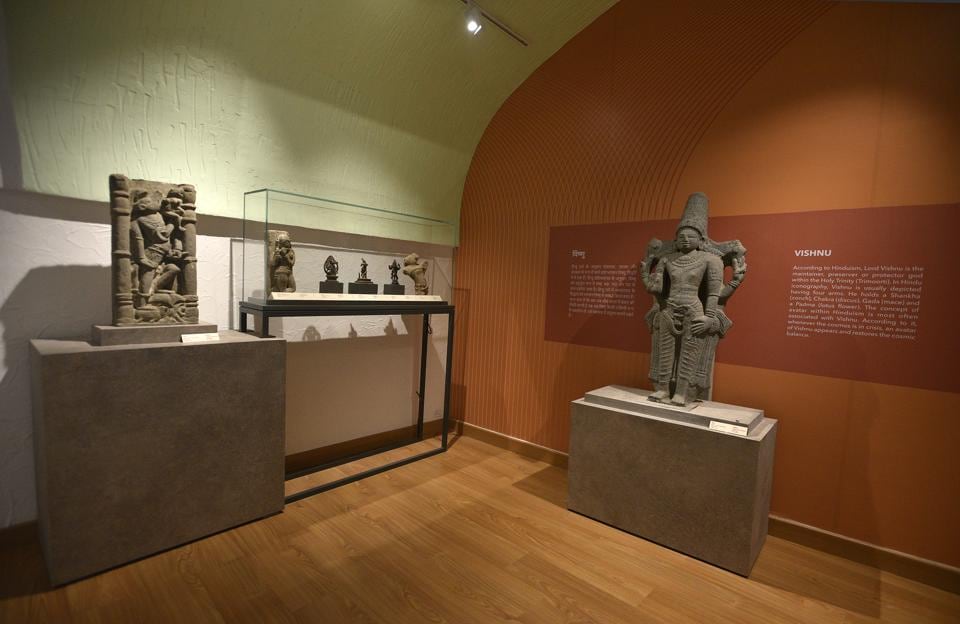
The gallery of confiscated and retrieved objects, a first of its kind in the country, was inaugurated on Saturday by minister of state for culture Prahlad Singh Patel.
The gallery will be open for public from 10 AM to 5 PM everyday, except Friday.
The gallery is curated by the Archaeological Survey of India (ASI). Most of the objects retrieved are through the ministry of external affairs and other law enforcement agencies and are stored at the ASI’s central antiquity collection (CAC) or other authorities.
“Our repository contains about 4,000 objects in the ‘retrieved and confiscated’ category. Out of these, we have selected 195 for display, depending on the uniqueness of the antiquity,” an official from the ASI said. The displayed antiquities include coins, Mughal miniatures, ivory and copper objects, as well as stone sculptures.
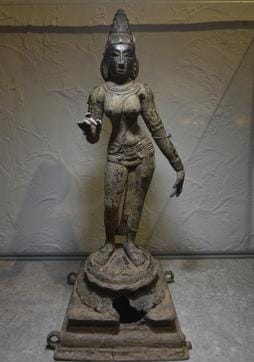
Most of the artifacts have been handed over voluntarily by countries which possessed them.
Apart from these, there are also objects that were stolen, but confiscated by authorities like the Central Bureau of Investigation (CBI), the Directorate of Revenue Intelligence (DRI) or the Delhi crime branch and returned to the ASI.
“If we know which museum or monument the object belonged to, then we return it to them. But in cases where we cannot trace the precise origin of the antiquity or do not consider it safe to be returned to it, we retain them with the CAC and are being displayed for public in the new gallery,” the official said.
“Most of the objects that were illegally exported were those acquired by art dealer Subhash Kapoor,” said D N Dimri former director of antiquities at ASI.
Allegedly one of the most prolific art smugglers in the world, Kapoor is currently on trial in Chennai and is charged with running a $100 million international smuggling racket. He was arrested in Frankfurt International Airport in 2011 and was extradited to Chennai the following year.
“Countries are bound by the UNESCO convention of 1970 to not acquire any objects wherein there is even a little bit of doubt about the legality of its acquisition,” he added.
The other means of retrieving a smuggled object, Dimri explained, is by proving its origin through detailed documentation and then negotiating its return through the India’s embassies.


