
 E-Paper



Delhi land pooling: Your dream to buy an affordable house may finally come true
AAP minister Satyendar Jain has said that 95 urbanised villages will be declared as development areas under the Delhi Development Authority Act as part of land pooling policy.


Removing the final bottleneck in implementation of the land pooling policy, Delhi urban development minister Satyendar Jain said on Thursday that the Delhi government will, within days, notify the 89 villages — declared as urbanised on Tuesday — as ‘development areas’.
“A total of 95 urbanised villages will be declared as development areas under section 12 of the Delhi Development Authority Act within two-three days. While 89 villages were notified as urbanised on Tuesday, six other urbanised villages (from previous notifications), will also be notified as development areas. Once notified the DDA can start implementation of the land pooling policy,” Jain said.
The minister also denied media reports that the Lieutenant Governor Anil Baijal’s office has bypassed the Delhi government in getting the notification issued by the urban development department.
Implementation of the policy will be a gateway towards availability of affordable housing in planned pockets of the city.
With the DDA having failed in meeting the housing demand in the capital, the city has witnessed mushrooming of unauthorised colonies across the city.
As the acquisition of land has become a controversial subject, planned urban growth had become even more difficult. With the land owner being in direct control of the development, the land pooling policy is being seen as the future of urbanisation in the capital.
The matter had been pending for more than two years as the Delhi government had been demanding the DDA to introduce a clause in the policy that 10% of the developed land will be allocated to the Delhi government in order to carry out social sector services like construction of schools and hospitals.
“The chief minister had already announced that the policy will be cleared in May. It has also been agreed that the DDA will provide developed land free of cost as and when required for providing services such as schools, hospitals and water supply units,” Jain said.
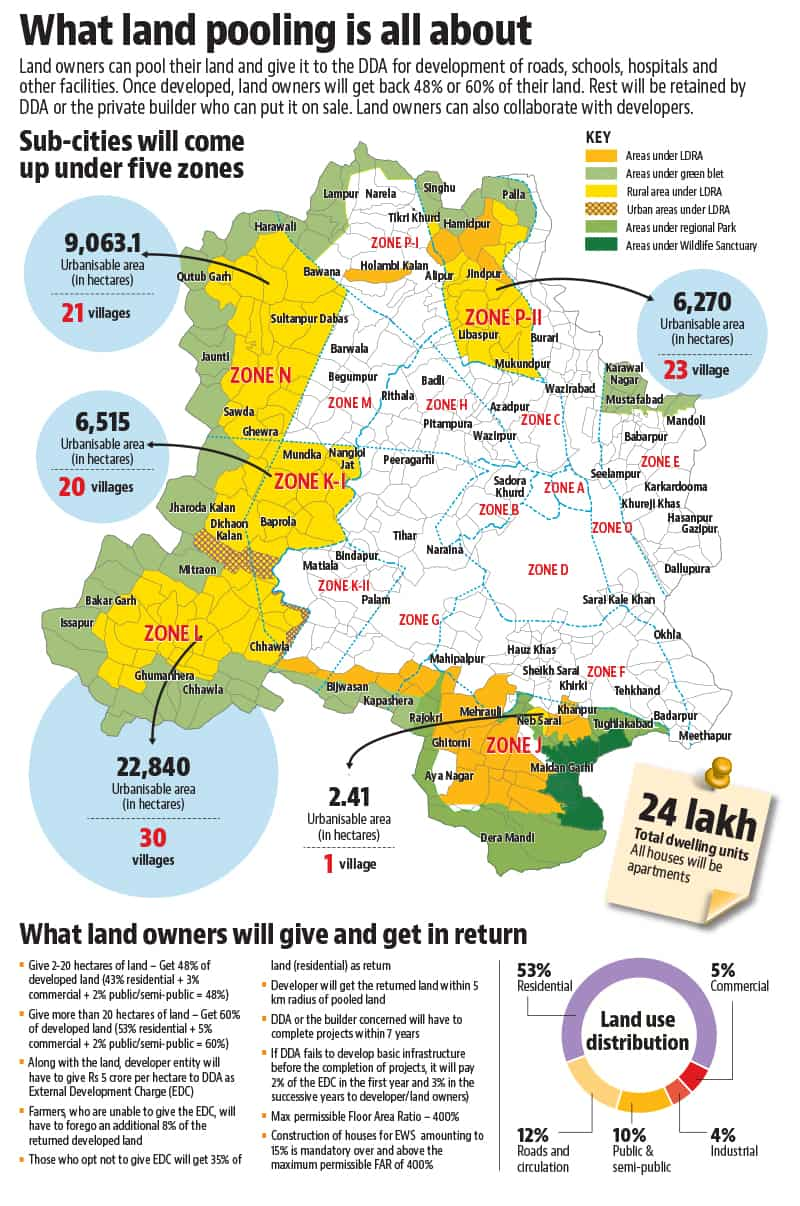
All the villages to be developed under the policy are located in west, north and north-western parts of Delhi. These villages are spread over about 77,000 acres of land, of which around 40,000 acres developed land will be available for real estate development.
While the policy implementation will change the character of these rural belts, revenue villages on the margins of the Delhi border across the city are likely to remain out of the policy even in the future.
“The villages on the city borders need to retain their agricultural character, or the city will be robbed of its greenery,” Jain said.


