Since January, the municipal corporations of Delhi (MCD) have recorded 38 cases of dengue and 92 cases of chikungunya till May 20. Of these, in 20 cases of dengue and 31 of chikungunya, people were infected in the neighbouring states and came for treatment to the Capital, according to data released by the corporations.
However, for 86% of infection originating in Delhi, the corporation failed to get the addresses or were unable to trace the addresses.
This makes the whole exercise useless, according to experts. Surveillance of the vector -borne diseases is done so that the data can be used for mapping areas where there is mosquito menace and actions can be taken accordingly.
Read: Dengue mosquitoes breed even in dry summer months: Study
“So much effort goes into collecting surveillance data for vector-borne diseases, but without the address or the locality, the data becomes unusable. Breeding control actions are taken depending on where the patients are coming from. In the absence of data, areas where breeding control efforts are needed, like urban slums, will not get adequate attention,” said Dr Sujatha Sunil, group leader, Vector Borne Diseases Group, International Centre for Genetic Engineering and Biotechnology.
“We cannot, however, expect the duty doctors to note down all the information. MCD teams have to be present at all secondary and tertiary care hospitals, especially the government ones whose only job would be to collect the data,” she added.
{{/usCountry}}“We cannot, however, expect the duty doctors to note down all the information. MCD teams have to be present at all secondary and tertiary care hospitals, especially the government ones whose only job would be to collect the data,” she added.
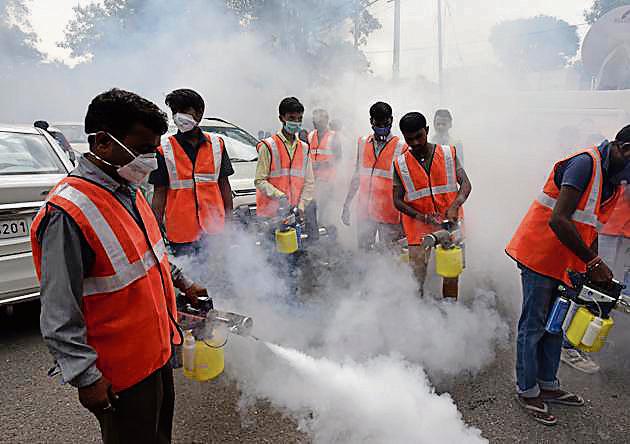
{{/usCountry}}Fogging efforts, in case of outbreak is also based on this data.
“Also, in cases of severe outbreak, like the dengue outbreak of 2015, we can also do fogging in particular areas to kill adult mosquitoes,” said a Delhi government health official. Fogging is usually not encouraged as killing adult mosquitoes in open areas is not effective and is done only when there is an outbreak.
ead: In the backyard of AIIMS: Visiting ground zero of Delhi’s chikungunya outbreak
“The best way to prevent dengue or chikungunya, which have become a yearly menace, is to prevent the breeding of the aedes aegypti mosquito, which transmits the disease. Once an adult mosquito starts reproducing, it can give birth to 10,000 mosquitoes in a month and the population increases to 10 lakh the month after. We need to stop this at the beginning,” said SM Raheja, head of Delhi’s dengue control cell.
Stay updated with all top Cities including, Bengaluru, Delhi, Mumbai and more across India. Stay informed on the latest happenings in World News along with Delhi Election 2025 and Delhi Election Result 2025 Live, New Delhi Election Result Live, Kalkaji Election Result Live at Hindustan Times.
Stay updated with all top Cities including, Bengaluru, Delhi, Mumbai and more across India. Stay informed on the latest happenings in World News along with Delhi Election 2025 and Delhi Election Result 2025 Live, New Delhi Election Result Live, Kalkaji Election Result Live at Hindustan Times.