Sign in

Air pollution: What Delhi can learn from Beijing

Once known as the world’s most polluted city, Beijing shed the dubious tag by showing political resolve and implementing innovate measures to provide its citizens cleaner air to breathe.

Updated on: Mar 11, 2015, 22:53:10 IST
None | By , New Delhi
Share
Share via
  • facebook
  • twitter
  • linkedin
  • whatsapp
Copy link
  • copy link

Once known as the world’s most polluted city, Beijing shed the dubious tag by showing political resolve and implementing innovate measures to provide its citizens cleaner air to breathe.

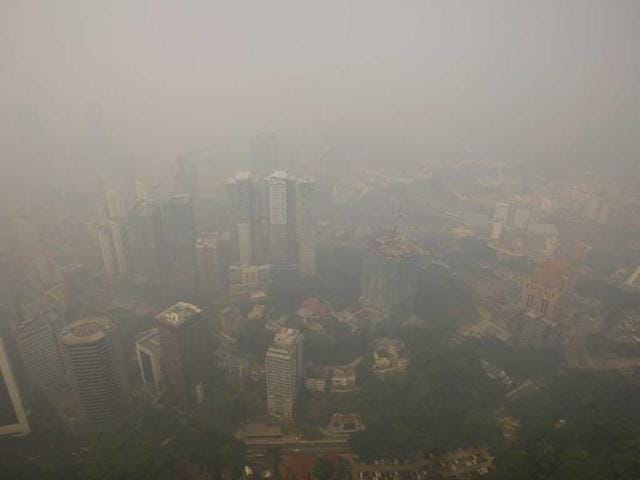
A-man-walks-past-trees-on-the-sidewalk-of-a-street-amid-heavy-haze-in-Beijing-A-chronic-shortage-of-natural-gas-is-hurting-China-s-plan-to-move-away-from-burning-coal-to-heat-homes-and-offices-raising-the-prospect-of-more-choking-air-pollution-this-winter-and-beyond-The-problem-is-worst-in-northern-China-where-air-pollution-mainly-caused-by-decades-of-reliance-on-coal-has-lowered-life-expectancy-by-an-estimated-5-5-years-compared-to-the-south-Chinese-and-international-researchers-said-in-July-Reuters-

Delhi — which has now picked up the tag of being most polluted — can learn some lessons from its neighbour in bringing down pollution levels.

Beijing in a span of less than eight years reduced its air pollution by about four percent, reversing the trend of deteriorating air quality in the city, said Li Kunsheng, director of Emission Management Unit of Beijing Municipal Environmental Protection Unit. Li was speaking at the Centre for Science and Environment’s Anil Agarwal Dialogue on the poor in climate change.

What Beijing achieved should be an inspiration for Delhi as it has dual benefits of healthier residents and spurring economic growth, said Michael P. Walsh, a vehicle technology expert from United States.

As air pollution levels were high, the Beijing administration adopted a multi-pronged strategy from introducing cleaner fuel to phasing out older vehicles to putting restrictions on buying new vehicles and incentives for adopting electric vehicles.

Phasing out a personal car every day, the city capped the number of vehicles at six million, Kunsheng said, adding Euro V compliant fuel was introduced in 2013 to reduce toxic pollutants.

In comparison, there are over seven million vehicles in Delhi and introducing Euro V will take another eight years, by which time vehicles in Beijing will be running on Euro 7.

Kunsheng said six ring roads have been built around Beijing — Delhi has only two — for the smooth passage of vehicles. Only least polluting vehicles are allowed in the inner most ring roads. “We achieve this through a vehicle lab system based on vehicle’s emission level,” he added.

The city has about 300 pollution checking centres having powers to penalize drivers of polluting vehicles with a fine of up to US$300 (Rs 18,845). The administration also provides financial incentives to buy zero emission electric vehicles and now the city has about 1,000 electric buses.

On heavy air pollution days, the city administration issues advisories to citizens and clamps down on industries and vehicle movement. People are advised to take public transport.

Los Angeles was like Beijing and Delhi in 1948 with smog gripping the city almost every third day.

“The city would have seen highest air pollution witnessed ever by the human race. But we were able to reduce air pollution by over 90% in the last 40 years…Our target is to have a zero emission city by 2050,” said Bart E Croes of California Air Resources Board.

He said reducing air pollution cost a few hundred dollars per resident with just 0.5% impact on the gross domestic product. “Healthier population is also more productive,” he said.

  • Chetan Chauhan
    ABOUT THE AUTHOR
    Chetan Chauhan

    Chetan Chauhan is the National Affairs Editor looking into all aspects of news and features from across India. A Chevening scholar with over three decades of experience in reporting and news management, Chetan has extensively covered all important aspects of the social sector, political economy, environment and climate change nationally and internationally. He did a journalism course at the Reuters Institute of Journalism in Oxford and Digital Media training at Nanyang Technological University in Singapore. He started as a reporter with The Statesman in 1996 and joined the Hindustan Times in 2000 in the metro bureau covering environment, crime and Delhi politics. He covered hot local news, from the Jessica Lal murder case to the rebellion of Delhi Congress MLAs against then Chief Minister Sheila Dikshit, to the replacement of toxic vehicle fuel with cleaner compressed natural gas (CNG) in the national capital. Some of his stories on air pollution became part of the Supreme Court’s landmark MC Mehta versus Government of India case in the National Capital Region (NCR), forcing the government to take corrective measures. As part of the national political bureau since 2004, he covered important central sectors such as environment, education, social justice, labour, rural development, water resources, renewable energy, agriculture, broadcasting and the Planning Commission for more than a decade producing several exclusive and investigative breaking stories. His specialisation is the environment, having covered at least a dozen United Nations global conferences on climate change, biodiversity and wildlife including climate summits in Paris, Copenhagen and Bali. He also covered India’s two five-year plans ---11th and 12th and reported on drafting and execution of right based laws such as Right to Education, Right to Information and rural job guarantee law, MG-NREGA, now being introduced in new format as VG-RAM-G Act. He has in-depth knowledge of social sector issues. He was one of the first to report on tigers vanishing from Sariska and Panna wildlife reserves in 2004 and 2008, respectively, leading to the setting up of the National Tiger Conservation Authority (NTCA) and the introduction of stringent penal provisions for poaching. He has written extensively on the rising human-animal conflict in India and the degradation of India’s biodiversity hotspots because of mining and other activities. Since 2004, Chetan has covered Parliament comprehensively and participated in training on the nuanced coverage of Parliament proceedings. He has travelled extensively across India to cover national and provincial elections since 1998, especially in the Hindi heartland states, considered India’s road to power. He writes a regular column for Hindustan Times, Ecostani, on important national politics, economy, Himalayan ecology and environmental issues. His other responsibilities include providing inputs for edits and edit page articles for the publication, apart from managing news flow from across India.Read More

Catch every big hit, every wicket with Crickit, a one stop destination for Live Scores, Match Stats, Infographics & much more. Explore now!

Stay updated with all top Cities including, Bengaluru, Delhi, Mumbai and more across India. Stay informed on the latest happenings in World News along with Delhi Election 2025 and Delhi Election Result 2025 Live, New Delhi Election Result Live, Kalkaji Election Result Live at Hindustan Times.