
 E-Paper



Delhi budget imposes no new taxes, focuses on education and healthcare
The Delhi government on Wednesday consolidated its pro-poor policies with a major thrust on revamping school education and healthcare, proposing to spend one-fourth of Delhi’s Rs 48,000-crore budget on the social sector over the next financial year.


The Delhi government on Wednesday consolidated its pro-poor policies with a major thrust on revamping school education and healthcare, proposing to spend one-fourth of the capital’s Rs 48,000-crore budget on the social sector over the next financial year.
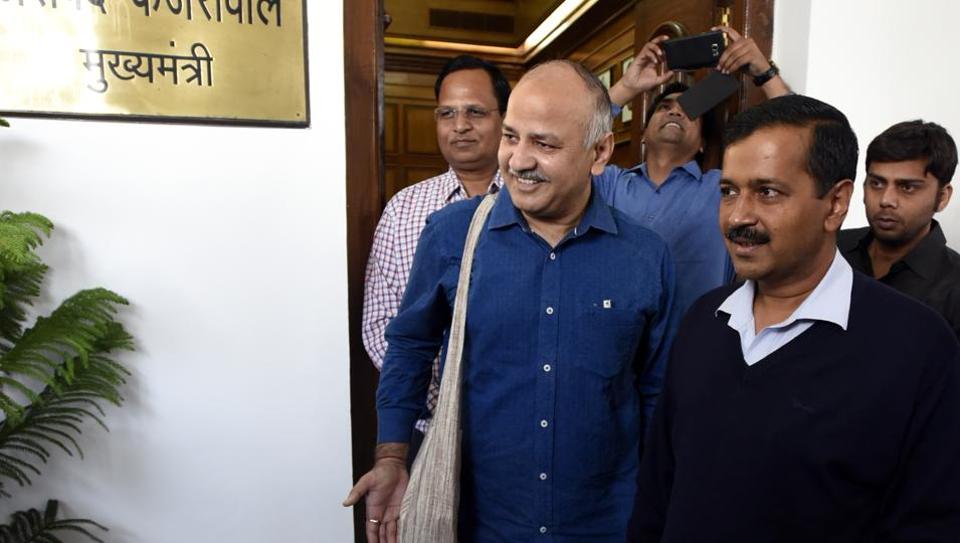
The budget, presented by Delhi finance minister Manish Sisodia, stayed away from imposing any new tax on citizens for the third year in a row.
There was no proposal for levying new taxes because the implementation of the proposed goods and services tax from July 1 was likely to overhaul the indirect tax regime across the country. However, the Delhi government reduced VAT rates on certain items.
The price of sanitary napkins, plywood, blackboards, particle boards and granite is likely to come down because the VAT imposed on them has been reduced from 12.5% to 5%. Sanitary napkins costing up to Rs 20 will be tax-free.
The highest allocation of Rs 11,300 crore was earmarked for the education sector. The funds will be used for constructing 10,000 new classrooms, providing tablets to teachers, and distributing bananas and eggs among students under the mid-day meal scheme.
Expanding the reach of the mid-day meal scheme, Sisodia announced that it will be extended to girl students from classes 9 to 12. His budget also proposed the setting up of early childhood centres, besides the installation of computer labs and libraries at government schools.
The health sector came second on the government’s list of priorities, with an allocation of Rs 5,736 crore – almost 12% – of the total budget outlay. With these funds, the government aims to strengthen its three-tier system of mohalla clinics, polyclinics and multi-specialty/super-specialty hospitals in the city.
“We expect to increase the number of mohalla clinics to over 150 by the end of the current financial year. We aim to set up 1,000 mohalla clinics in the next financial year, for which work is going on in full swing,” said Sisodia, who is also the Delhi deputy chief minister. At present, the city has 110 mohalla clinics.
The government also announced a number of new infrastructural projects for 2017-18. It said that while the construction of two underpasses at Ashram and Mahipalpur will be launched in the next financial year, expansion of the Delhi metro network and Barapullah elevated corridor will be completed in the same period.
The Delhi government also suggested turning the traditional outlay-oriented budget into an “outcome-oriented budget” by injecting transparency and accountability into the exercise. “Money is being saved because we are working honestly… Under this outcome-oriented budget, there will be accountability for every single penny that is spent,” said Sisodia.
The budget comes just a month ahead of the municipal elections in the city. Even as Sisodia hit out at the Centre over demonetisation, which he termed as the primary cause for the dip in revenue and GDP growth in the current fiscal, he said the government will continue offering the water and power subsidies introduced in the AAP government’s first budget in 2015.
The government also earmarked a record Rs 7,571 crore for civic bodies, which comes to about 15% of the total allocation and about 14.9% higher than the funds allocated last year. Chief minister Arvind Kejriwal said the increase in allocation was aimed at spurring the civic bodies to get their house in order.
Asked if the budget was framed with the municipal elections in mind, Kejriwal said: “The AAP government has delivered on its promises. We have opened mohalla clinics, new schools, laid new water pipelines in several colonies. If we ask for votes based on that, what’s wrong with it?”
However, opposition leader Vijender Gupta termed Sisodia’s budget speech as an attempt to hide the AAP government’s failure to fulfill the promises listed in the 70-point manifesto released on the eve of the 2015 election. “The finance minister fallaciously claimed historic growth in revenue collection on many fronts. This is against the actual targets. The total receipts for the current financial year were projected at Rs 44,946 crore – against which the government expects to achieve Rs 40,083 crore. The government has failed to mop up about Rs 4,863 crore of its income,” Gupta said.


