
 E-Paper



A pro-Beijing vote in Malé
President Muizzu’s anti-India stance will have economic and strategic costs

 Prefer HTon Google


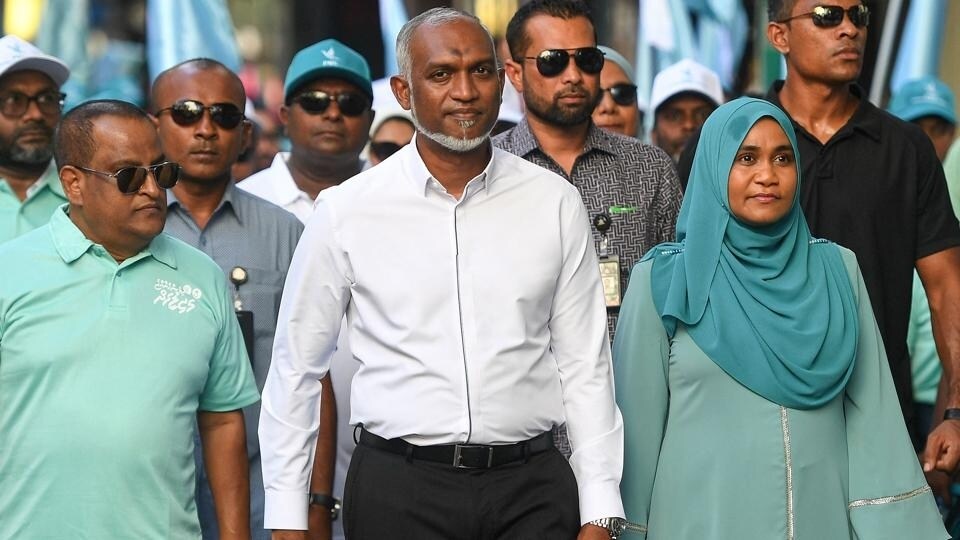
The resounding victory for President Mohamed Muizzu’s ruling coalition in the parliamentary polls is likely to further complicate India’s relations with the Maldives at a time of increased contestation between New Delhi and Beijing across the Indian Ocean. Muizzu pitched the election as a referendum on his pro-China, anti-India policies that have roiled Male’s relations with New Delhi since he came to power last year. The main Opposition Maldivian Democratic Party (MDP) argued for course correction, pointing to history, geography and legacy, and campaigned against the obvious pro-China tilt. It is telling that the MDP’s message didn’t resonate with voters and it won less than a dozen seats in the 93-member Parliament. The results reflect the popular backing for Muizzu, with members of the ruling alliance securing an absolute majority with close to 70 seats.
As a free nation, the Maldives has a right to pick its friends, but in the long run, its preference to privilege China and Turkey over India has implications for the region. The Indian Ocean is a highly contested region now, and China’s interest in the Maldives is driven by factors such as its geostrategic location in the Indian Ocean and Beijing’s desire to up the pressure on New Delhi amid the standoff on the Line of Actual Control (LAC) by stitching up partnerships within the neighbourhood. A foothold in the Maldives will allow China to give impetus to its Belt and Road Initiative (BRI) through access to maritime routes and enhance its naval presence in regional waters. Muizzu has already taken steps to replace India with Turkey and China in crucial areas such as food security and security cooperation. These are also countries eyeing the Indian Ocean in an attempt to assert their claims in what they believe is a post-US-led western order.
The Maldives would do well to factor in the economic and strategic costs of its pivot. Such moves won’t endear it to the US and its allies, which have indicated that India is their preferred partner to counter China’s aggressive behaviour across the Indo-Pacific. Malé can also learn from recent history, which provides evidence about the perils of China's dependency and reliance on financial assistance that comes with opaque terms. India has little to do at this moment but to let the Maldives sort out its priorities while continuing to emphasise its “Neighbourhood First” policy that comes with no strings attached, while restating that it respects the strategic autonomy of countries in the region.


