
 E-Paper



Congress in the coalition trap
Uddhav Thackeray's Shiv Sena faction seeks parity in seat sharing with Congress in Maharashtra, risking the party's historic low in upcoming elections.

 Prefer HTon Google


An ambitious Shiv Sena faction led by Uddhav Thackeray (Sena-UBT), angling for the chief minister’s office and fighting to make itself seen as the real Sena, has pushed the Maha Vikas Aghadi (MVA) in Maharashtra to settle for a deal that is likely place it on par with the Congress for the number of seats the two parties will contest inthe upcoming assembly elections. Nationalist Congress Party leader Sharad Pawar has proposed a formula for 255 seats wherein all three parties settled on 85 seats each. The remaining 33 seats, of which 18 are for smaller allies, will be settled later. If the Pawar political formula holds for the 15 unallotted seats as well, Congress candidates will be in the fray in less than 100 seats in Maharashtra, a historic low for the Grand Old Party. Ironically, the Congress has had to compromise on seats just after it did remarkably well in the general elections — the party won 13 of the 17 seats it contested (a strike rate of 76.4%) in the state.
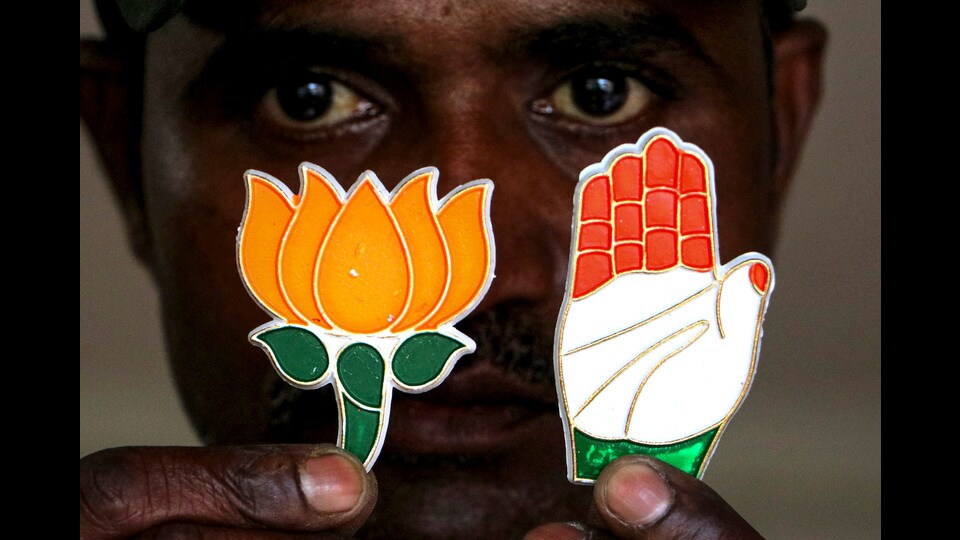
Read with the Congress’s tactical move to stick with the Samajwadi Party in Uttar Pradesh, despite the latter’s reluctance to provide the seats requested by its state unit, it is clear that the Congress high command, in the backdrop of the Haryana result, has decided to trust its instincts rather than back the satraps, who are more focused on local interests than the national picture. The Congress leadership seems to believe that allies — and coalitions — are necessary to keep the BJP in check, in the states and at the Centre. The tricky question is if it can convince its own leaders and cadres about this vision and get them to play the coalition game wholeheartedly.
The Congress has always had its share of coalition sceptics. This was evident when the party held a conclave in Pachmarhi in 1998, soon after Sonia Gandhi took over as the organisation head, to discuss the advent of coalition governments at the Centre. Between 1989 and 1998, the Janata Dal-led National Front and United Front, and the BJP-led National Democratic Alliance (NDA) had trumped the Congress to form the government at the Centre. However, the Pachmarhi conclave felt that the rise of coalitions represented a transient phase. Five years later, the party nuanced its stance at the Shimla conclave to appeal for “the unity of secular forces”. By then, the BJP had built the NDA into a representative coalition that included many influential regional parties. The Congress’ reluctance to forge alliances had neither helped the party recoup nor enabled it to win office. The Pachmarhi line was quietly abandoned and the unexpected results of the 2004 general election led to the formation of the United Progressive Alliance (UPA) with Congress as its pole. The UPA got a second lease of life ahead of the 2024 general election in the form of the INDIA bloc that succeeded in preventing the BJP from gaining a simple majority in the Lok Sabha.
It may well be the chastening experience of Haryana and the memory of the INDIA bloc doing well in the general election that has influenced the Congress to privilege bonds within the MVA over the sentiments of its Maharashtra unit. This may be a practically wise move since the party’s primary consideration now is to keep the BJP out of power rather than expand its footprint. Maharashtra is a crucial election and a win for the NDA would wipe out the gains the INDIA bloc made in June. How the Congress negotiates the contradictions of its national goals and regional priorities will be keenly watched.


