
 E-Paper



Election relief for Kejriwal
Bail for Delhi chief minister may boost the Opposition’s general elections campaign

 Prefer HTon Google


Since Justice VR Krishna Iyer’s comment to the effect in 1977, the considered view is that bail is the rule and jail is the exception. So, it is welcome that the Supreme Court (SC) has given interim bail to the Delhi chief minister (CM) and Aam Aadmi Party (AAP) chief Arvind Kejriwal in the Delhi excise policy case. The bail terms set by the Court include a bar on the CM from visiting the office of the chief minister and the Delhi Secretariat, signing official files “unless it is required and necessary for obtaining clearance/approval of the Lieutenant Governor of Delhi”, making comments with regard to his role in the case, and interacting with witnesses and/or those who have access to official files connected with the case.
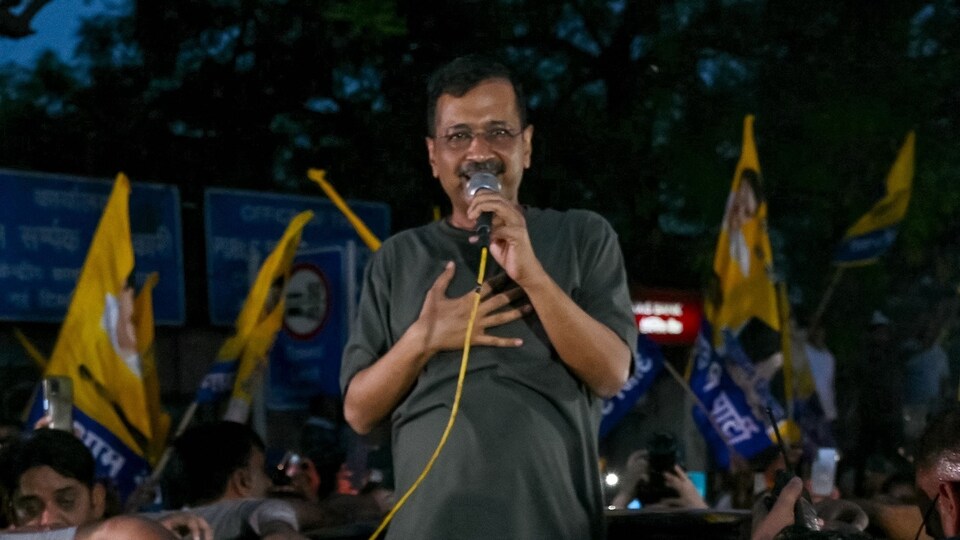
But the immediate import of this decision will be felt in electioneering: Three phases of polling are over while four more are left. The polling process has been completed in 283 of the 543 Lok Sabha constituencies but polling in the AAP strongholds of Delhi (seven seats) and Punjab (13 seats) is slated for May 25 and June 1, respectively. That gives Kejriwal enough time to hit the streets, energise party cadres, and spice up the contest, even beyond seats that the AAP is contesting. Whether the electorate will be impressed by the entry of the AAP’s political face and chief campaigner is anybody’s guess. However, the bail does restore some kind of a level-playing field for the Opposition which has claimed that the Enforcement Directorate’s (ED) decision to arrest the Delhi CM (on March 21) after the Election Commission of India announced the poll schedule was politically motivated. Given the “prodigious importance” of the general elections — to quote the SC — it is fair that a senior politician has been allowed to campaign: Kejriwal has to surrender before the Court on June 2, the day after the polling process is completed.
The excise policy has been mired in politics since the ED made the first arrests in 2022. Delhi deputy CM Manish Sisodia has been in prison since February 2023; senior AAP leader and Rajya Sabha MP Sanjay Singh and senior Bharat Rashtra Samithi leader K Kavitha were also arrested in this case. Singh, in fact, has been leading the AAP campaign since his bail in early April. The AAP has held that the case is politically motivated and foisted on it by the Centre to check the former’s growth as a political party. This is also the premise for Kejriwal refusing to respond to the ED’s summons for questioning, the party has argued.
In the SC, ED opposed Kejriwal’s bail arguing that the right to campaign in an election is not a fundamental right, or even a legal one. It also raised the concern that bail for Kejriwal would set a precedent that could incentivise criminals to join politics and turn campaigners to stay out of prison. It is indeed debatable whether the right to campaign can be set as a basis for bail. However, as the Court said, Kejriwal is not a habitual offender or a threat to society but an elected representative of the people, the head of a mainstream party. It is understandable that the Court did not want Kejriwal to carry out his responsibilities as CM of Delhi. Propriety demands that a person in high office steps down if a court has deemed it fit to order him (or her) to judicial custody. He or she needs to fight the case, whatever its merits may be, in the court and follow due process. However, it is unjust to deny bail to an accused, especially those with no prior criminal record.


