Before he began a second term as the US President, Donald Trump claimed he would be able to end the war between Russia and Ukraine in “24 hours” of taking office. The protracted negotiations that US officials have engaged in since then have brought out the harsh reality that Trump is not close to resolving a conflict that has dragged on for nearly three-and-a-half years, killed and wounded an estimated 1.4 million troops from both sides, and caused widespread devastation
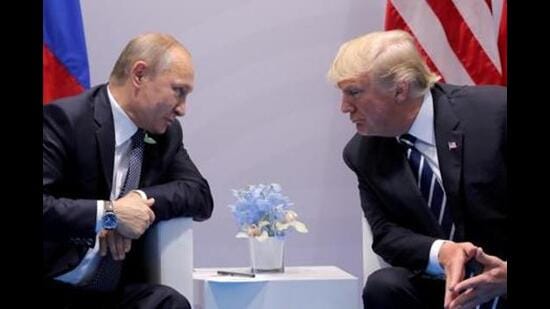
Before he began a second term as the US President, Donald Trump claimed he would be able to end the war between Russia and Ukraine in “24 hours” of taking office. The protracted negotiations that US officials have engaged in since then have brought out the harsh reality that Trump is not close to resolving a conflict that has dragged on for nearly three-and-a-half years, killed and wounded an estimated 1.4 million troops from both sides, and caused widespread devastation in the two countries. Trump’s more ambivalent approach towards Russia initially raised hopes that he would be able to reach an understanding with President Vladimir Putin on ending the conflict, but recent moves by the US President — including his decision to slap a punitive 25% tariff on India for its Russian oil purchases — have signalled his growing frustration at lack of progress in efforts to stop the war. The planned summit between Trump and Putin on August 15 in Alaska, once part of the Russian empire, will be the first meeting between the two leaders since 2019.
Trump has hinted at a deal to end the war in Ukraine involving the swapping of territories, which is something Putin too has mooted to Washington in recent days. However, Ukraine and its European partners have apprehensions that such an approach will encourage Russian aggression, and they have backed a diplomatic resolution that protects European security interests. European States have emphasised that Ukraine must be part of all efforts to find a solution.
The Alaska summit will be closely watched for all these reasons, and India is right to welcome it. One, a positive outcome will end the Ukraine war, which has caused immense damage to not just Russia and Ukraine, but also roiled Europe’s economic and political situation and caused economic ripples in the Global South. Two, a Trump-Putin deal will have an impact on India since the stated reason behind Washington’s threat to impose a punitive tariff is centred on New Delhi’s trade with Moscow. Three, a US-Russia detente will allow Europe to recalibrate its priorities and also provide elbow room to India to pursue strategic autonomy and build ties with Moscow and Washington parallelly.
That said, irrespective of the Alaska outcome, India should continue attempts not just strengthen its legacy ties with Russia but also normalise relations with Beijing. Strategic autonomy and multipolarity are in the interests of India’s economic and global ambitions. It must pursue bilateral deals while being part of global alliances and partnerships that collectively speak for the Global South in trade, climate mitigation and security.
One Subscription.
Get 360° coverage—from daily headlines
to 100 year archives.
Archives
HT App & Website