
 E-Paper



Recalibrating India-China ties
These need to be firewalled from external factors such as the Dalai Lama’s succession and China’s trade and foreign policy initiatives.

 Prefer HTon Google


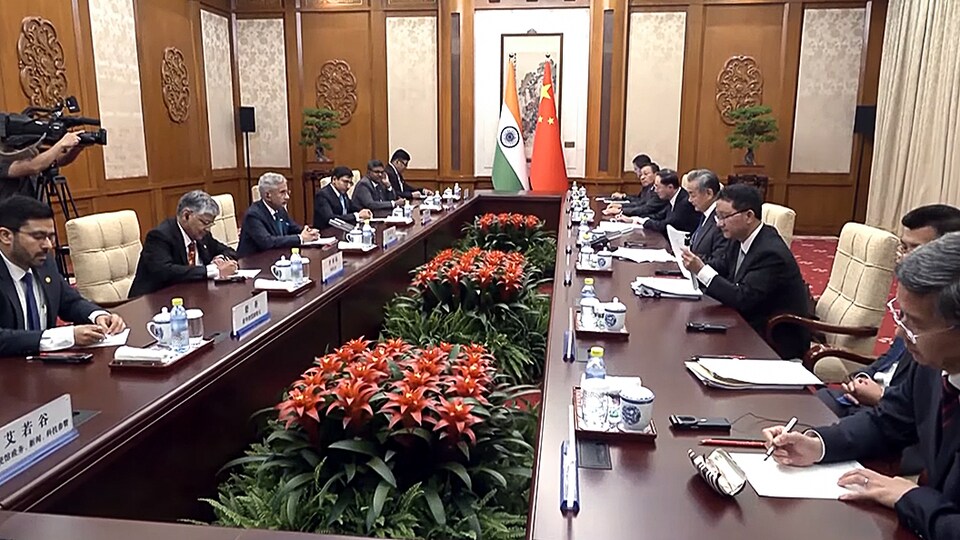
External affairs minister S Jaishankar is in China at a crucial time for bilateral relations, which are on the long road to normalisation after a four-year military standoff on the Line of Actual Control (LAC). While Jaishankar is visiting the northern neighbour for a meeting of foreign ministers of the Shanghai Cooperation Organisation (SCO), he also held talks aimed at taking forward bilateral ties. Noting the good progress in the normalisation process, Jaishankar told his counterpart Wang Yi the two sides must address border-related matters such as de-escalation. In this sphere, the main focus should be on firewalling the normalisation of relations from external factors such as the Dalai Lama’s succession and China’s trade and foreign policy initiatives. Beijing’s support for Islamabad during Operation Sindoor has cast a shadow over India-China relations. And the Chinese leadership’s hardline stance on the Tibet issue — a Chinese spokesperson has called it a “thorn” in China-India relations and a “burden” for India — and its restrictions on exports of key commodities such as rare earths and fertilisers further complicate matters.
Beijing should know that the Dalai Lama is not just a “separatist” political leader, as it wants the world to think. He is today the most respected Buddhist leader, god to some and guru to others, and his following is trans-national. India itself is home to millions of Buddhists who revere the Dalai Lama, and hence, his presence in the country will be handled accordingly. New Delhi believes in the separation of church and state, and the political leadership here has historically refused to be involved in the domain of religion, especially in the conduct of religious affairs and succession issues. The judiciary has intervened only when approached by the concerned parties for redress. In the case of the Dalai Lama’s succession, it is not New Delhi’s intent to play the institution against Beijing, but to accord him the respect due to him as a spiritual leader and the head of a large religious community, and accept the choice of the Buddhist laity in deciding his successor.
China, which believes in total control over society, seems not to understand this separation of powers between the political, temporal and spiritual domains, and continues to perceive India’s approach towards the Dalai Lama in purely political terms. The Dalai Lama has said more than once that all he desires is greater autonomy for Tibet and protection for the Tibetan people. The Dalai Lama’s statement thanking India — and the Indian perception of the leader — needs to be seen from this perspective.


