
 E-Paper



Opinion: Kanwar Yatra is a remarkable confluence of faith and discipline
Every year, thousands embark on the Kanwar Yatra, a pilgrimage reflecting profound faith and collective discipline. Discover the meanings behind this pilgrimage

 Prefer HTon Google


By Dr. Ranganath Tripathi, Head, Department of Vedas, Shri Gorakshnath Sanskrit Vidyapeeth Postgraduate College, Gorakhnath Temple, Gorakhpur
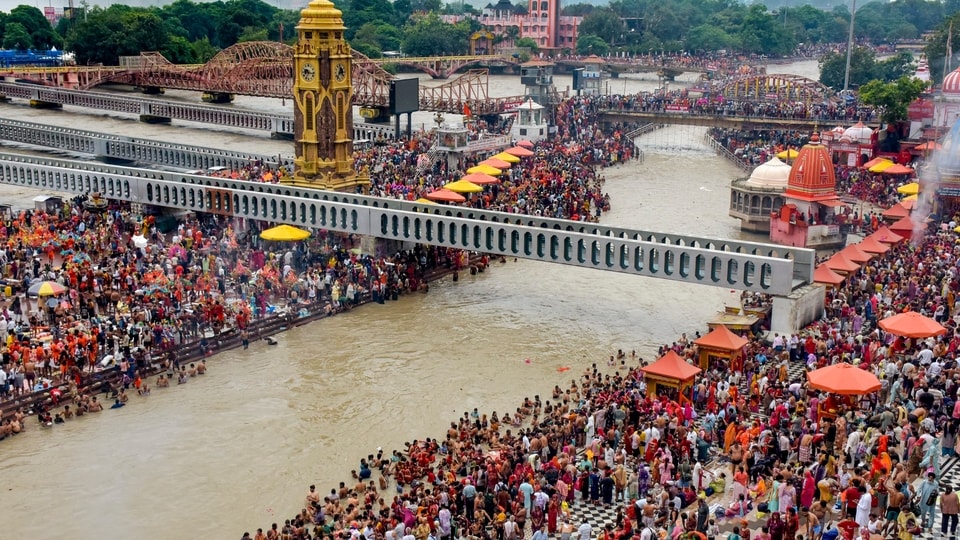
During the month of Sawan, when groups of Kanwariyas across not only Uttar Pradesh but the entire northern India move towards their destinations carrying Gangajal on their shoulders while immersing themselves in Shivtatva, it is a direct manifestation of that eternal stream of Sanatan tradition which has flowed through the consciousness of India since ancient times. This month is the holiest period dedicated to the worship of Lord Shiva. According to Puranic belief, it was during this time that Lord Shiva held the Halahal poison that emerged from the Samudra Manthan in His throat, thereby saving creation from destruction. When Kanwariyas carry Gangajal to perform Abhishek of the Shivling, it is an expression of gratitude towards the deity who consumed poison for the welfare of the world. It is a living expression of the eternal principles of sacrifice and devotion. On this very foundation of faith, if we examine this pilgrimage from a social and psychological perspective, a structure emerges that contains deep layers of collective consciousness, discipline, and social cooperation. It is this depth that inspires Uttar Pradesh Chief Minister Yogi Adityanath to serve these ascetics with complete dedication.
The fundamental essence of this pilgrimage is faith and discipline. Faith enhances a person's endurance. Walking hundreds of kilometers on foot, amidst intense heat and the uncertainties of the monsoon, is not a task of ordinary physical ability. Driven by devotion, the body gradually transcends the limits of fatigue. A devotee of Lord Shiva experiences the body's limitations in an entirely new way. This experience is long-lasting and collective. Here, competition is not the focus; Participation is. This physical test teaches an individual that limits are as much mental as they are physical, and often the mind gives up before the body does.
From this point arises the question of mental discipline. During the long foot journey, Kanwariyas are required to observe a defined code of restraint and conduct. They must rest on time, maintain simplicity in their food, and, most importantly, observe the rule of not placing the Kanwar on the ground. This discipline is a voluntarily accepted restraint. When a person consciously disciplines oneself for a higher purpose, the capacity for self-control develops. Many Kanwariyas describe this experience not merely as a religious ritual but as a process of self-refinement. From a spiritual perspective, the rule of not placing the Kanwar on the ground also carries profound symbolic meaning. This water represents the sacred Ganga herself, the purity that flowed from the matted locks of Lord Shiva. In Indian tradition, penance, vows, and self-restraint have always been regarded as the path to liberation, and the Kanwar Yatra is a contemporary expression of that tradition of austerity.
From a sociological perspective, the Kanwar Yatra is a form of collective participation that temporarily blurs the boundaries of social structures, caste, class, and economic status. While walking on the road, a laborer and a trader share fatigue and hardship equally. This shared experience creates a temporary yet powerful bond. It is deeply embedded in human social nature that shared suffering and shared purpose bind communities more strongly. Shared happiness does not create the same strength of bonding. This spirit of collective participation is also reflected in the service camps. The service camps established at various points along the route, where local residents, social organizations, and volunteers provide free food, rest, and medical assistance, form the social foundation of the entire pilgrimage. They represent an example of spontaneous community cooperation. Thousands of families and institutions contribute to these arrangements without expecting any direct benefit in return. At a time when modern urban life is increasingly moving towards individualism and mutual isolation, the Kanwar Yatra, even if only once a year, revives the spirit of interdependence and community responsibility.
No discussion on this subject would be complete without considering the role of the state. The efforts made by the Yogi Adityanath government in Uttar Pradesh over the past years to make this pilgrimage organized, safe, and dignified reflect a clear cultural vision. Measures such as route lighting, medical camps, drone surveillance, cleanliness campaigns, flower showers, and traffic management demonstrate that the Yogi government views devotees not as a crowd but as respected pilgrims of faith. Yogi Adityanath is himself a religious leader, and under his leadership these efforts are viewed as a cultural renaissance or the "restoration of Sanatan pride." This is a vision within which the grand redevelopment of Kashi Vishwanath Dham, the infrastructure transformation around the Ram Mandir in Ayodhya, and the grandeur of events such as the Kumbh can also be placed. Every road, every light, and every service camp along the Kanwar Yatra route symbolizes a respectful relationship between faith and governance. Naturally, there are differing opinions on any major public issue, and some commentators hold a different perspective on this subject. However, the widespread public support and the continuously growing number of devotees demonstrate that the Yogi government is meeting their expectations.
It would not be appropriate to view the Kanwar Yatra solely as an expression of faith or discipline. In reality, this pilgrimage stands at the confluence of both, where spiritual belief gives meaning to physical hardship, and physical hardship makes that belief deeper, more direct, and more experiential. Without faith, this journey would remain only a difficult physical test, and without discipline, it would become nothing more than emotional fervor. But when lakhs of devotees walk together in their love for Lord Shiva, endure hardships, and still smile while chanting "Bol Bam," it ceases to be merely a form of social behavior. It becomes proof of the indomitable vitality of Sanatan Dharma. When the state itself steps forward to provide dignity, security, and respect to this faith, it reflects the state's gratitude towards the civilizational memory that has given us our Sanatan identity. It is in the balance between these two that the true strength of this tradition resides. It is a strength that connects individuals with themselves, communities with one another, and the nation with its spiritual roots.


