
 E-Paper



The making of Samriddha Bharat
The Prime Minister's Independence Day speech outlined his strategy to build a prosperous India

 Prefer HTon Google


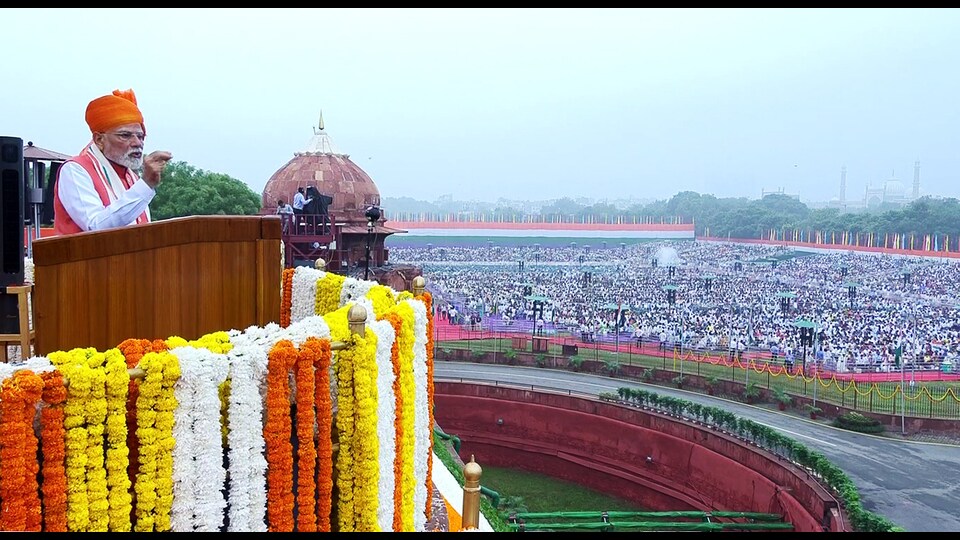
Given the restive external environment, it was no surprise that the nation’s pursuit of aatmanirbharta (self-reliance) took much of PM Narendra Modi’s time as he delivered his 12th Independence Day speech. In a 103-minute speech, the PM presented a vision statement of what his government intends to do going ahead, to realise a developed Bharat by 2047. The PM offered policy and politics while appealing to the different constituencies, including the core base of his BJP. PM Modi presented self-reliance as a layered idea that had implications for national security, political economy, and India’s outreach to the world. Just in case anyone thought that the talk on self-reliance, with the appeal to consumers and shopkeepers to go “swadeshi”, was a throwback to the past, the PM emphasised that the idea was for the country to turn self-reliant in defence equipment, jet engines, space exploration, clean and renewable energy, semiconductors, critical minerals, vaccines, medicines and drugs, and turn India into a production hub that can conquer world markets with products manufactured with “daam kam” and “dum zyada” (lower-priced but quality goods). This is to be realised by building capacities in mission mode and with major private sector participation, he elaborated.
Towards this end, the PM announced a reform task force to drive next-generation reforms, among them reducing compliance costs for startups, MSMEs, and entrepreneurs. As if to buttress intent, the PM recalled how close to 40,000 compliances and 1,500 laws have been done away with to improve the ease of doing business. But the teaser in the piece was that big ticket reforms are due in the GST regime by Diwali, which will lighten the tax load and reduce the costs of daily-use items. The ₹1-lakh-crore PM Viksit Bharat Rozgar Yojana was a clear outreach to the youth: Under the scheme, expected to benefit 35 million Indians, young people beginning their first jobs will receive a one-time payment of ₹15,000, given in two instalments.
The focus on self-reliance has become an imperative with the US working to dismantle the old global order underwritten by free trade and multilateral fora and replace it with bilateralism driven by national self-interest. Considering the hostile nature of India’s neighbourhood, the shifts in global power relations call for considerable national efforts to build self-sufficiency in energy and defence. True to his style, Modi proposed Mission Sudarshan Chakra, a new security platform that can neutralise enemy missiles and improve India’s offensive capabilities.
A politically significant aspect of PM Modi’s speech was his appreciation of the RSS. Considering that his political grooming happened under the Sangh’s guidance, a mention of the RSS in its centenary year in the PM’s speech was not surprising. The ideological imprint was visible in his comment on a “well-thought-out conspiracy” to change India’s demography and the announcement of a “demographic mission” to prevent infiltrators from allegedly usurping jobs and land and targeting “our sisters and daughters”. Any conversation on this polarising subject will need to engage with the complex historical, geographical and economic legacies that continue to shape life in the subcontinent. Infiltration constitutes a security concern, surely, but a new language of articulation is called for to build a political consensus on the ways to defuse the threat. The hard line on borders and immigrants reflects a global trend, but the Indian narrative is laced with communal overtones, which can potentially disrupt the journey towards what the PM termed samriddha (prosperous) Bharat.


