
 E-Paper



Trump’s nuclear talk: rethinking nuclear tests
Trump’s remarks raise questions about the global regulatory regime. India must be ready for all options

 Prefer HTon Google


US President Donald Trump’s remark expressing intent to resume testing of nuclear weapons after a gap of at least three decades has reopened a debate on such tests and the effectiveness of the 1996 Comprehensive Nuclear Test Ban Treaty (CTBT), and has been perceived in some quarters as bordering on the irresponsible. During an interview, Trump claimed that secret testing by China, Russia, North Korea and Pakistan is reason enough for the US to resume the detonation of nuclear devices to test their efficacy. CIA director John Ratcliffe has reiterated US assessments that Russia and China were carrying out low-yield nuclear tests. As the leader of the most powerful country in the world, what Trump says will be taken seriously, though China’s foreign ministry has denied his claim that the country has secretly tested nuclear weapons.
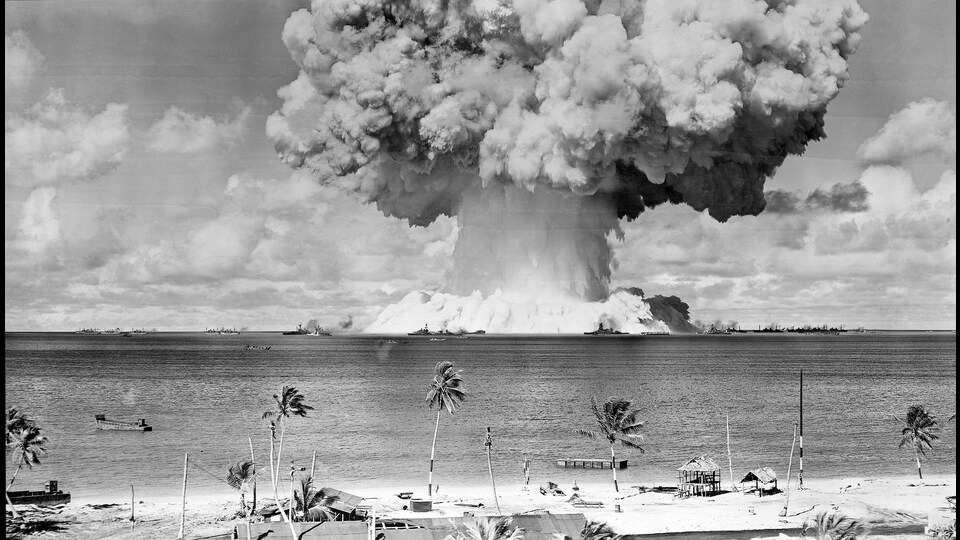
Since CTBT came into force, only India, Pakistan and North Korea — which have not signed on to the treaty — have conducted tests. The US last tested nuclear weapons in 1992, China and France in 1996, and the Soviet Union in 1990, though Russian President Vladimir Putin spoke in 2023 about the possibility of resuming nuclear tests. The US has never ratified CTBT, while Russia revoked its ratification in 2023, leaving the treaty ineffectual at a time when Cold War-era arms control mechanisms have been repeatedly diluted by Moscow and Washington. If Trump’s move provokes the start of testing by China and Pakistan, India will need to rethink its own self-imposed moratorium put in place after the nuclear tests of 1998. China and Pakistan have expanded their nuclear arsenals, forcing India to keep pace with the rapidly growing number of warheads in its neighbourhood. The main purpose of testing is validating design of weapons and calibrating them, especially given the transition to a new generation of tactical devices and miniaturised warheads. These were developed amid the worldwide moratorium, leading to discussions even within India about the need to keep the door open for tests to validate their reliability.
The international framework that controlled testing was a deeply discriminatory framework imposed by the West after it had acquired a substantial stockpile, to prevent countries such as India from becoming nuclear powers, but any new round of nuclear tests will lead to its collapse. Trump’s policy pivot may help give the push for a new regime to replace the CTBT but it could also kickstart a new nuclear arms race. India must be prepared for all options.


