
 E-Paper



When Modi met Putin
On defence, the partnership is growing. But a more broad-based relationship that expands beyond defence will be essential for ties with Russia in the long-term

 Prefer HTon Google


President Vladimir Putin made only his second trip outside Russia since the start of the Covid-19 pandemic for the annual summit with Prime Minister Narendra Modi, reflecting the importance Moscow attaches to its relationship with New Delhi and the desire of the leadership of the two countries to give a push to ties in areas from security to trade and investment. Mr Putin’s last foreign trip was to Geneva in June for a summit with United States (US) President Joe Biden. The outcome of that was not as fruitful as the meeting with Mr Modi. India and Russia have maintained contact amid the pandemic, working closely on the Covid-19 response and the situation in Afghanistan. This prepared the grounds for the summit, which coincided with the inaugural 2+2 dialogue, and the delivery of the first of the S-400 air defence systems to India — developments which underline Russia’s importance as a key security partner.
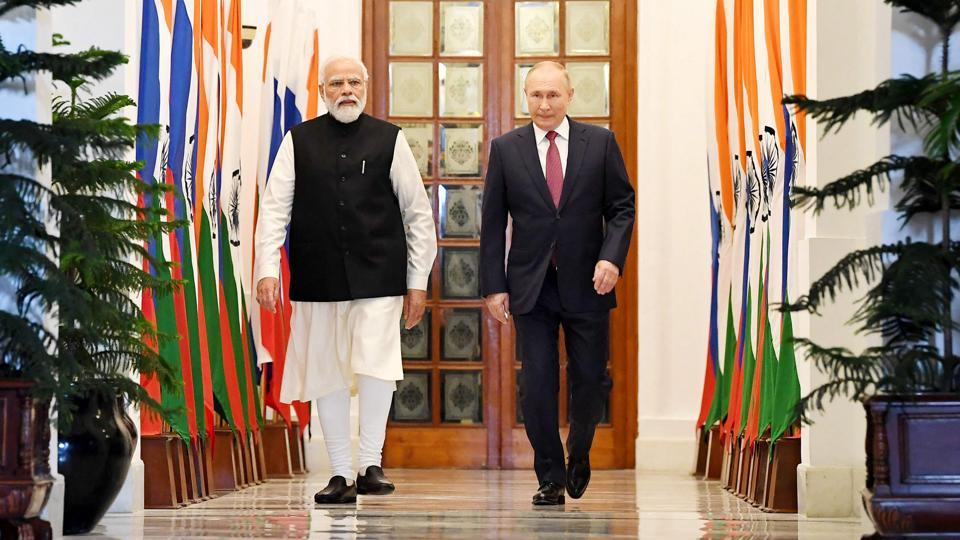
That the two sides signed an agreement on military-technical cooperation for the next decade and finalised a contract for making more than 600,000 assault rifles for the Indian military shows their defence collaboration remains robust amid efforts by India to diversify its arms procurements, and despite pressure from the US, now an important defence partner for India, under its Countering America’s Adversaries Through Sanctions Act regime. There were discussions on economic cooperation, including arrangements for energy and fertilisers from Russia, and connectivity options. On Afghanistan, the two sides are on the same page, despite Russia’s initial dalliance with the Taliban.
However, differences remain between the two sides, primarily over Russia’s aversion to India’s closer ties with the US and its role in Quad. Russian foreign minister Sergey Lavrov made it clear that Russia didn’t see these new constructs replacing existing structures such as the Association of South East Asian Nations. The Indian side made a pointed mention of China’s “unprovoked aggression” on the border, with defence minister Rajnath Singh saying India seeks defence partners that are sensitive to the country’s expectations — a nod to Russia-China defence cooperation. India’s policy of strategic autonomy in defence procurements and national security interests has served it well, though a more broad-based relationship that expands beyond defence will be essential for ties with Russia in the long-term.


