
 E-Paper



$100,000 OPT fee plan is bad news for Indian students and the US | Number Theory
America’s international student total was still rising in 2024-25, but the growth was increasingly coming from people who had already left the classroom.
Published on: Aug 3, 2026, 06:46:52 IST

 Prefer HTon Google
Share via


Copy link

The Donald Trump administration in the US is considering a $100,000 fee tied to Optional Practical Training (OPT), which allows foreign graduates to work temporarily in the US after completing their degrees. The proposal follows an appeals court setback to a similar H-1B levy. Unlike direct overseas H-1B recruitment, OPT is the route many large US employers use to hire foreign graduates from American universities before later sponsoring them for work visas. What has been the importance of OPT for foreign students in the US? What is the potential impact of the proposal on Indian students? How will this impact Indian students in the US?
$100,000 OPT fee plan is bad news for Indian students and the US
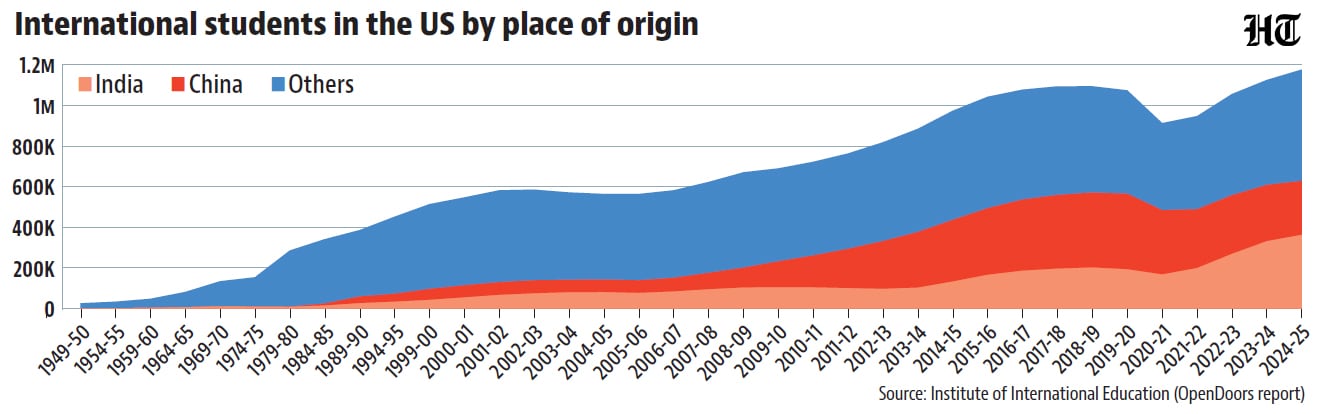
 India is now the biggest source of foreign students in the USFor more than a decade, China was the largest source of international students in the US. Both Indian and Chinese numbers fell in 2020-21, but their recoveries soon diverged. India’s count rose from 167,582 that year to 363,019 in 2024-25, more than doubling in four years. China’s, by contrast, recovered only briefly before sliding from 317,299 to 265,919. Indians now make up roughly 31% of all international students in the US, compared with 23% for China. Indians are now the biggest beneficiaries of H-1B visas and, as international students in the US, biggest potential beneficiaries of the OPT route to employment.
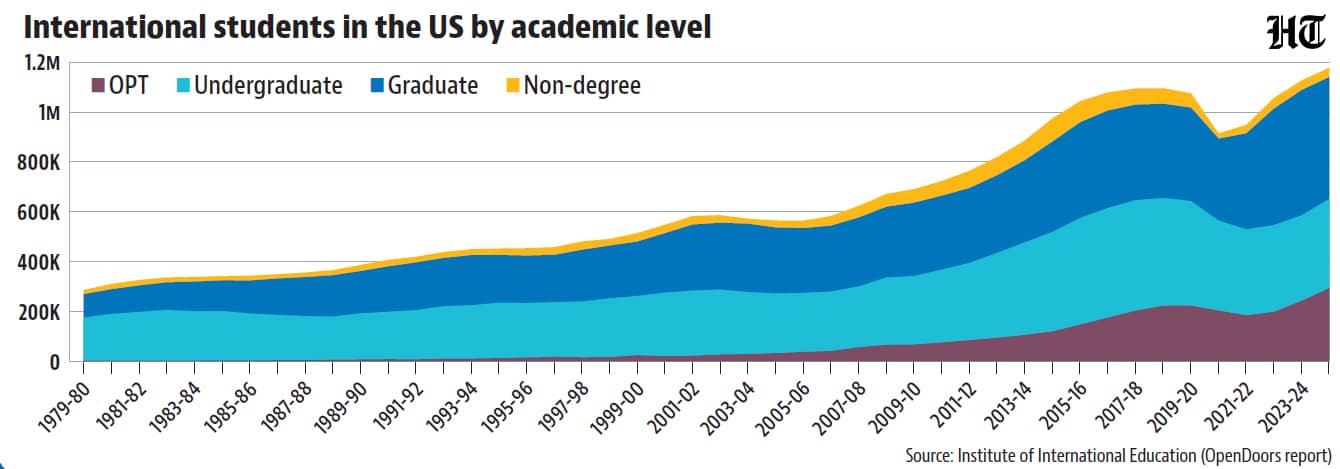
- Enrolments by foreign students in American universities had already begun to lose steamAmerica’s international student total was still rising in 2024-25, but the growth was increasingly coming from people who had already left the classroom. The combined number of undergraduate, graduate and non-degree students fell marginally from the previous year, while graduate enrolment alone declined by nearly 14,000. The headline total nevertheless increased by more than 51,000 because the number of students on OPT rose from 242,782 to 294,253. OPT participants, mostly recent graduates temporarily permitted to work in jobs related to their degrees, consequently accounted for one-quarter of the international student count, up from less than 19% two years earlier and about 12% a decade ago. America’s foreign student population was, in other words, being sustained increasingly by yesterday’s students rather than new enrolments. The intake pipeline appears to have weakened further since then. The Global Enrolment Benchmark Survey, produced by NAFSA, Oxford Test of English and Studyportals, found that new international enrolments at 149 participating US universities during January to March 2026 fell by an average 20% at bachelor’s level and 24% at master’s level from the same intake a year earlier. Around 62% of the US institutions reported lower enrolment at both levels. The survey is not a national headcount and participating universities were self-selected, but it is indicative of the broader trend.
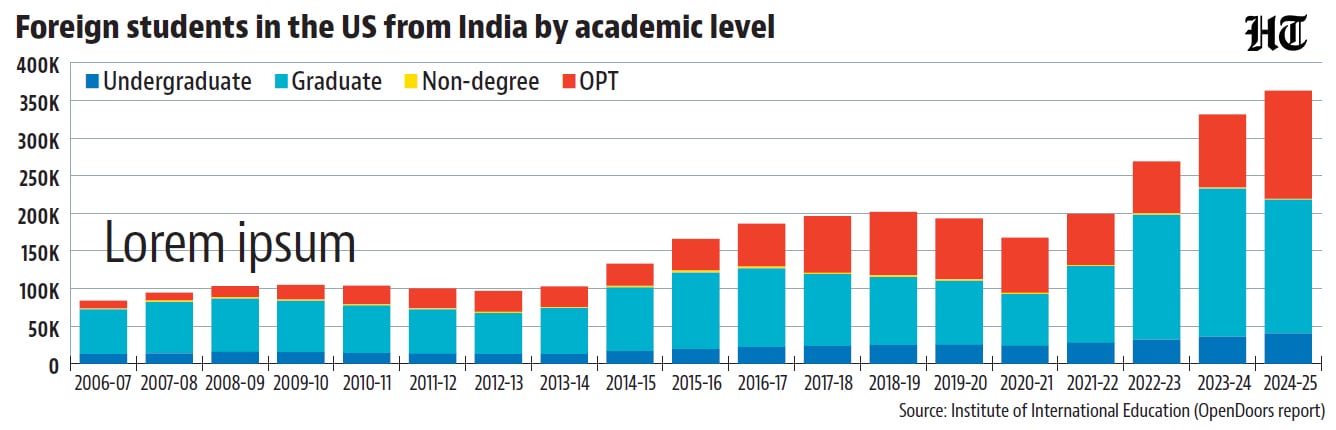
- Rise in Indian students in recent years led to boom in graduate workers who will be disproportionately hit by the proposalThe proposed fee would not fall evenly across America’s international student population. Indians accounted for 143,740 of the 294,253 people on OPT in 2024-25, or nearly 49%. That makes India unusually exposed to any attempt to put a six-figure price on the bridge between a US degree and a US job. In fact, India’s enrolment surge had already begun to fade beneath the headline numbers. While the total number of Indian students in the US rose by 31,417 in 2024-25, the number actually enrolled in undergraduate, graduate or non-degree programmes fell by 14,767. Graduate enrolment dropped by almost 19,000, while the OPT population jumped by more than 46,000. In other words, the entire increase in Indian student population came from recent graduates staying on to work through OPT. A $100,000 levy would weaken the calculation made by future applicants, especially those pursuing costly graduate degrees on the expectation that US earnings will help justify the investment. To be sure, the proposal remains under discussion, including who would ultimately bear the cost.
- America risks pricing away its advantageWho writes the cheque remains unclear. The administration has not said whether the $100,000 free would be paid by students, employers or universities. But the burden would be hard to contain. Students could face higher costs and fewer job offers, employers could become choosier, and universities could find an already weakening recruitment market even harder to sell. The US has been the world’s leading destination for international students. Yet its advantage rests partly on what follows the degree. Make that bridge prohibitively expensive, and America risks its greatest undermining one of its biggest attractions for global talent.


Unlock a world of Benefits with HT! From insightful newsletters to real-time news alerts and a personalized news feed – it's all here, just a click away! -Login Now!


