E-Paper



Mystery, mastery and a tumultuous twist: Roger Ackroyd at 100
It’s been a century since Agatha Christie wrote The Murder of Roger Ackroyd — her sixth novel, but arguably the most popular one.

 Prefer HTon Google


The contents page should have been the first clue: the last chapter is titled “Apologia”. What could the author possibly have to apologise for?
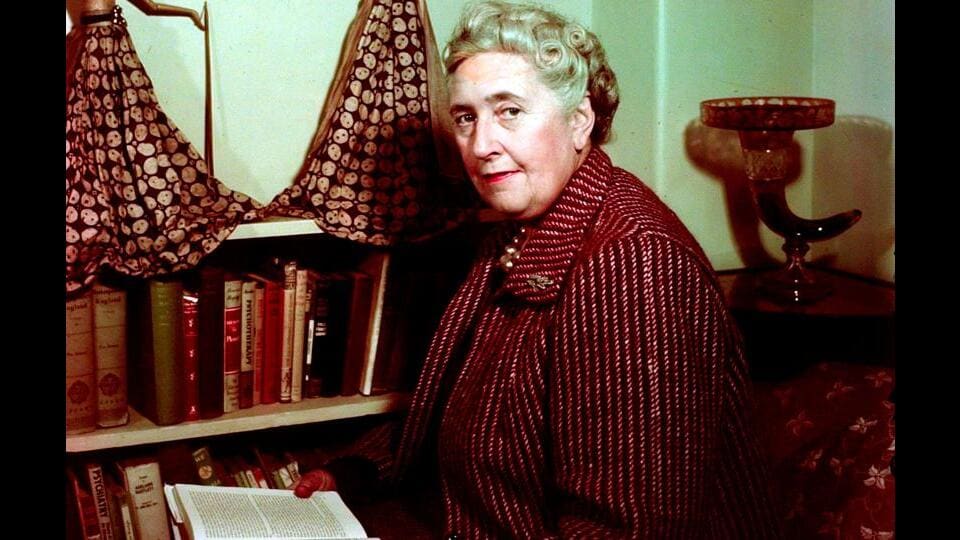
It’s been a hundred years since Agatha Christie wrote The Murder of Roger Ackroyd — her sixth novel, but arguably the most popular one — and for the world, that’s a century of readers being led by the nose and sold down the river.
Roger Ackroyd, we are told in the second chapter of the book, is “more impossibly like a country squire than a country squire could be”. Telling us this is a doctor named James Sheppard, the narrator.
As first-person narrators go, Sheppard is rather judgmental. He disparages his sister, Catherine’s remarkable network of informants from whom she gets to hear of all the goings on in the village. He refuses to acknowledge her observations though he may agree with many of them. He pokes fun at Ackroyd, who, it turns out, is “an immensely successful manufacturer” and the “life and soul of King Abbott”, the quiet English village in which the novel is set.
Sheppard is a bit curmudgeonly, but we don’t grudge him that. He is a doctor and what’s more, he is the one telling us the story — so we empathise with his point of view.
A murder is announced
The book begins with a death, and Sheppard has to decide whether to recommend an inquest or not: his position of power and trustworthiness is well-established.
As the narrative progresses, Christie leaves clues all over the place.
For instance, after a crucial meeting with Ackroyd, Sheppard returns home and to avoid his sister’s queries, makes up “a slightly fictitious account of the evening” to satisfy her curiosity. He writes about meeting with Ackroyd shortly before the man’s death, but leaves out what happens during a crucial 10-minute period. As readers, we are used to this: after all, no novel offers a blow-by-blow account of every single minute of the protagonists’ lives. Time shifts are expected. And herein lay Christie’s genius. She played with the norms of the written text and subverted our expectations.
Later in the book, Sheppard even receives a ringing endorsement from none other than Hercule Poirot himself. Handing over the manuscript he has maintained of the events to Poirot, Sheppard is delighted when the Belgian detective praises him. “A very meticulous and accurate account. You have recorded all the facts faithfully and exactly — though you have shown yourself becomingly reticent as to your own share in them,” Poirot tells Sheppard.
The last phrase is the biggest clue of all, but we don’t notice it.
The missing 10 minutes and Sheppard’s reticence as a narrator add up to him being the murderer.
It was a bold move that no one saw coming, and the book divided readers of the genre like nothing else had done before: purists were outraged, devotees were impressed. Dorothy L Sayers, a detective fiction writer and Christie’s friend, even defended the story’s ending, stating that it was the reader’s job to suspect everybody.
Cards on the table
It is rare for a book to remain relevant a hundred years after it was written, and ‘Roger Ackroyd’ certainly qualifies as one of them. Only a few things date the book, such as a reference to a “scientific machine” that “registers guilty heartbeats” (a lie detector), and the vital role of the “dictaphone” (a voice recording machine) in mystery, but the storytelling as well as the reactions of all characters is true to form: in this, Christie remains a masterful writer.
The Murder of Roger Ackroyd was the first of Christie’s stories to be adapted into a play. Titled Alibi, it opened at the Prince of Wales Theatre in London’s West End in May 1928. John Moffatt, one of the most popular actors to perform the role of Hercule Poirot on radio adaptations of Christie’s novels began with Roger Ackroyd in 1987 — the first time it aired on the BBC Radio 4 was in December. There have also been countless adaptations of the book all over the globe — from Japan to South Africa. In India too, the book has been translated into multiple languages.
But Christie’s novel was significant also for the literature it came to be part of. The novel came out the same year Franz Kafka’s The Castle was posthumously released. In it, the protagonist K goes through many futile attempts to reach the authority governing his village council. William Faulkner’s Soldiers’ Pay was another novel to be released that year, which followed a group of World War 1 veterans and their disillusionment.
Ernest Hemingway’s The Sun Also Rises and the English translation of Andre Gide’s The Counterfeiters, also published that year, told their stories in a similar style that broke away from the staid 19th century third-person narrative, and instead offered fragmented perspectives, unreliable narrators and questionable authority figures.
Four years later, another detective novel, The Maltese Falcon, written by Samuel D Hammett across the Atlantic, brought about yet another shape-shifting change to the genre: he turned it into an urban thriller. This was not a fluke. Modernism, the broad category under which these works fell, was marked by such experimentation with both form and content.
Cat among the pigeons
TS Eliot, whose fame as a poet was only superseded by his as a literary critic, articulated many of the standards for detective fiction in The Criterion (a literary journal he published) in 1927. A key tenet was fair play — the reader should have a fair shot at solving the crime — and, there should be no recourse to the occult or other such sleight-of-hand solutions.
Ronald A. Knox, a Catholic priest who ran the London Detection Club (which counted among its members Sayers, Christie and GK Chesterton), also wrote the Ten Commandments of detective fiction echoing many of Eliot’s pronouncements about the genre. ‘Roger Ackroyd’ pushed the boundaries of what detective fiction could do.
Yet, not everyone was convinced of its value when it was first published. New Yorker reviewer Edmund Wilson wrote a piece titled, Who Cares Who Killed Roger Ackroyd? in 1945, in which he famously ranked detective stories as a kind of vice that lay somewhere between crosswords and smoking. He also called them “wasteful of time” and “degrading to the intelligence.” In a previous piece titled, Why Do People Read Detective Stories? published a year before, he tried to explain the hold that such literature, poor though it was, had over our collective imagination.
“The detective story has kept its hold; had even, in the two decades between the great wars, become more popular than ever before; and there is, I believe, a deep reason for this. The world during those years was ridden by an all-pervasive feeling of guilt and by a fear of impending disaster which it seemed hopeless to try to avert, because it never seemed conclusively possible to pin down the responsibility,” he wrote. “Nobody seems guiltless, nobody seems safe; and then, suddenly, the murderer is spotted, and—relief!—he is not, after all, a person like you or me. He is a villain!” he added.
Curtains
Wilson wasn’t off the mark. Cultural theorists today agree that the function of murder mysteries and detective stories help the reader find order in chaos. The figure of the detective upheld the moral order; he brought things to right when they’d gone awry. ‘Roger Ackroyd’ cemented Hercule Poirot’s unshakeable position in the pantheon.