The US and Iran signed a memorandum of understanding on June 17 that eased traffic through the Strait of Hormuz, a key route for Gulf oil and gas exports that had been disrupted since the US-Iran war began at the end of February. Did this bring India’s consumption of oil and gas products back to normal?
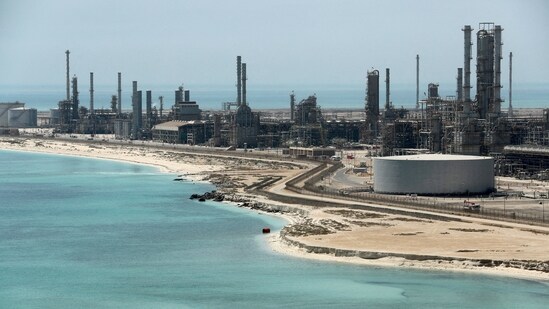
Saudi Aramco's Ras Tanura oil refinery and oil terminal in Saudi Arabia. (Reuters File)
Traffic through Hormuz has not fully normalised, the US-Iran agreement came only in mid-June, and complete consumption data is not yet available. However, provisional
{{^usCountry}}{{/usCountry}}
Consumption of petro goods nears normal
Growth rebounded to normal levels for petrol and diesel consumption in June, but not for ATF
HT reported on June 3 that petrol and diesel consumption had not contracted up to May despite the West Asia crisis. However, consumption growth had slowed compared to long-term averages. While part of this slow growth could have been attributed to price hikes leading to demand destruction, June data supports the claim that there was also an aspect of supply constraint to the story. While retail prices remained where they were in May, the growth in the consumption of petrol-diesel was back to long-term averages in June. ATF consumption growth was, however, still sluggish.
Contraction in LPG consumption continued, but was not as sharp as May
Contraction in LPG consumption and other petroleum products (all excluding petrol, diesel, ATF, and LPG) continued in June. However, the level of contraction eased for LPG. It was 14% in June, an improvement over the 21% contraction in May. The trend was less clear for other petroleum products, but their consumption is also more volatile. To be sure, these other products regularly reported contraction even before the war.
It is not clear how much natural gas substituted LPG
The decline in LPG consumption should be viewed alongside the government’s efforts to shift consumers towards natural gas after the conflict began. However, it is not clear how much of this shift is affecting LPG consumption. This is because natural gas consumption itself has contracted every month since the war started, a trend that continued up to May (the latest available data for natural gas). A contraction in natural gas consumption is also not rare and, therefore, difficult to interpret. The fuel’s consumption recorded a bigger contraction in March and May last year than this year. To be sure, the fuel’s consumption for CGD (city gas distribution), which includes natural gas used as Piped Natural Gas (PNG) and Compressed Natural Gas (CNG), has not contracted so far. Sectoral consumption data for March and April shows all sectors recording a contraction except CGD, which registered 11.5% and 15.7% growth in the two months. Consumption growth happened in almost all sectors in February.
Crude oil imports had registered growth even in May
How has India been able to avoid a major crisis in petroleum products availability, especially petrol and diesel? One reason could be that crude oil imports – in quantity terms – were not disrupted drastically. While the contraction in imports was 15% in March, the highest since pandemic affected February 2021, this eased to a 3.9% contraction in April, a level seen as recently as June 2024 before the West Asia war. Since the government diverted some of this crude oil to production of LPG, this might have helped even with softening the contraction in LPG consumption. Moreover, LPG imports themselves were recovering by May.
Abhishek Jha is Assistant Editor-Data at Hindustan Times. He uses statistical programming to generate newsworthy insights from large datasets. He is part of the team that produces Number Theory, a daily data story feature of the paper’s print edition. Since March 2024, he has been writing Weather Bee, a weekly column for the Hindustan Times website. He is a chemical engineer by training, who specialises in stories related to weather, climate, and the environment. Jha has been at HT since 2018, where he offers data-driven perspective and analysis on politics, environment, weather, climate, economy and society. His work includes data coverage of elections in India and abroad, including the 2019 and 2024 Lok Sabha elections; the disasters and extreme weather resulting from changing climate, such as floods, droughts, heat waves, cold waves, and dwindling snow cap in the Himalayas; the factors that drive poor air quality in northern India; the changing patterns of land use; the Covid-19 pandemic and its impact on labour market conditions; the changing pattern of consumer spending seen in the new consumer spending surveys; and social norms seen in the surveys such as the National Family Health Survey.
Unlock a world of Benefits with HT! From insightful newsletters to real-time news alerts and a personalized news feed – it's all here, just a click away! -Login Now!
Unlock a world of Benefits with HT! From insightful newsletters to real-time news alerts and a personalized news feed – it's all here, just a click away! -Login Now!
Home/Editors Pick/Consumption of petro goods nears normal | Number Theory
{{^htLoading}}
Advertisement
{{/htLoading}}
SHARE THIS ARTICLE ON
{{#usCountry}}{{/usCountry}}
Notifications
Get breaking alerts directly from the newsroom
Notifications are on!You'll be notified when news breaks